Sei in: home » database dei legni


Fornitori
|
Ditta 5
Indirizzo: via dei platani 4 liguria Tel.: +39 456 5664 54 Sito web: www.pippo.it E-mail: pippo at libero.it |
|
Ditta 4
Indirizzo: via dei platani 4 liguria Tel.: +39 456 5664 54 Sito web: www.pippo.it E-mail: pippo at libero.it |
|
Ditta 3
Indirizzo: via dei platani 4 liguria Tel.: +39 456 5664 54 Sito web: www.pippo.it E-mail: pippo at libero.it |
|
Ditta 2
Indirizzo: via dei platani 4 liguria Tel.: +39 456 5664 54 Sito web: www.pippo.it E-mail: pippo at libero.it |
|
Ditta 1
Indirizzo: via dei platani 4 liguria Tel.: +39 456 5664 54 Sito web: www.pippo.it E-mail: pippo at libero.it |
|
Ditta 0
Indirizzo: via dei platani 4 liguria Tel.: +39 456 5664 54 Sito web: www.pippo.it E-mail: pippo at libero.it |
Contatti
database dei legni


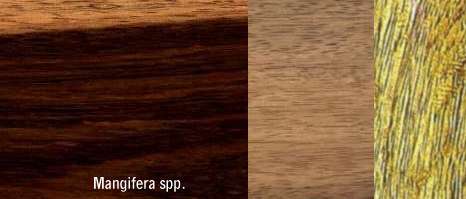
Am (Mangifera indicata)
Family: Anacardiaceae Common names: Am, Ama, Amba, Amba-nujhada, Ambe, Ambi, Ambo, Amiya, Amri, Asam, Bocho, Figured asam, Ghari am, Jegachu, Krerk, Kruk, Lamung, Ma-monton, Maa, Machang, Mak-mong, Mamadi, Mangga, Mango, Manguier, Marka, Marka marra, Mavena, Mavina-mara, Mavu, Sagyaw, Shagyaw, Takau, Thaiguja-baphang, Thayet, Thekachu, Ul, Uli, Umung Distributed in: Burma, Guadelope [France], India, Malaysia, Nepal, Puerto Rico [US], Thailand (Oceania and S.E. Asia) Distribution overview: Throughout tropical Asia, most species found in Malaya. M. indica produces the mango fruit of commerce and has been introduced throughout tropical and subtropical areas of the world. Common uses: Agricultural implements, Boat building (general), Boxes and crates, Brush backs & handles, Cabinetmaking, Canoes, Cooperages, Flooring, Fuelwood, Furniture, Heavy construction, Joinery, Light construction, Matches, Mine timbers, Musical instruments, Musical instruments: percussion, Oars, Paneling, Plywood, Poles, Sporting Goods, Textile equipment, Tool handles, Turnery, Vehicle parts, Veneer, Veneer: decorative Tree size: Trunk diameter is 150-200 cm
Colors: the heart isReddish brown, Yellow to golden-yellow to orangeand the sapwoodWhite to yellow, Yellow.The grain isWavy, the textureMedium coarse to coarseand the lusterMedium
Natural durability: Susceptible to marine borer attack, Very durable Silica Content: Siliceous Kiln Schedules: Drying (speed) is fast Kiln Drying Rate: Rapid Drying Defects: Slight twist/warp, Splitting Ease of Drying: Thick Stock Requires Care Tree Identification: Bole/stem form is straight
Comments: General finishing qualities are rated as good General finishing qualities are rated as satisfactory Blunting Effect: High to severe
Boring: Fairly easy to very easy Carving: Fair to Good Results
Cutting Resistance: Fairly Difficult to Very Difficult to saw Gluing: Fairly Easy to Very Easy Mortising: Poor to Very Poor Moulding: Fairly Easy to Very Easy Movement in Service: Fairly Easy to Very Easy Nailing: Fairly Difficult to Very Difficult, Holds nails well Planing: Planes well, to a good finish Resistance to Impregnation: Resistant sapwood Resistance to Splitting: Good
Response to hand tools: Variable qualities Routing recessing: Fair to Good Results
Sanding: Poor results Veneering qualities: Veneers easily, Veneers moderately easy
Screwing: Screwing yields good results
; Turning: Finish is generally satisfactory
Painting: Very Good to Excellent; Polishing: Very Good to Excellent; Staining: Staining (Characteristic) = coloured water-soluble extract; Varnishing: Very Good to Excellent;
Shrinkage, Tangential = very small 1 Shrinkage, Radial = very small 1 Density (dry weight) = 38-45 lbs/cu. ft. 1 Max. crushing strength = medium Shearing strength (parallel to grain) = very low Bending strength (MOR) = low Toughness-Hammer drop (Impact Strength) = low Max. crushing strength = low Bending strength (MOR) = medium Modulus of Elasticity (stiffness) = very low Modulus of Elasticity (stiffness) = low Hardness (side grain) = soft Shrinkage, Tangential = small Hardness (side grain) = medium Shrinkage, Radial = moderate Bending strength (MOR) = very low Anon,1963,Indian Woods: Their Identification, Properties and uses. Vol.II Linaceae,to Moringaceae,Manager of Publications, Delhi, IndiaBurgess, P.F.,1966,Timbers of Sabah,Sabah Forest Record, no.6Desch, H.E.,1954,Manual of Malayan Timbers (2 vols,Malayan Forest Records,no.15E.H. Walker,1954,Important Trees of the Ryukyu Islands,United States Civil Administration of the Ryukyu Islands Special Bulletin,No. 3Hearne, D.A.,1975,Trees for Darwin and Northern Australia,Australian Government Publishing Service, CanberraHoward, A.L.,1948,A Manual of Timbers of the World.,Macmillan & Co. Ltd. London 3rd ed.Jain, N.C., Et al,1974,Peeling characteristics of Indian timbers Part 14. Mangifera indica,(mango,Holzforschung Und Holzverwertung 26(S) pp107-9Jain, V.K.; Arora, K.L.; and Sharma, A.K.,1993,A Note on the Movement of some Indian Timbers,The Indian Forester Vol.119 No.11, pp.936-939Kapur, S.N., Rehman, M.A.,1939,Notes on the air seasoning characteristics of some Indian woods,Indian Forest Records (n.s.) No.1 (8)Keating, W.G., Bolza, E.,1982,Characteristics properties and uses of timbers. South East Asia, Northern,Australia and the Pacific,C.S.I.R.O. Div. Chemical Technology,Inkata Press,1Kribs, D.A.,1950,Commercial and Foreign Woods on the American Market (a manual to their,structure, identification, uses and distribution,U.S.A. Penn. State College, Tropical Woods LaboratoryLimaye, V.D., Sultan Mohammed,1942,The testing and suitability of Indian timbers for plywood tea chests,Indian Forest Records (NS) Utilization 2(8, Forest Res. Inst. Dehra DunLimaye, V.D.,1933,The Physical and Mechanical Properties of woods grown in India (Third,Interim Report on Project 1,Indian Forest Records,18(10,pp1-70Limaye, V.D.,1957,Grouping of Indian Timbers and Their Properties, Uses and Suitability.,Indian Forest Records (N.S. Timber Mechanics Vol.1 No.2)Little, E.L., Wadsworth, F.H.,1964,Common Trees of Puerto Rico and the Virgin Islands,U.S.A. Department of Agriculture, Agriculture Handbook,No.249Little, E.L.,1948,A Collection of Tree Specimens from Western Ecuador,Caribbean Forester,9(3,pp215-98Longwood, F.R.,1961,Puerto Rican Woods - Their Machining Seasoning and Related Characteristics,U.S.A. Department of Agriculture, Agriculture Handbook,No.205Nazma,1981,A handbook of Kerala Timbers,Kerala Forest Research Institute Research Report, No.9Pearson, R.S., Brown, H.P.,1932,Commercial Timbers of India,Govt. Printer Calcutta,2 volsRamamritham, S.,1954,Use of indigenous (Indian) timber for wood development of aircraft quality,plywood,Comp. Wood 1(6) pp138-4Reyes, L.J.,1938,Philippine Woods,Commonwealth of the Philippines Department of Agriculture and Commerce,Technical Bulletin,No.7Sekhar, A.C., Rajput, S.S.,1968,Physical and mechanical properties of sal (Shorea robusta) from fourteen,diffrent localities in India,Indian Forester 94(2) pp175-85Sekhar, A.C.,1967,Some Indian Timbers Equivalent to Foreign Timbers,Van Vigyan 5(1&2,pp18-24Skolmen, R.G.,1974,Some woods of Hawaii, properties and uses of 16 commercial species,U.S.A. Department of Agriculture, Forest Service, Pacific Southwest Forest,and Range Experiment Station, General Technical Report PSW_8Takahashi, A.,1975,Compilation of data on the Mechanical Properties of Foreign Woods (Part 2,Central and South America,Shimane University, Japan, Research Report on Foreign Wood No.4Tewari, M.C., Jain, J.C.,1980,Utilization of Secondary Species,Journal of the National Building Organization 25(2) pp1-6Varian, H.F., Gallardo, A.C.,1940,Notes on the susceptibility to insect attack of Philippine woods,Philippine Journal of forestry 3(3) pp347-78Wong Choong Ngok, Burgess, H.J.,1960,A comparison of linear shrinkage data obtained by different methods,Malaysia Forest Research Institute, Forestry Department Research Pamphlet,29 |

*Come interpretare i dati (manleva su eventuali imprecisioni)
Messenger id: XXXXXXXXXX - Skype id: XXXXXXXXX
Copyright © 2026 | P.IVA 01158930998 Perito Camera di Commercio di Genova n.1917 settore Legnami e Pavimenti in legno

