Sei in: home » database dei legni


Fornitori
|
Ditta 5
Indirizzo: via dei platani 4 liguria Tel.: +39 456 5664 54 Sito web: www.pippo.it E-mail: pippo at libero.it |
|
Ditta 4
Indirizzo: via dei platani 4 liguria Tel.: +39 456 5664 54 Sito web: www.pippo.it E-mail: pippo at libero.it |
|
Ditta 3
Indirizzo: via dei platani 4 liguria Tel.: +39 456 5664 54 Sito web: www.pippo.it E-mail: pippo at libero.it |
|
Ditta 2
Indirizzo: via dei platani 4 liguria Tel.: +39 456 5664 54 Sito web: www.pippo.it E-mail: pippo at libero.it |
|
Ditta 1
Indirizzo: via dei platani 4 liguria Tel.: +39 456 5664 54 Sito web: www.pippo.it E-mail: pippo at libero.it |
|
Ditta 0
Indirizzo: via dei platani 4 liguria Tel.: +39 456 5664 54 Sito web: www.pippo.it E-mail: pippo at libero.it |
Contatti
database dei legni


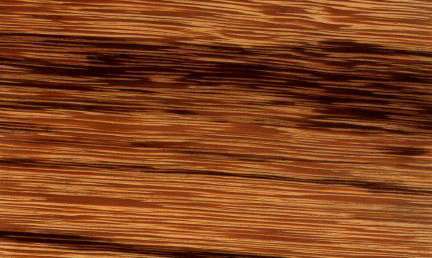
Angelim rajado (Marmaroxylon racemosum)
Family: Leguminosae Common names: Angelim rajado, Angelin rajado, Bois macaque, Bois serpent, Bois zebra, Bostamarinde, Bousi tamarin, Forest tamarind, Gevlambe bostamarinde, Inga cagtitu, Ingarana, Ingarana da terra firme, Marblewood, Puta locus, Rostamarinde, Slang-houdou, Snakewood, Sneki housou, Sneki-oedoe, Uru buzeiro Distributed in: Brazil, French Guiana, Guyana, Suriname (Central America, Latin America) Distribution overview: French Guiana and the lower Amazon. Common uses: Agricultural implements, Cabinetmaking, Decorative veneer, Flooring, Flooring: industrial heavy traffic, Furniture , Furniture, Handles: general, Heavy construction, Interior trim, Joinery, Ladders, Light construction, Marquetry, Mine timbers, Paneling, Piling, Plywood, Railroad ties, Sporting Goods, Toys, Turnery, Vehicle parts, Veneer, Wainscotting, Wheel spokes, Wheels Product sources: The ITTO reports that the species is an occasional source of timber, some of which is sometimes exported. Environment profile: Status has not been officially assessed
Tree size: Tree height is 20-30 m
Colors: the heart isYellow, Yellow to golden-yellow to orangeand the sapwoodWhite to yellow, Yellow.The grain isStriped figure, the textureMedium coarse to coarseand the lusterSlightly lustrous
Natural durability: Susceptible to marine borer attack, Very durable Odor: No specific smell or taste
Kiln Drying Rate: Naturally dries slowly
Drying Defects: Severe surface checking, Splitting Ease of Drying: Slowly Tree Identification: Bole/stem form is straight Comments: General finishing qualities are rated as good Blunting Effect: Medium to fairly severe effect Boring: Fairly easy to very easy Carving: Fairly Easy to Very Easy
Cutting Resistance: Fairly Difficult to Very Difficult to saw Gluing: Use special attention for best results Mortising: Fairly Easy to Very Easy
Moulding: Fairly Easy to Very Easy
Movement in Service: Fairly Easy to Very Easy
Nailing: Possible if prebored, Pre-Boring Recommended Planing: Specially tipped cutters are recommended Resistance to Impregnation: Resistant sapwood Response to hand tools: Responds Readily Routing recessing: Fairly Easy to Very Easy Veneering qualities: Veneers easily, Veneers moderately easy
Screwing: Pre-boring recommended
; Turning: Very Good to Excellent Results
Polishing: Very Good to Excellent; Staining: Some care is required ;
Density (dry weight) = 67-75 lbs/cu. ft. Density (dry weight) = 61-67 lbs/cu. ft. Density (dry weight) = >75 lbs/cu. ft. Max. crushing strength = high Density (dry weight) = 53-60 lbs/cu. ft. Bending strength (MOR) = medium Shearing strength (parallel to grain) = medium Modulus of Elasticity (stiffness) = medium Bending strength (MOR) = high Weight = very high Shrinkage, Tangential = moderate Shrinkage, Tangential = large Shrinkage, Tangential = fairly large Shrinkage, Radial = moderate Shrinkage, Radial = large Shrinkage, Radial = fairly large Density = very high Bending strength (MOR) = very high Bending strength (MOR) = low Berni, C.A., Bolza, E., Christensen, F.J.,1979,South American Timbers - The Characteristics, Properties and Uses of 190,Species,C.S.I.R.O Div. Building ResearchBois et Forets des Tropiques,1984,Boco - Bocoa prouacensis Aubl,Bois et Forets des Tropiques Vol. 205 p.26Bois et Forets des Tropiques,1990,Special Guyane,Bois et Forets des Tropiques Vol. 219Bois et Forets des Tropiques,1991,Acacia franc - Enteroloblium schomburgkii Benth.,Bois et Forets des Tropiques Vol.230 pp.53-56Chichignoud, M., G. Deon, P. Detienne, B. Parant, and P. Vantomme. 1990. Tropical Timber Atlas of Latin America. Prepared for International Tropical Timber Organization (ITTO) by Centre Technique Forestier Tropical (CTFT, Division of CIRAD, 45bis, Avenue de la Belle Gabrielle, Nogent-sur-Marne Cedex, France.Ducke, A.,1943,The Most Important Woods of the Amazon Valley,Tropical Woods,12(74,pp1-15Erfurth, T., Rusche, H.,1976,The Marketing of Tropical Wood B. Wood Species from S. American Tropical,Moist Forests,F.A.O. Forestry DepartmentFanshawe, D.B.,1954,Forest Products of British Guiana Part 1 Principal Timbers,Forest Department British Guiana Forestry Bulletin (New Series 2nd,Edition,No.1Kribbs, D.A. 1959. Commercial Foreign Woods on the American Market. Buckhout Lab., Dept. of Botany, The Pennsylvania State University, University Park, Pennsylvania.Kukachka, B.F.,1970,Properties of Imported Tropical Woods,Forest Research Paper FPL 125Longwood, F.R.,1962,Commercial Timbers of the Caribbean,U.S.A. Department of Agriculture, Agriculture Handbook,No.207Sallenave, P.,1955,Proprietes Phyiques et Mecaniques des Bois Tropicaux de l'Union Francaise,C.T.F.TTakahashi, A.,1975,Compilation of data on the Mechanical Properties of Foreign Woods (Part 2,Central and South America,Shimane University, Japan, Research Report on Foreign Wood No.4Vink, A.T.,1965,Surinam Timbers,Surinam Forest Service Paramaribo,3rd rev. ed. |

*Come interpretare i dati (manleva su eventuali imprecisioni)
Messenger id: XXXXXXXXXX - Skype id: XXXXXXXXX
Copyright © 2026 | P.IVA 01158930998 Perito Camera di Commercio di Genova n.1917 settore Legnami e Pavimenti in legno

