Sei in: home » database dei legni


Fornitori
|
Ditta 5
Indirizzo: via dei platani 4 liguria Tel.: +39 456 5664 54 Sito web: www.pippo.it E-mail: pippo at libero.it |
|
Ditta 4
Indirizzo: via dei platani 4 liguria Tel.: +39 456 5664 54 Sito web: www.pippo.it E-mail: pippo at libero.it |
|
Ditta 3
Indirizzo: via dei platani 4 liguria Tel.: +39 456 5664 54 Sito web: www.pippo.it E-mail: pippo at libero.it |
|
Ditta 2
Indirizzo: via dei platani 4 liguria Tel.: +39 456 5664 54 Sito web: www.pippo.it E-mail: pippo at libero.it |
|
Ditta 1
Indirizzo: via dei platani 4 liguria Tel.: +39 456 5664 54 Sito web: www.pippo.it E-mail: pippo at libero.it |
|
Ditta 0
Indirizzo: via dei platani 4 liguria Tel.: +39 456 5664 54 Sito web: www.pippo.it E-mail: pippo at libero.it |
Contatti
database dei legni


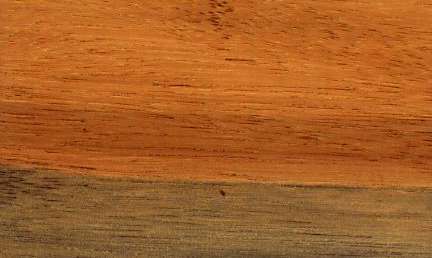
Manoka jaune (Asteropeia rhopaloides)
Family: Theaceae Common names: Manko, Manoka jaune, Manoko, Manoko mavo Distributed in: Central African Republic, Madagascar (Africa) Common uses: Agricultural implements, Boat building (general), Boat building, Building construction, Building materials, Cabin construction, Canoes, Carvings, Chairs, Charcoal, Chests, Concealed parts (Furniture), Construction, Crossties, Desks, Dining-room furniture, Domestic flooring, Dowell pins, Dowells, Drawer sides, Excelsior, Factory construction, Factory flooring, Fine furniture, Floor lamps, Flooring, Fuelwood, Furniture , Furniture components, Furniture squares or stock, Furniture, Hatracks, Heavy construction, Interior construction, Interior trim, Joinery, Kitchen cabinets, Lifeboats, Living-room suites, Millwork, Mine timbers, Moldings, Office furniture, Parquet flooring, Poles, Posts, Radio - stereo - TV cabinets, Railroad ties, Rustic furniture, Sporting Goods, Turnery, Vehicle parts Product sources: The ITTO reports that timber from this species is produced at low but regular rate. Export potential is rated as fair.The timber is available in adequate quantities and is prized in the moderate range. It has a wide range of applications in Brazil, where the timber is used to construct entire buildings. Reports indicate that Peroba rosa leads all other hardwoods from Brazil in availability and procurement quantities.The color of the Peroba timbers are often used to indicate the name. For example, Peroba reta has conspicuous black streaks, Peroba miuda is red with darker patches, Peroba peca is a white wood, Peroba rajada is light red with lighter patches, almost golden, and Peroba revesa has a figure similar to that in bird's eye maple. Environment profile: Status has not been officially assessed
Tree size: Tree height is 20-30 m
Colors: the heart isPale brown, Yellowand the sapwoodPale yellow-brown, and occasionally striped , Yellow.The grain isStraight to interlocked, the textureFine
Natural durability: Resistant to powder post beetles, Susceptible to insect attack Ease of Drying: Moderately Difficult to Difficult Comments: Hard and heavy, and is often used in the round form Blunting Effect: Requires specially tipped cutters
Boring: Fairly difficult to very difficult
Carving: Fairly Difficult to Very Difficult
Cutting Resistance: Fairly easy to saw Gluing: Good gluing properties Mortising: Fairly Difficult to Very Difficult
Moulding: Fairly Difficult to Very Difficult
Movement in Service: Fairly Difficult to Very Difficult
Nailing: Pre-Boring Recommended, Pre-boring recommended Planing: Requires special tipped cutters to facilitate conversion because it is hard and heavy Resistance to Impregnation: Sapwood is moderately resistant Response to hand tools: Fairly Difficult to Difficult to Work
Routing recessing: Fairly Difficult to Very Difficult
Screwing: Pre-boring recommended
; Turning: Fairly Difficult to Very Difficult
Max. crushing strength = very high Bending strength (MOR) = very high Shrinkage, Tangential = moderate Shrinkage, Radial = small Shrinkage, Radial = moderate Hardness (side grain) = very hard Bending strength (MOR) = high Very dense Shrinkage, Tangential = large Shrinkage, Tangential = fairly large Shrinkage, Radial = large Shrinkage, Radial = fairly large Hardness (side grain) = hard Density (dry weight) = 46-52 lbs/cu. ft. Bolza, E., Keating, W.G.,1972,African Timbers - the Properties, Uses and Characteristics of 700 Species,C.S.I.R.O. Div. of Building ResearchGueneau, P., Gueneau, D.,1969,Proprietes Physiques et Mecaniques des Bois Malagaches,CTFT MadagascarKeating, W.G., Bolza, E.,1982,Characteristics properties and uses of timbers. South East Asia, Northern,Australia and the Pacific,C.S.I.R.O. Div. Chemical Technology,Inkata Press,1Sallenave, P.,1955,Proprietes Phyiques et Mecaniques des Bois Tropicaux de l'Union Francaise,C.T.F.TTakahashi, A.,1978,Compilation of Data on the Mechanical Properties of Foreign Woods (Part,III) Africa,Shimane University, Japan, Research Report on Foreign Wood No. 7 |

*Come interpretare i dati (manleva su eventuali imprecisioni)
Messenger id: XXXXXXXXXX - Skype id: XXXXXXXXX
Copyright © 2026 | P.IVA 01158930998 Perito Camera di Commercio di Genova n.1917 settore Legnami e Pavimenti in legno

