Sei in: home » database dei legni


Fornitori
|
Ditta 5
Indirizzo: via dei platani 4 liguria Tel.: +39 456 5664 54 Sito web: www.pippo.it E-mail: pippo at libero.it |
|
Ditta 4
Indirizzo: via dei platani 4 liguria Tel.: +39 456 5664 54 Sito web: www.pippo.it E-mail: pippo at libero.it |
|
Ditta 3
Indirizzo: via dei platani 4 liguria Tel.: +39 456 5664 54 Sito web: www.pippo.it E-mail: pippo at libero.it |
|
Ditta 2
Indirizzo: via dei platani 4 liguria Tel.: +39 456 5664 54 Sito web: www.pippo.it E-mail: pippo at libero.it |
|
Ditta 1
Indirizzo: via dei platani 4 liguria Tel.: +39 456 5664 54 Sito web: www.pippo.it E-mail: pippo at libero.it |
|
Ditta 0
Indirizzo: via dei platani 4 liguria Tel.: +39 456 5664 54 Sito web: www.pippo.it E-mail: pippo at libero.it |
Contatti
database dei legni


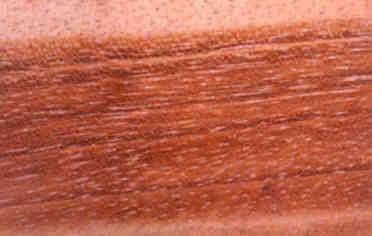
Goncalo alves (Astronium graveolens)
Family: Anacardiaceae Common names: Aderno, Almedro macho, Arathanha, Aroeira do campo, Aroeira preta, Batao, Bauwana, Chibatao, Ciruelillo, Ciruelo, Cubatau, Diomate, Frijolillo, Gateado, Goncalo alves, Guarabozebra, Guarita, Guasango, Gusanero, Gusango, Jenjuira, Jobillo, Locuswood, Masicaran, Muiracatiara, Ormigo, Palo de cera, Palo de cruz, Palo de culebra, Palo obero, Potrico, Quebracha, Quebracho, Ron ron, Ronron, Roron, Tibigaro, Tigerwood, Ubatin, Urunday, Vermezho, Yomato, Zebrawood, Zorro Distributed in: Argentina, Bolivia, Brazil, Colombia, Columbia, Costa Rica, Ecuador, Guyana, Honduras, Mexico, Paraguay, Peru, Trinidad and Tobago, Venezuela (Central America, Latin America, Oceania and S.E. Asia) Distribution overview: Goncalo Alves was once a common tree in the upland forests of many regions from Mexico and Central America through to Colombia, Venezuela, Brazil, and Ecuador. It's distribution is less widespread now. Common uses: Bedroom suites, Billiard-cue butts, Boat building (general), Bridge construction, Brush backs & handles, Brush backs & handles, Building construction, Building materials, Cabin construction, Cabinetmaking, Carvings, Chairs, Chests, Construction, Decorative veneer, Desks, Dining-room furniture, Factory construction, Figured veneer, Fine furniture, Flooring, Flooring: industrial heavy traffic, Fuelwood, Furniture , Furniture, Handles, Handles: general, Heavy construction, Joinery (external): ground contact, Joinery, Ladders, Light construction, Living-room suites, Mine timbers, Paneling, Piling, Plywood, Posts, Railroad ties, Shafts/Handles, Sporting Goods, Tool handles, Turnery, Vehicle parts, Veneer, Veneer: decorative, Wardrobes, Wheel spokes, Wheels, Woodwork Environment profile: Questionable Tree size: Trunk diameter is 100-150 cm
Colors: the heart isYellow, Yellow to golden-yellow to orangeand the sapwoodWhite to yellow, Yellow.The grain isWavy, the textureMediumand the lusterSlightly lustrous
Natural durability: Very durable, Very durable Odor: No specific smell or taste
Kiln Schedules: UK=C US=T3C2/T3C1 Fr=3 Kiln Drying Rate: Naturally dries quickly Drying Defects: Slight twist/warp, Splitting Ease of Drying: Variable results. Tree Identification: Bole/stem form is straight Comments: Durable General finishing qualities are rated as good Hard and heavy Lesser known species from Central and South America One of the most beautiful tropical woods Strength properties similar to those of American dogwood (Cornus florida) Strong Suited primarily for construction and secondarily for fine furniture Tough Used as subsitute for making bobbins Used for knife handles as a subsitute for Cocobolo (Dalbergia) Boring: Twist drills should be avoided because they cause breakouts Carving: Start with medium-cut burrs and progress to fine ones is recommended since coarse burrs tend to chip the wood Cutting Resistance: Rip-Profile blade with a maximum of 28 teeth is recommended for ripping to allow sawdust to clear and to prevent charring from heat buildup Gluing: Use glues with a longer open time, such as woodworker's white glue Moulding: Fairly Difficult to Very Difficult Movement in Service: Fairly Difficult to Very Difficult Nailing: Pre-Boring Recommended, Pre-boring recommended Planing: Straight-Grained wood can be fed into the planer at a 90 degree angle Resistance to Impregnation: Resistant sapwood Response to hand tools: Variable qualities Routing recessing: Fairly Difficult to Very Difficult Sanding: Use a cabinet scraper and sanding with the grain for best results Veneering qualities: Veneers easily, Veneers moderately easy Steam bending: Unsuitable
Screwing: Very Good to Excellent Results, Very good screw holding qualities; Turning: Turns easily with sharp tools
Polishing: Very Good to Excellent;
Density (dry weight) = 61-67 lbs/cu. ft 0 Max. crushing strength = high 0 Modulus of Elasticity (stiffness) = high 1 Hardness (side grain) = hard 0 Bending strength (MOR) = high 0 Density (dry weight) = 67-75 lbs/cu.ft Density (dry weight) = 53-60 lbs/cu. ft Bending strength (MOR) = medium Work to Maximum Load = very low Shrinkage, Radial = small Shearing strength (parallel to grain) = medium Shrinkage, Tangential = moderate Shearing strength (parallel to grain) = high Density (dry weight) = >75 lbs/cu. ft Bending strength (MOR) = very high Shrinkage, Tangential = fairly large Modulus of Elasticity (stiffness) = very high Modulus of Elasticity (stiffness) = medium Max. crushing strength = very high Very heavy Very dense Shrinkage, Tangential = large Shrinkage, Radial = moderate Shrinkage, Radial = large Shrinkage, Radial = fairly large Hard The bending strength qualities of this species in the air-dry condition is very high, far superior to those of Mahogany.It is hard - harder than Hard maple or Teak Berni, C.A., Bolza, E., Christensen, F.J.,1979,South American Timbers - The Characteristics, Properties and Uses of 190,Species,C.S.I.R.O Div. Building ResearchBodig, J. and B. A. Jayne. 1982. Mechanics of Wood and Wood Composites. Van Nostrand Reinhold Company, New York.Boone, R.S., C.J. Kozlik, P.J. Bois, E.M. Wengert. 1988. Dry Kiln Schedules for Commercial Hardwoods -Temperate and Tropical. USDA, Forest Service, General Technical Report FPL-GTR-57, Forest Products Laboratory, Madison, Wisconsin.Brown, W.H.,1978,Timbers of the World, No. 2 South America,TRADA, Red Booklet SeriesChichignoud, M., G. Deon, P. Detienne, B. Parant and P. Vantomme. 1990. Tropical Timber Atlas of Latin America. International Tropical Timber Organization (ITTO, Centre Technique Forestier Tropical, Division of CIRAD, 45 bis, Avenue de la Belle Gabrielle, Nogent-sur-marne, CEDEX, France.Chudnoff, M.,1984,Tropical Timbers of the World,U.S.A. Department of Agriculture, Forest Service, Forest Products,Laboratory, Madison.Dickinson, F.E.,1949,Properties and Uses of Tropical Woods 1,Tropical Woods,13(95,pp1-140Erfurth, T., Rusche, H.,1976,The Marketing of Tropical Wood B. Wood Species from S. American Tropical,Moist Forests,F.A.O. Forestry DepartmentKribbs, D.A. 1959. Commercial Foreign Woods on the American Market. Buckhout Lab., Dept. of Botany, The Pennsylvania State University, University Park, Pennsylvania.Kryn, J.M.,1952,Goncalo Alves - Astronium fraxinifolium Schott, and Astronium graveolens,Jacq., including var. Planchonianum (A.planchonianum Engl.) Family,Anacardiaceae,Foreign Woods Information Leaflet, Forest Products Laboratory, Forest,Service U.S. Department of AgricultureKynoch, W., Norton, N.A.,1938,Mechanical Properties of certain tropical woods chiefly from S. America,School of Forestry and Conservation, University of Michigan Bulletin,No.7Lamb, A.F.A., Wangaard, F.F.,1950,The Gluing Properties of certain Tropical American Woods,Yale Univ. School of Forestry Technical Report,4Lincoln, W.A. 1986. World Woods in Color. Linden Publishing Co. Inc., Fresno, California.Perpetua Hardwoods.Sea Star Trading Co. - Purveyors of Fine Wood.Newport, Oregon.Personal Communication, 1993.Record, S.J., Hess, R.W.,1943,Timbers of the New World,Yale University PressRecord, S.J.,1939,American Woods of the Family Anacardiaceae,Tropical Woods,8(60,pp11-45Simpson, W.T. and J.A. Sagoe. 1991. Relative Drying Times of 650 Tropical Woods : Estimation by Green Moisture Content, Specific Gravity, and Green Weight Density.United States Department of Agriculture (USDA, Forest Service, General Technical Report FPL-GTR-71, Forest Products Laboratory, Madison, Wisconsin.Takahashi, A.,1975,Compilation of data on the Mechanical Properties of Foreign Woods (Part 2,Central and South America,Shimane University, Japan, Research Report on Foreign Wood No.4U.S.D.A. Forest Service,1974,Wood Handbook,U.S.A. Department of Agriculture, Forest Service Handbook,72Wangaard, F.F., and A.F. Muschler. 1952. Tropical Woods - Properties and Uses of Tropical Woods, Volume III, No. 98. School of Forestry, Yale University, New Haven, Connecticut.Wangaard, F.F., Muschler, A.F.,1952,Properties and Uses of Tropical Woods 3,Tropical Woods,14(98, pp1-190WCMC. 1992. Conservation Status Listing - Trees and Timbers of the World. World Conservation Monitoring Center-Plants Programme, Cambridge, CB3 ODL, United Kingdom.Wood Magazine. 1995. Goncalo alves - Prized for its Beauty, Harvested for its Durability.Compiled with Woodworker Tom Etreses and Woodturner Gary Zeff in Wood Magazine, August 1995. Page 37-38. |

*Come interpretare i dati (manleva su eventuali imprecisioni)
Messenger id: XXXXXXXXXX - Skype id: XXXXXXXXX
Copyright © 2026 | P.IVA 01158930998 Perito Camera di Commercio di Genova n.1917 settore Legnami e Pavimenti in legno

