Sei in: home » database dei legni


Fornitori
|
Ditta 5
Indirizzo: via dei platani 4 liguria Tel.: +39 456 5664 54 Sito web: www.pippo.it E-mail: pippo at libero.it |
|
Ditta 4
Indirizzo: via dei platani 4 liguria Tel.: +39 456 5664 54 Sito web: www.pippo.it E-mail: pippo at libero.it |
|
Ditta 3
Indirizzo: via dei platani 4 liguria Tel.: +39 456 5664 54 Sito web: www.pippo.it E-mail: pippo at libero.it |
|
Ditta 2
Indirizzo: via dei platani 4 liguria Tel.: +39 456 5664 54 Sito web: www.pippo.it E-mail: pippo at libero.it |
|
Ditta 1
Indirizzo: via dei platani 4 liguria Tel.: +39 456 5664 54 Sito web: www.pippo.it E-mail: pippo at libero.it |
|
Ditta 0
Indirizzo: via dei platani 4 liguria Tel.: +39 456 5664 54 Sito web: www.pippo.it E-mail: pippo at libero.it |
Contatti
database dei legni


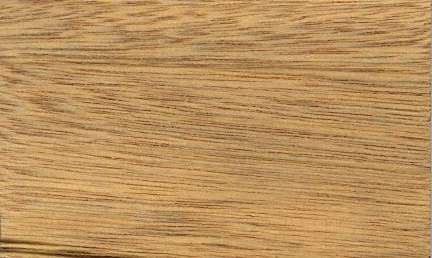
Light celtis (Celtis nymanii)
Family: Ulmaceae Common names: Light celtis Distributed in: Papua New Guinea, Solomon Islands (Oceania and S.E. Asia) Distribution overview: Southeast Asia, primarily in Papua New Gunea and the Solomon Islands. Common uses: Balusters, Barge fenders, Building construction, Building materials, Construction, Docks, Dockwork, Domestic flooring, Excelsior, Exterior trim & siding, Exterior uses, Flooring, Foundation posts, Harbor work, Interior construction, Joinery, Light construction, Marine construction, Moldings, Naval architecture, Parquet flooring, Poles, Posts, Raft floats, Rafts, Shakes, Sheathing, Shingles, Siding, Stairrails, Stairworks, Stakes, Stringers, Sub-flooring, Utility poles, Wharf construction Environment profile:
The environmental status of this species within its geographical boundaries has not been officially determined.
Tree size: Tree height is 30-40 m
Colors: the heart isRed, Yellowish brownand the sapwoodGreen/Grey, Red.The grain isWavy, the textureFine to mediumand the lusterLow
Natural durability: Resistant to powder post beetles, Susceptible to insect attack Odor: No specific smell or taste
Kiln Drying Rate: Rapid Drying Defects: Moderate end spitting, Splitting Ease of Drying: Slowly Comments: The timbers are tough and suitable for many exterior uses after treatment. Properties are dependent upon conditions at growing sites. Tension wood may also be present in the woodVaries significantly Cutting Resistance: Easy to saw
Gluing: Fairly Easy to Very Easy
Mortising: Fairly Easy to Very Easy Moulding: Fairly Easy to Very Easy Movement in Service: Fairly Easy to Very Easy Nailing: Fair to Good , Very Good to Excellent Planing: Planes well, to a good finish Resistance to Abrasion: Highly resistant to wear
Suitable for exterior applications after proper protection against decay.
Resistance to Impregnation: Sapwood is permeable Response to hand tools: Fairly Difficult to Difficult to Work Sanding: Fair sanding qualities
Veneering qualities: Veneers easily, Veneers moderately easy Steam bending: Poor to Very Poor Results
Screwing: Fairly Easy to Very Easy, Very Good to Excellent Results; Turning: Fairly Easy to Very Easy
Polishing: Very Good to Excellent; Staining: Stains very well;
Hardness = medium Compression strength (parallel to grain) = high Bending strength (MOR) = high Density is high Bolza, E. and N. H. Kloot.1966.The Mechanical Properties of 81 New Guinea Timbers.Technological Paper No. 41.Division of Forest Products, Commonwealth Scientific & Industrial Research Organization (CSIRO, Melbourne, Australia.Eddowes, P. J.1977.Commercial Timbers of Papua New Guinea - Their Properties and Uses.Forest Products Research Center, Office of Forests, Department of Primary Industry, Papua New Guinea.Keating, W.G., Bolza, E.,1982,Characteristics properties and uses of timbers. South East Asia, Northern,Australia and the Pacific,C.S.I.R.O. Div. Chemical Technology,Inkata Press,1 |

*Come interpretare i dati (manleva su eventuali imprecisioni)
Messenger id: XXXXXXXXXX - Skype id: XXXXXXXXX
Copyright © 2026 | P.IVA 01158930998 Perito Camera di Commercio di Genova n.1917 settore Legnami e Pavimenti in legno

