Sei in: home » database dei legni


Fornitori
|
Ditta 5
Indirizzo: via dei platani 4 liguria Tel.: +39 456 5664 54 Sito web: www.pippo.it E-mail: pippo at libero.it |
|
Ditta 4
Indirizzo: via dei platani 4 liguria Tel.: +39 456 5664 54 Sito web: www.pippo.it E-mail: pippo at libero.it |
|
Ditta 3
Indirizzo: via dei platani 4 liguria Tel.: +39 456 5664 54 Sito web: www.pippo.it E-mail: pippo at libero.it |
|
Ditta 2
Indirizzo: via dei platani 4 liguria Tel.: +39 456 5664 54 Sito web: www.pippo.it E-mail: pippo at libero.it |
|
Ditta 1
Indirizzo: via dei platani 4 liguria Tel.: +39 456 5664 54 Sito web: www.pippo.it E-mail: pippo at libero.it |
|
Ditta 0
Indirizzo: via dei platani 4 liguria Tel.: +39 456 5664 54 Sito web: www.pippo.it E-mail: pippo at libero.it |
Contatti
database dei legni


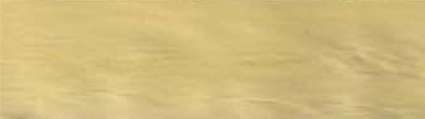
Hackberry (Celtis occidentalis)
Family: Ulmaceae Common names: Bastard elm, Common hackberry, False elm, Hackberry, Hacktree, Hoop ash, Nettle tree, Nettletree, Sugarberry, Western hackberry Distributed in: Canada, United States (North America) Distribution overview: Hackberry is widely distributed in the eastern United States from the southern New England States through central New York west in southern Ontario to North and South Dakota. Northern outliers are found in southern Quebec, western Ontario, southern Manitoba, and southeastern Wyoming. The range extends south from western Nebraska to northeastern Colorado and northwestern Texas, then east to Arkansas, Tennessee, and North Carolina, with scattered occurrences in Mississippi, Alabama, and Georgia. Because sugarberry (Celtis laevigata) and hackberry are so similar, it has been difficult to establish the exact range of either species in the South. Parts of their ranges overlap, with hackberry probably restricted to the upland and sugarberry occupying the bottom land. Common uses: Bedroom suites, Boards, Boxes and crates, Building materials, Cabinetmaking, Casks, Chairs, Chests, Concealed parts (Furniture), Cooperages, Decorative veneer, Desks, Dining-room furniture, Dowell pins, Dowells, Drawer sides, Dressed boards, Figured veneer, Fine furniture, Floor lamps, Furniture , Furniture components, Furniture squares or stock, Furniture, Hatracks, Interior construction, Interior trim, Kitchen cabinets, Living-room suites, Lumber, Millwork, Office furniture, Packing cases, Paneling , Plywood, Radio - stereo - TV cabinets, Rough boards/dimension stock, Rustic furniture, Sporting Goods, Stools, Tables , Truck bodies, Utility furniture, Vehicle parts, Veneer, Veneer: decorative Product sources: Hackberry is available in large quantities in the form of lumber and quartered, sliced, or rotary cut veneers. The wood resembles Ash and Elm, and is often sold with lower grade material from the two species. Hackbery is too weak and relatively scarce in commercial volumes to be used for building construction. Price is usually within the medium to expensive range. Environment profile: Widespread
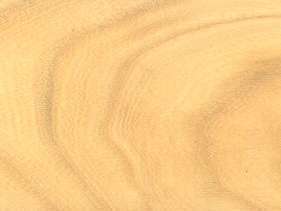
Colors: the heart isYellow to golden-yellow to orange, Yellowish - light graysh brown and the sapwoodSame as heartwood, White to yellow.The grain isStraight, the textureFine to medium
Natural durability: Susceptible to attack by fungi, Very little natural resistance Odor: No specific smell or taste Kiln Schedules: 8 - C4 (4/4) T6 - C3 (8/4) US
Drying Defects:
Slow drying with poor air circulation may result in chemical sapwood stains. The wood has a tendency to buckle after drying
Ease of Drying: Easy Blunting Effect: Blunting effect on machining is moderate
Boring: Easy
Carving: Very good results
Gluing: Satisfactory gluing properties Mortising: Fair mortising qualities
Moulding: Difficult moulding qualities
Movement in Service: Difficult moulding qualities
Nailing: Holds satisfactorily, Pre-boring recommended Planing: Planes to a satisfactory finish Resistance to Impregnation: Sapwood is permeable Steam bending: Moderate
Screwing: Pre-Boring is recommended in screwing , Screwing yields satisfactory results; Turning: Turns with moderate ease
Painting: Good
The wood takes enamels very well.; Polishing: Good; Staining: Stains well
Wood yields an attractive appearance with natural finishes
; Varnishing:
Ackberry responds very well to varnishing.
;
Work to Maximum Load = low Shearing strength (parallel to grain) = low Modulus of Elasticity (stiffness) = very low Hardness (side grain) = soft Bending strength (MOR) = low Toughness-Hammer drop (Impact Strength) = high Shrinkage, Tangential = fairly large Max. crushing strength = low Density (dry weight) = 38-45 lbs/cu. ft. Shrinkage, Radial = moderate Shrinkage, Radial = fairly large Max. crushing strength = medium Max. crushing strength (stiffness) = very low Heavy Hardness = medium Density (dry weight) = 31-37 lbs/cu. ft. Crushing strength = low Compression strength (parallel to grain) = low Bending strength (MOR) = very low Bending strength (MOR) = high Boone, R.S., C.J. Kozlik, P.J. Bois, E.M. Wengert. 1988. Dry Kiln Schedules for Commercial Hardwoods - Temperate and Tropical. USDA, Forest Service, General Technical Report FPL-GTR-57, Forest Products Laboratory, Madison, Wisconsin.Brown, H.P. and Panshin, A.J.,1940,Commercial Timbers of the United States Their structure, identification,,properties and uses,McGraw-Hill, LondonBrown, W.H.,1978,Timbers of the World: - No.7 North America,TRADAGlendon Smalley,1934,American Woods - Hackberry,USDA Forest Service American woods FS-238Harrar, E.S.,1942,Some Physical Properties of Modern Cabinet Woods 3. Directional and Volume,Shrinkage,Tropical Woods,9(71, pp26-32Howard, A.L.,1948,A Manual of Timbers of the World.,Macmillan & Co. Ltd. London 3rd ed.Kaiser, J.1988 Wood of the Month:Hackberry - The 'Elm' with a Funny Name.In Wood and Wood Products, January, 1988.Page 56.Kline, M. 1983. Celtis occidentalis - Hackberry. In A Guide to Useful Woods of the World. Flynn Jr., J.H., Editor. King Philip Publishing Co., Portland, Maine. 1994. Page 103.Little, E.L.1980.The Audubon Society Field Guide to North American Trees - Eastern Region.Published by Arthur A. Knopf, New York.Markwardt, L.J., Wilson, T.R.C.,1935,Strength and related properties of woods grown in the United States,U.S.A. Department of Agriculture Technical Bulletin,No.479Panshin, A.J. and C. deZeeuw. Textbook of Wood Technology. McGraw-Hill Series in Forest Resources. McGraw-Hill Book Company, New York.U.S.D.A. Forest Service,1974,Wood Handbook,U.S.A. Department of Agriculture, Forest Service Handbook,72USDA. 1987. Wood Handbook: Wood as an Engineering Material. Agriculture Handbook No. 72. United States Department of Agriculture, Forest Service, Madison, Wisconsin.USDA. 1988. Dry Kiln Operators Manual, Preliminary Copy. Forest Service, Forest Products Laboratory, Madison, Wisconsin. |

*Come interpretare i dati (manleva su eventuali imprecisioni)
Messenger id: XXXXXXXXXX - Skype id: XXXXXXXXX
Copyright © 2026 | P.IVA 01158930998 Perito Camera di Commercio di Genova n.1917 settore Legnami e Pavimenti in legno

