Sei in: home » database dei legni


Fornitori
|
Ditta 5
Indirizzo: via dei platani 4 liguria Tel.: +39 456 5664 54 Sito web: www.pippo.it E-mail: pippo at libero.it |
|
Ditta 4
Indirizzo: via dei platani 4 liguria Tel.: +39 456 5664 54 Sito web: www.pippo.it E-mail: pippo at libero.it |
|
Ditta 3
Indirizzo: via dei platani 4 liguria Tel.: +39 456 5664 54 Sito web: www.pippo.it E-mail: pippo at libero.it |
|
Ditta 2
Indirizzo: via dei platani 4 liguria Tel.: +39 456 5664 54 Sito web: www.pippo.it E-mail: pippo at libero.it |
|
Ditta 1
Indirizzo: via dei platani 4 liguria Tel.: +39 456 5664 54 Sito web: www.pippo.it E-mail: pippo at libero.it |
|
Ditta 0
Indirizzo: via dei platani 4 liguria Tel.: +39 456 5664 54 Sito web: www.pippo.it E-mail: pippo at libero.it |
Contatti
database dei legni


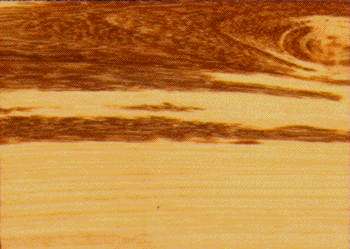
Ai salo (Celtis philippensis)
Family: Ulmaceae Common names: Ai salo, Bautakate, Bulagson, Dila-dilaan, Dofala, Gotgot, Gumaliel, Ha-adi, Hanuma, Hard celtis, Iangao, Kajoe sirih, Kaju lulu, Kapahalombiti, Lae lae, Laelae, Lausi, Lodono, Lomlomata, Magabuyo, Malagabuyo, Malaikmo, Malingagok, Mangdong, Mangong, Mangongkong, Maragaoed, Maragok, Mougong, Orarog, Oratan, Pingul, Propore, Sessel, Solomon Islands celtis, Takupi, Tavasu, Udalo, Ulalo, Urarag, Uratan, Waiam-a-hasi Distributed in: Australia, Indonesia, Nigeria, Papua New Guinea, Philippines, Solomon Islands (Africa, Oceania and S.E. Asia) Common uses: Boat building (general), Boat building: decking, Bridge construction, Cabinetmaking, Decks, Flooring, Flooring: commercial heavy traffic, Flooring: industrial heavy traffic, Furniture, Heavy construction, Joinery (external): ground contact, Joinery, Light construction, Marine construction, Moldings, Piling, Plywood corestock, Plywood, Poles, Pulp/Paper products, Railroad ties, Structural work, Toys, Turnery, Vehicle parts, Veneer, Veneer: decorative, Wharf construction Environment profile: Abundant/Secure
Colors: the heart isYellow, Yellow to golden-yellow to orangeand the sapwoodSame as heartwood
.The grain isStraight, the textureMedium to coarseand the lusterLustrous
Natural durability: Susceptible to attack from termites (Isoptera), The sapwood is susceptible to wood staining fungal attack LightInduced Color Change: Darker
Kiln Schedules: Kiln Drying Rate (in days) is rapid Kiln Drying Rate: Rapid (<10 days for boards < 32 mm, to <30 days for boards >= 63 mm)
Drying Defects: No surface checking
Tree Identification: Bole/stem form is fluted Comments: General finishing qualities are rated as poor Blunting Effect: Blunting effect on sawing dry wood is moderate
Gluing: Easy to glue Nailing: Difficult to nail, Pre-boring recommended Planing: Planes well, to a good finish
Resistance to Impregnation: Sapwood is permeable Resistance to Splitting: Poor
Response to hand tools: Variable qualities Veneering qualities: Suitable for slicing, There is slight to moderate drying degrade and the potential for buckles and splits
Polishing: Satisfactory; Staining: Staining (Characteristic) = coloured water-soluble extract;
Shrinkage, Radial = very small Shrinkage, Tangential = small Density (dry weight) = 46-52 lbs/cu. ft. Density (dry weight) = 38-45 lbs/cu. ft. Bending strength (MOR) = medium Modulus of Elasticity (stiffness) = high Shrinkage, Tangential = very small Shearing strength (parallel to grain) = medium Max. crushing strength = medium Max. crushing strength = high Hardness (side grain) = medium Modulus of Elasticity (stiffness) = mediun Bolza, E.,1975,Properties and Uses of 175 Timber Species from Papua New Guinea and West,Irian,C.S.I.R.O. Div. Building Research Report,no.34Bolza, E.,1981,The Mechanical properties of 33 Solomon Islands timbers,C.S.I.R.O. Div. Building Research. Technical Paper (2nd series) No.37Brown, W.H.,1978,Timbers of the World, No. 8 Australasia,TRADA, Red Booklet SeriesEddowes, P.J.,1977,Commercial Timbers of Papua New Guinea: Their Properties and Uses,Hebano Press, Port Moresby, Papua New GuineaForeman, D.B.,1971,A checklist of the vascular plants of Bouganville with descriptions of,some common forest trees,New Guinea Forestry Department, Division of Botany, Lae, Botany Bulletin,No.5I.U.F.R.O.,1973,Veneer Species of the World,Assembled at F.P.L. Madison on behalf of I.U.F.R.O. Working Party on,Slicing and Veneer CuttingKeating, W.G., Bolza, E.,1982,Characteristics properties and uses of timbers. South East Asia, Northern,Australia and the Pacific,C.S.I.R.O. Div. Chemical Technology,Inkata Press,1Kraemer, J.H.,1951,Trees of the Western Pacific Region,West Lafayette, Indiana U.S.A.Osborne, L.D.,1970,Decay resistance of South-West Pacific rain forest timbers,C.S.I.R.O.,Div. for Prod., Tech. paper No.56Pleydell, G.J.,1970,Timbers of the British Solomon Islands,United Africa Company (Timber) Ltd, LondonReyes, L.J.,1938,Philippine Woods,Commonwealth of the Philippines Department of Agriculture and Commerce,Technical Bulletin,No.7Solomon Islands, Ministry of Natural Resources, Forestry Division,1979,Solomon Islands Timbers - Minor Species,Solomon Islands, Ministry of Natural Resources, Forestry Division, Honiara,Timber Booklet 2Uganda Forest Department,1954,The Mechanical Properties of some Ugandan Timbers,Uganda Forest Department Timber Leaflet,No.1Whitmore, T.C.,1966,Guide to the Forests of the British Solomon Islands,Oxford University PressWyatt-Smith, J.,1979,Pocket Checklist of Timber Trees,Malayan Forest Records No.17 |

*Come interpretare i dati (manleva su eventuali imprecisioni)
Messenger id: XXXXXXXXXX - Skype id: XXXXXXXXX
Copyright © 2026 | P.IVA 01158930998 Perito Camera di Commercio di Genova n.1917 settore Legnami e Pavimenti in legno

