Sei in: home » database dei legni


Fornitori
|
Ditta 5
Indirizzo: via dei platani 4 liguria Tel.: +39 456 5664 54 Sito web: www.pippo.it E-mail: pippo at libero.it |
|
Ditta 4
Indirizzo: via dei platani 4 liguria Tel.: +39 456 5664 54 Sito web: www.pippo.it E-mail: pippo at libero.it |
|
Ditta 3
Indirizzo: via dei platani 4 liguria Tel.: +39 456 5664 54 Sito web: www.pippo.it E-mail: pippo at libero.it |
|
Ditta 2
Indirizzo: via dei platani 4 liguria Tel.: +39 456 5664 54 Sito web: www.pippo.it E-mail: pippo at libero.it |
|
Ditta 1
Indirizzo: via dei platani 4 liguria Tel.: +39 456 5664 54 Sito web: www.pippo.it E-mail: pippo at libero.it |
|
Ditta 0
Indirizzo: via dei platani 4 liguria Tel.: +39 456 5664 54 Sito web: www.pippo.it E-mail: pippo at libero.it |
Contatti
database dei legni


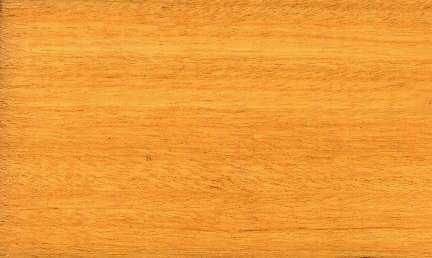
African celtis (Celtis soyauxii)
Family: Ulmaceae Common names: African celtis, Asan, Ba, Bolunde, Celtis, Esa, Esa fufu, Esa kokoo, Esa pa, Hackberry, Ita, Kayombo, Luniumba, Luniumbu, Mrinde, Mrunde, Mukokukoma, Namanuka, Odou, Ohia, Shiunza Distributed in: Cameroon, Ghana, Ivory Coast, Kenya, Nigeria, Tanzania, Uganda, Zaire (Africa) Distribution overview: Tropical Africa, from Guinea to Sudan and south to Angola and Tanzania. Common uses: Beams, Bent Parts, Building materials, Cabinetmaking, Chairs, Chests, Concealed parts (Furniture), Decorative plywood, Desks, Dining-room furniture, Domestic flooring, Dowell pins, Dowells, Drawer sides, Excelsior, Factory construction, Fine furniture, Floor lamps, Flooring, Framing, Furniture , Furniture components, Furniture squares or stock, Handles, Hatracks, Interior construction, Interior trim, Joinery, Joists, Kitchen cabinets, Living-room suites, Moldings, Office furniture, Parquet flooring, Plywood, Porch columns, Radio - stereo - TV cabinets, Rough construction, Stairworks, Structural work, Tool handles Product sources: Primary exporting countries are Ghana and Ivory Coast. Although current production is limited because of low demand, it can be increased substantially since the species is abundant and is widely distributed. Environment profile: Rare within its natural habitat Tree size: Tree height is 0-10 m
and the sapwoodClearly differentiated from the heartwood
.The grain isStraight, the textureMediumand the lusterLustrous
Natural durability: Susceptible to attack by fungi, Very little natural resistance Odor: No specific smell or taste
Kiln Schedules: 10 - D4S (4/4) US
Ease of Drying: Easy
Blunting Effect: Blunting effect on machining is moderate
Boring: Easy
Carving: Good carving qualities
Cutting Resistance: Easy to saw
Gluing: Glues well
Mortising: Easy to mortise
Moulding: Good moulding properties
Movement in Service: Good moulding properties
Nailing: Difficult to nail, Pre-boring recommended Planing: A reduced cutting angle of 20 degrees has been recommended for best planing Resistance to Impregnation: Sapwood is moderately resistant Response to hand tools: Difficult to machine
Routing recessing: Good in both routing and recessing.
Sanding: Easy to sand
Veneering qualities:
Celtis timbers are reported to respond readily to slicing and peeling after steaming logs to about 200 degrees F (85 degrees C). There is little risk of checking and splitting when drying veneer. Shrinkage in the tangential direction is rated as moderate, and veneers can be glued satisfactorily with Urea formaldehyde or Phenol formaldehyde type adhesives.
Steam bending: Good
Turning: Easy to turn
Compression strength (parallel to grain) = high Bending strength (MOR) = very high The wood has high density. Bolza, E., Keating, W.G.,1972,African Timbers - the Properties, Uses and Characteristics of 700 Species,C.S.I.R.O. Div. of Building ResearchITTO.1986.Tropical Timber Atlas, Volume 1 - Africa.International Tropical Timber Organization (ITTO) and Centre Technique Forestier Tropical (CTFT, 45bis, Avenue de la Belle Gabrielle, Nogent-sur-Marne Cedex, France.ITTO. New Marketable Species in Africa - Celtis. Technical Notes. Prepared by Centre Technique Forestier Tropical (CTFT, Division of CIRAD, 45 bis, Avenue de la Belle Gabrielle, 94736 Nogent-sur-marne Cedex, France.Keay, R.W.J.1989. Trees of Nigeria.Revised Version of Nigerian Trees. Clarendon Press, Oxford.Maeglin, R., C. K. Baah, G. Troemmer, J. D. Danielson, and S. P. Loehnertz.1989.Pre-project Report:Sawing of Difficult Species. Prepared for International Tropical Timber Organization (ITTO) by United States Department of Agriculture (USDA, Forest Service, Forest Products Laboratory, Madison, Wisconsin. |

*Come interpretare i dati (manleva su eventuali imprecisioni)
Messenger id: XXXXXXXXXX - Skype id: XXXXXXXXX
Copyright © 2026 | P.IVA 01158930998 Perito Camera di Commercio di Genova n.1917 settore Legnami e Pavimenti in legno

