Sei in: home » database dei legni


Fornitori
|
Ditta 5
Indirizzo: via dei platani 4 liguria Tel.: +39 456 5664 54 Sito web: www.pippo.it E-mail: pippo at libero.it |
|
Ditta 4
Indirizzo: via dei platani 4 liguria Tel.: +39 456 5664 54 Sito web: www.pippo.it E-mail: pippo at libero.it |
|
Ditta 3
Indirizzo: via dei platani 4 liguria Tel.: +39 456 5664 54 Sito web: www.pippo.it E-mail: pippo at libero.it |
|
Ditta 2
Indirizzo: via dei platani 4 liguria Tel.: +39 456 5664 54 Sito web: www.pippo.it E-mail: pippo at libero.it |
|
Ditta 1
Indirizzo: via dei platani 4 liguria Tel.: +39 456 5664 54 Sito web: www.pippo.it E-mail: pippo at libero.it |
|
Ditta 0
Indirizzo: via dei platani 4 liguria Tel.: +39 456 5664 54 Sito web: www.pippo.it E-mail: pippo at libero.it |
Contatti
database dei legni


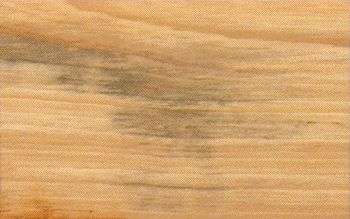
African celtis (Celtis zenkeri)
Family: Ulmaceae Common names: African celtis, Asan, Atako, Ba, Bolonde, Bunyoro, Celtis, Esa, Esa-kokoo, Gombi, Ita, Ita-gidi, Itako, Kayombo, Killiakamba, Kisisa, Luniumbu, Mengo, Mukokukoma, Mukomukoma, Namanuka, Odou, Odu, Odu elias, Ohia, Shiunza, Toro, Yisa, Yisa-kokoo, Yisapie Distributed in: Angola, Congo, Ghana, Guinea, Sudan, Tanzania, Uganda (Africa) Common uses: Agricultural implements, Flooring, Fuelwood, Furniture, Heavy construction, Joinery, Light construction, Millwork, Plywood, Posts, Sporting Goods, Textile equipment, Tool handles, Turnery, Vehicle parts Environment profile: Rare Tree size: Trunk diameter is 200-250 cm
Colors: the heart isYellow, Yellow to golden-yellow to orangeand the sapwoodWhite, Yellow.The grain isStraight, the textureMediumand the lusterPronounced
Natural durability: The sapwood is susceptible to wood staining fungal attack, Very durable Odor: Has an odor Kiln Schedules: Kiln Drying Rate (in days) is fairly rapid Kiln Drying Rate: Naturally dries at a moderate speed Drying Defects: Slight cupping, Slight end splitting Ease of Drying: Slowly Tree Identification: Bole/stem form is straight Blunting Effect: Little Boring: Very good to excellent results Carving: Fairly Easy to Very Easy Cutting Resistance: Cutting Resistance with dry wood is easy Gluing: Very Good to Excellent Results Mortising: Very Good to Excellent Moulding: Very Good to Excellent Movement in Service: Very Good to Excellent Nailing: Pre-boring recommended, Very Good to Excellent Planing: Fairly Easy to Very Easy Resistance to Impregnation: Sapwood is permeable Resistance to Splitting: Excellent
Response to hand tools: Moderate difficulty Routing recessing: Fairly Easy to Very Easy Veneering qualities: Veneers easily, Veneers moderately easy Steam bending: Unsuitable
Screwing: Fairly Easy to Very Easy, Very Good to Excellent Results; Turning: Very Good to Excellent Results
Painting: Very Good to Excellent; Polishing: Very Good to Excellent; Staining: Very Good to Excellent;
Shrinkage, Volumetric = large Shrinkage, Tangential = large Shrinkage, Tangential = fairly large Shrinkage, Radial = fairly large Bending strength (MOR) = high Shrinkage, Radial = very small Shrinkage, Radial = moderate Shrinkage, Radial = large Density (dry weight) = 46-52 lbs/cu. ft. Crushing strength = high Shrinkage, Tangential = very small Shrinkage, Tangential = small Shrinkage, Tangential = moderate Modulus of Elasticity (stiffness) = mediun Modulus of Elasticity (stiffness) = high Hardness (side grain) = medium Density (dry weight) = 38-45 lbs/cu. ft. Crushing strength = medium Bolza, E., Keating, W.G.,1972,African Timbers - the Properties, Uses and Characteristics of 700 Species,C.S.I.R.O. Div. of Building ResearchChudnoff, M.,1984,Tropical Timbers of the World,U.S.A. Department of Agriculture, Forest Service, Forest Products,Laboratory, Madison.Eggeling, W.J.,1940,Indigenous Trees of Uganda,Govt. Printer Entebbe UgandaFarmer, R.H.,1972,Handbook of Hardwoods,HMSOForests Products Research Laboratory, U.K.,1956,A Handbook of Hardwoods,Forest Products Research Laboratory, Princes Risborough, Department of,Science and Industrial Research, Building Research EstablishmentFouarge, J.,1970,Essais Physiques,Mecaniques et de Durabilite de Bois de la Republique,Democratique du Congo,I.N.E.A.C. Belgium Serie Technique,No.76France - C.T.F.T./C.T.B.,1982,Guide pour le Choix des Essences Deroulables-pour la fabrication du,contreplaque,C.T.F.T./C.T.B. FranceFrance - C.T.F.T.,Promotion of Ivory Coast Timbers. New Series (Leaflets,C.T.F.T.Hughes, J.F.,1971,The Principal Timber Trees of Cameroon,Unpublished dataIrvine, F.R.,1961,Woody Plants of Ghana,O.U.P. LondonKeay, R.W.J.,1964,Nigerian Trees Vol.2,Nigeria Federal Department of Forest Research, IbadanKennedy, J.D.,1936,Forest Flora of Southern Nigeria,Government Printer LagosSavill, P.S., Fox, J.E.D.,1967,Trees of Sierra LeoneSpalt, H.A., Stern, W.L.,1956,Survey of Africa Woods 2,Tropical Woods 16(106) pp65-97Spalt, H.A., Stern, W.L.,1956,Survey of African woods 1,Tropical Woods,115(105,pp 13-38Takahashi, A.,1978,Compilation of Data on the Mechanical Properties of Foreign Woods (Part,III) Africa,Shimane University, Japan, Research Report on Foreign Wood No. 7Taylor, C.J.,1960,Synecology and Silviculture in Ghana,University College of Ghana Thomas Nelson and SonsUganda Forest Department,1954,Mukomukoma (Celtis zenkeri,Uganda Forest Department Timber Leaflet,No.31Uganda Forest Department,1969,The Shrinkage of Some Ugandan Timbers,Uganda Forestry Department Timber Leaflet,No.47 |

*Come interpretare i dati (manleva su eventuali imprecisioni)
Messenger id: XXXXXXXXXX - Skype id: XXXXXXXXX
Copyright © 2026 | P.IVA 01158930998 Perito Camera di Commercio di Genova n.1917 settore Legnami e Pavimenti in legno

