Sei in: home » database dei legni


Fornitori
|
Ditta 5
Indirizzo: via dei platani 4 liguria Tel.: +39 456 5664 54 Sito web: www.pippo.it E-mail: pippo at libero.it |
|
Ditta 4
Indirizzo: via dei platani 4 liguria Tel.: +39 456 5664 54 Sito web: www.pippo.it E-mail: pippo at libero.it |
|
Ditta 3
Indirizzo: via dei platani 4 liguria Tel.: +39 456 5664 54 Sito web: www.pippo.it E-mail: pippo at libero.it |
|
Ditta 2
Indirizzo: via dei platani 4 liguria Tel.: +39 456 5664 54 Sito web: www.pippo.it E-mail: pippo at libero.it |
|
Ditta 1
Indirizzo: via dei platani 4 liguria Tel.: +39 456 5664 54 Sito web: www.pippo.it E-mail: pippo at libero.it |
|
Ditta 0
Indirizzo: via dei platani 4 liguria Tel.: +39 456 5664 54 Sito web: www.pippo.it E-mail: pippo at libero.it |
Contatti
database dei legni


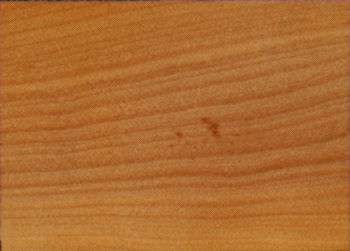
Ceratopetalum (Ceratopetalum apetalum)
Family: Cunoniaceae Common names: Ceratopetalum, Coachwood, Leather jacket, Rose mahogany, Satinwood, Scented satinwood Distributed in: Australia (Oceania and S.E. Asia) Common uses: Agricultural implements, Boat building (general), Broom handles, Cabinetmaking, Chairs, Flooring, Flooring: industrial heavy traffic, Furniture, Handles: general, Joinery, Millwork, Moldings, Paneling, Plywood corestock, Plywood, Plywood: veneer (marine), Sporting Goods, Textile equipment, Turnery, Vehicle parts, Veneer, Veneer: decorative Environment profile: Vulnerable Tree size: Trunk diameter is 300-350 cm
Colors: the heart isReddish brown, Yellowand the sapwoodWhite, Yellow.The grain isStraight, the textureUniformand the lusterSlightly lustrous
Natural durability: Susceptible to insect attack, Very durable Kiln Schedules: Kiln Drying Rate (in days) is rapid Kiln Drying Rate: Rapid (<10 days for boards < 32 mm, to <30 days for boards >= 63 mm) Drying Defects: Slight twist/warp, Splitting Ease of Drying: Slowly Tree Identification: Bole/stem form is straight
Comments: General finishing qualities are rated as satisfactory Blunting Effect: Moderate Boring: Fairly easy to very easy Carving: Fairly Easy to Very Easy Cutting Resistance: Fairly Difficult to Very Difficult to saw Gluing: Fairly Easy to Very Easy Mortising: Very Good to Excellent Moulding: Moulding ease is moderate Movement in Service: Moulding ease is moderate Nailing: Holds nails well, Very Good to Excellent Planing: Fairly Easy to Very Easy Resistance to Impregnation: Resistant sapwood Resistance to Splitting: Poor
Response to hand tools: Responds Readily Routing recessing: Fairly Easy to Very Easy Sanding: Very Good to Excellent Results Veneering qualities: Veneers easily, Veneers moderately easy Steam bending: Poor
Screwing: Screwing yields good results, Very Good to Excellent Results; Turning: Fairly Easy to Very Easy
Painting: Surface Preparation; Polishing: Very Good to Excellent; Staining: Very Good to Excellent; Varnishing: Surface Preparation;
Density (dry weight) = 38-45 lbs/cu. ft. 1 Modulus of Elasticity (stiffness) = mediun Crushing strength = medium Bending strength (MOR) = medium Hardness (side grain) = soft Shearing strength (parallel to grain) = medium Toughness (total work) = medium Toughness (total work) = low Shrinkage, Tangential = large Shrinkage, Radial = fairly large Shearing strength (parallel to grain) = low Modulus of Elasticity (stiffness) = low Max. crushing strength (stiffness) = very low Density (dry weight) = 46-52 lbs/cu. ft. Density (dry weight) = 31-37 lbs/cu. ft. Crushing strength = high Bending strength (MOR) = low Australia - N.S.W. Forestry Commission,1968,Working Properties of some Native and Imported Timbers,Forestry Commission of New South Wales, Technical Publication No.8Australia - N.S.W. Forestry Commission,1988,Furniture Timbers of New South Wales,Forest Commission, N.S.W., Aust. Tech. Publication No.1Boas, I.H.,1947,The Commercial Timbers of Australia - Their Properties and Uses,Council for Scientific and Industrial Research, MelbourneBolza, E., Kloot, N.H.,1963,The Mechanical Properties of 174 Australian Timbers,C.S.I.R.O. Division of Forest Products Technological Paper,No.25Brown, W.H.,1978,Timbers of the World, No. 8 Australasia,TRADA, Red Booklet SeriesClifford, N.,1953,Commercial Hardwoods - Their Characteristics Identification and,Utilization,Sir Isaac Pitman & Sons Ltd. LondonCox, H.A.,1939,A Handbook of Empire Timbers,Forest Products Research Laboratory, Princes RisboroughForestry Commission of New South Wales,1987,Timbers used in New South Wales for Domestic Buildings,Forestry Commission of New South Wales, Technical Publication No.6Gay, F.J., Et al,1955,Standard laboratory colonies of termites for evaluating the resistance of,timber, timber preservatives and other materials to termite attack.,C.S.I.R.O., Australia Bulletin,No.277I.U.F.R.O.,1973,Veneer Species of the World,Assembled at F.P.L. Madison on behalf of I.U.F.R.O. Working Party on,Slicing and Veneer CuttingLavers, G.M.,1983,The Strength Properties of Timber (3rd ed. revised Moore G.L.,Forest Products Research Laboratory, Princes Risborough, Building Research,Establishment Report (formerly Bulletin No.50)Mawby, M.,Development of dynamic hardness measurement methods for wood,N.S.W. Forestry Commission, Div. Wood Technology Project TM14, Sub project,14-1, progress report No.2.Patterson, D.,1988,Commercial Timbers of the World, 5th Edition,Gower Technical PressRendle, B.J.,1969,World Timbers (3 Vols.,Ernest Benn Ltd. LondonThe Australian Timber Journal & Building Products, Merchandiser,1969,Timber Durability and Preservation,Supplement to Australian Timber Journal 35(4) Tech. Timb. Guide No.8 |

*Come interpretare i dati (manleva su eventuali imprecisioni)
Messenger id: XXXXXXXXXX - Skype id: XXXXXXXXX
Copyright © 2026 | P.IVA 01158930998 Perito Camera di Commercio di Genova n.1917 settore Legnami e Pavimenti in legno

