Sei in: home » database dei legni


Fornitori
|
Ditta 5
Indirizzo: via dei platani 4 liguria Tel.: +39 456 5664 54 Sito web: www.pippo.it E-mail: pippo at libero.it |
|
Ditta 4
Indirizzo: via dei platani 4 liguria Tel.: +39 456 5664 54 Sito web: www.pippo.it E-mail: pippo at libero.it |
|
Ditta 3
Indirizzo: via dei platani 4 liguria Tel.: +39 456 5664 54 Sito web: www.pippo.it E-mail: pippo at libero.it |
|
Ditta 2
Indirizzo: via dei platani 4 liguria Tel.: +39 456 5664 54 Sito web: www.pippo.it E-mail: pippo at libero.it |
|
Ditta 1
Indirizzo: via dei platani 4 liguria Tel.: +39 456 5664 54 Sito web: www.pippo.it E-mail: pippo at libero.it |
|
Ditta 0
Indirizzo: via dei platani 4 liguria Tel.: +39 456 5664 54 Sito web: www.pippo.it E-mail: pippo at libero.it |
Contatti
database dei legni


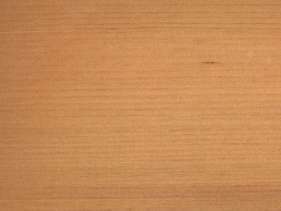
Port Orford cedar (Chamaecyparis lawsoniana)
Family: Cupressaceae Common names: Cypress, Ginuer pine, Lawson cypress, Lawson false cypress, Lawson's cypress, Oregon cedar, Port Orford cedar, Port Orford white cedar, White cedar Distributed in: New Zealand, United States (North America, Oceania and S.E. Asia, Western Europe) Distribution overview: Port-Orford-cedar has a very limited distribution, occurring near the Pacific Ocean in southwestern Oregon and northwestern California.The northern limit of its distribution is near Coos Bay, Oregon.The species' range extends southward about 220 miles (350 km) to the central portion of the Mad River drainage in Humbolt County, California. Isolated populations occur near Mount Shasta and the Trinity Mountains in northern California.It occurs in greatest abundance within about 40 miles of the coast.Farther inland, its distribution is spotty, and it is mostly limited to sites with abundant soil moisture and/or atmospheric moisture.Port-Orford-cedar is cultivated in Hawaii, New Zealand and Europe. Common uses: Beams, Boat building (general), Boat building, Boat building: decking, Boat building: planking, Boxes and crates, Broom handles, Building construction, Cabin construction, Cabinetmaking, Canoes, Chests, Concrete formwork, Construction, Decks, Factory construction, Flooring, Form work, Foundation posts, Framing, Furniture , Furniture, Heavy construction, Joinery (external): ground contact, Joinery, Joists, Lifeboats, Light construction, Matches, Millwork, Mine timbers, Musical instruments: piano, Oars, Piling, Plaques, Plywood: veneer (marine), Porch columns, Posts, Railroad ties, Rough construction, Shingles, Shipbuilding, Sporting Goods, Toys, Vats Product sources: The timber is over-harvested and the use of heavy-duty extracting equipment tends to spread a virus which kills the trees.Supplies of Port Orford cedar are very limited, with stumpage prices of $3,000.00 per thousand board feet (1993 figures). It is sold mainly on the Japanese market. Some material culled from prime grade saw logs are available in limited quantities in areas where the tree grows. Environment profile: Widespread Tree size: Tree height is 30-40 m
Colors: the heart isYellow to golden-yellow to orange, Yellowish tanand the sapwoodWhite to yellow, Yellow.The grain isWeak figure, the textureMedium to coarseand the lusterLustrous
Natural durability: Susceptible to insect attack, Very durable Odor:
The freshly cut wood has a pungent, ginger-like odor and a spicy, bitter taste
LightInduced Color Change: Darker
Kiln Schedules: Dry at a moderate speed
Drying Defects: Distortion, Slight twist/warp Ease of Drying: Moderately Difficult to Difficult Tree Identification: Bole/stem form is buttressed
Comments: General finishing qualities are rated as good Blunting Effect: Little Boring: Fairly easy to very easy Carving: Fair to Good Results
Cutting Resistance: Easy to saw
Gluing: Very Good to Excellent Results Mortising: Very Good to Excellent Moulding: Moulding ease is moderate Movement in Service: Moulding ease is moderate Nailing: Holds nails well, Very Good to Excellent Planing: Very Good to Excellent Resistance to Impregnation: Sapwood is permeable Response to hand tools: Responds Readily Routing recessing: Very Good to Excellent Results Sanding: Fairly Easy to Very Easy
Veneering qualities: Veneers easily, Veneers moderately easy Steam bending: Very poor
Screwing: Screwing yields good results, Very Good to Excellent Results; Turning: Very good
Painting: Very Good to Excellent; Polishing: Satisfactory; Staining: Stains very well; Varnishing: Very Good to Excellent;
Density (dry weight) = 31-37 lbs/cu. ft. 0 Bending strength (MOR) = low 0 Max. crushing strength = medium Hardness (side grain) = very soft Shearing strength (parallel to grain) = very low Density (dry weight) = 23-30 lbs/cu. ft. Modulus of Elasticity (stiffness) = low Max. crushing strength = low Bending strength (MOR) = medium Modulus of Elasticity (stiffness) = very low Max. crushing strength (stiffness) = very low Toughness-Hammer drop (Impact Strength) = very low Toughness-Hammer drop (Impact Strength) = low Shearing strength (parallel to grain) = low Hardness (side grain) = soft Weight = medium Toughness (total work) = medium Toughness (total work) = low Soft Shrinkage, Tangential = moderate Shrinkage, Radial = moderate Modulus of Elasticity (stiffness) = mediun Crushing strength = medium Can be dented and marred easily Bending strength (MOR) = very low Bending strength (MOR) = high Banks, C.H.,1970,The Durability of South African Wood and Wood Base Building Materials,South African Forestry Journal,No.75Bendsten, B.A.,1972,Important Structural Properties of Four Western Softwoods: White Pine,,Sugar Pine, Western Redcedar, Port-Orford Cedar,USDA Forest Service Research Paper FPL191Bolza, E.,1976,Timber and Health,Div. Building Res. C.S.I.R.O. AustraliaBoone, R.S., C.J. Kozlik, P.J. Bois, E.M. Wengert. 1988. Dry Kiln Schedules for Commercial Hardwoods - Temperate and Tropical. USDA, Forest Service, General Technical Report FPL-GTR-57, Forest Products Laboratory, Madison, Wisconsin.Brown, H.P. and Panshin, A.J.,1940,Commercial Timbers of the United States Their structure, identification,,properties and uses,McGraw-Hill, LondonBrown, W.H.,1978,Timbers of the World: - No.7 North America,TRADABrown, W.H.,1978,Timbers of the World, No. 6 Europe,TRADA, Red Booklet SeriesClifford, N.,1957,Timber Identification for the Builder and Architect,Leonard Hill (Books) LTD. LondonDallimore, W. and Jackson, A. Bruce,1966,A Handbook of Coniferae and Ginkgoaceae Fourth Ed. Revised by S.G.,Harrison,Edward Arnold (Publishers) Ltd. LondonDave Faison. Into the Woods. 1993. Personal Communication.Flynn Jr., J.H. 1993. Chamaecyparis lawsoniana - Port-Orford-cedar. In A Guide to Useful Woods of the World. Flynn Jr., J.H., Editor. King Philip Publishing Co., Portland, Maine. 1994. Page 109-110.Forest Products Research Laboratory U.K.,1957,A Handbook of Softwoods,Department of Scientific and Industrial Research Forest Products Research,HMSOHenley, J.,1973,American Woods - Port Orford Cedar,USDA, Forest Service American Woods FS-228Howard, A.L.,1948,A Manual of Timbers of the World.,Macmillan & Co. Ltd. London 3rd ed.I.U.F.R.O.,1973,Veneer Species of the World,Assembled at F.P.L. Madison on behalf of I.U.F.R.O. Working Party on,Slicing and Veneer CuttingKloot, N.H., Bolza, E.,1961,Properties of Timbers Imported into Australia,C.S.I.R.O. Forest Products Division Technological Paper,No.12Lavers, G. M.1966.The Strength Properties of Timbers.Forest Products Research Bulletin, No. 50.Ministry of Technology, Her Majesty's Stationery Office, London.Lavers, G.M.,1983,The Strength Properties of Timber (3rd ed. revised Moore G.L.,Forest Products Research Laboratory, Princes Risborough, Building Research,Establishment Report (formerly Bulletin No.50)Little, E.L.1980.The Audobon Society Field Guide to North American Trees - Western Region.Published by Arthur A. Knopf, New York.Markwardt, L.J., Wilson, T.R.C.,1935,Strength and related properties of woods grown in the United States,U.S.A. Department of Agriculture Technical Bulletin,No.479Panshin, A.J. and C. deZeeuw. Textbook of Wood Technology. McGraw-Hill Series in Forest Resources. McGraw-Hill Book Company, New York.Patterson, D.,1988,Commercial Timbers of the World, 5th Edition,Gower Technical PressRecord, S.J., Hess, R.W.,1943,Timbers of the New World,Yale University PressRendle, B.J.,1969,World Timbers (3 Vols.,Ernest Benn Ltd. LondonScott, M.H.,1935,Weights of South African Growth Timbers,South African Department of Agriculture and Forestry Bulletin,No.145,Forest Products Institute, Forestry Series No.1Thomas, A.V.,1964,Timbers Used in the Boat Building Industry A Survey,Department of Scientific and Industrial Research Forest Products Research,LaboratoryTimber Development Association Ltd.,1955,World Timbers (3 Vols.,Timber Development Association Ltd.Titmuss, F.H.,1965,Commercial Timbers of the World,Technical Press Ltd., London, 3rd editionU.S.D.A. Forest Service,1974,Wood Handbook,U.S.A. Department of Agriculture, Forest Service Handbook,72USDA. 1987. Wood Handbook: Wood as an Engineering Material.Agriculture Handbook No. 72. United States Department of Agriculture, Forest Service, Forest Products Laboratory, Madison, Wisconsin.USDA. 1988. Dry Kiln Operators Manual, Preliminary Copy. Forest Service, Forest Products Laboratory, Madison, Wisconsin.WCMC.1992.Conservation Status Listing - Trees and Timbers of the World.World Conservation Monitoring Center - Plants Programme, Cambridge, CB3 ODL, United Kingdom.Western Wood Products Association.19__.Softwoods of the Western USA.Published and Distributed by the Western Wood Products Association, Yeon Building, 522 S.W. Fifth Avenue, Portland, Oregon. |


*Come interpretare i dati (manleva su eventuali imprecisioni)
Messenger id: XXXXXXXXXX - Skype id: XXXXXXXXX
Copyright © 2026 | P.IVA 01158930998 Perito Camera di Commercio di Genova n.1917 settore Legnami e Pavimenti in legno

