Sei in: home » database dei legni


Fornitori
|
Ditta 5
Indirizzo: via dei platani 4 liguria Tel.: +39 456 5664 54 Sito web: www.pippo.it E-mail: pippo at libero.it |
|
Ditta 4
Indirizzo: via dei platani 4 liguria Tel.: +39 456 5664 54 Sito web: www.pippo.it E-mail: pippo at libero.it |
|
Ditta 3
Indirizzo: via dei platani 4 liguria Tel.: +39 456 5664 54 Sito web: www.pippo.it E-mail: pippo at libero.it |
|
Ditta 2
Indirizzo: via dei platani 4 liguria Tel.: +39 456 5664 54 Sito web: www.pippo.it E-mail: pippo at libero.it |
|
Ditta 1
Indirizzo: via dei platani 4 liguria Tel.: +39 456 5664 54 Sito web: www.pippo.it E-mail: pippo at libero.it |
|
Ditta 0
Indirizzo: via dei platani 4 liguria Tel.: +39 456 5664 54 Sito web: www.pippo.it E-mail: pippo at libero.it |
Contatti
database dei legni


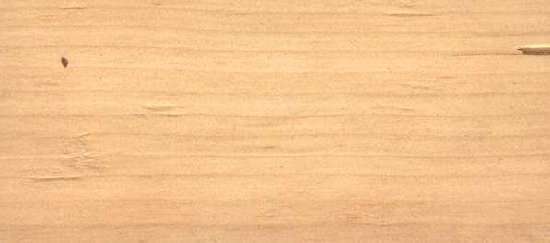
Alaska cedar (Chamaecyparis nootkatensis)
Family: Cupressaceae Common names: Alaska cedar, Alaska cypress, Alaska ground cypress, Alaska yellow cedar, Canoe cedar, FALSE cypress, Nootka cypress, Nootka false cypress, Nootka Sound cypress, Pacific coast cypress, Sitka cypress, White cedar, Yellow cedar, Yellow cypress Distributed in: Canada, United States (North America) Distribution overview: Alaska-cedar is found in the Pacific Coast mountain ranges from south-central Alaska to southwestern Oregon with isolated groves in the Siskiyou Moutains of northern California.The eastern edge of Alaska-cedar's range is defined by two disjunct populations:one in the Selkirk Mountains of southeastern British Columbia and one in the Aldrich Mountains of central Oregon. Common uses: Barge fenders, Bedroom suites, Boat building (general), Boat building, Boat building: decking, Boat building: planking, Boxes and crates, Brush backs & handles, Cabinetmaking, Canoes, Carvings, Caskets, Chairs, Chests, Concealed parts (Furniture), Cooperages, Decks, Desks, Dining-room furniture, Docks, Dockwork, Dowell pins, Dowells, Drawer sides, Drawing boards, Fine furniture, Floor lamps, Furniture , Furniture components, Furniture squares or stock, Furniture, Greenhouses, Harbor work, Hatracks, Heavy construction, Joinery (external): ground contact, Joinery, Kitchen cabinets, Lifeboats, Light construction, Living-room suites, Marine construction, Millwork, Moldings, Musical instruments, Naval architecture, Oars, Office furniture, Paddles, Paneling, Piling, Plywood corestock, Poles, Posts, Radio - stereo - TV cabinets, Raft floats, Rafts, Railroad ties, Rustic furniture, Shingles, Shipbuilding, Sporting Goods, Stools, Tables , Toys, Utility furniture, Vats, Veneer, Veneer: decorative Product sources: Alaska cedar is in little demand in the U.S. It is exported in the log form to Japan, at a price of $3,000.00 to $5,000.00 per thousand board feet. Many wood dealers located on the U.S. west-coast are reported to stock Alaska cedar. Environment profile: Widespread Tree size: Tree height is 40-50 m
Colors: the heart isYellow, Yellow to golden-yellow to orangeand the sapwoodWhite to yellow, Yellow.The grain isStraight, the textureMediumand the lusterLustrous
Natural durability: Very high natural resistance, Very suitable for exterior applications Odor:
The freshly cut wood has a characteristic odor which has been described as similar to that of raw potatoes. It also has a faint, bitter and somewhat spicy taste.
LightInduced Color Change: Darker
Kiln Schedules: UK=J US=T10D5S/T8D4S Fr=4 Kiln Drying Rate: Naturally dries quickly
Drying Defects: Distortion, Slight surface checking Ease of Drying: Rapidly Tree Identification: Bole/stem form is unknown Comments: General finishing qualities are rated as good Blunting Effect: High to severe Boring: Excellent (95+ pieces out of 100 will yield excellent results) Carving: Good carving qualities Cutting Resistance: Easy to saw Gluing: Very good properties Mortising: good Moulding: Good finishing Movement in Service: Good finishing Nailing: Good nailing qualities, Holds nails well Planing: The planing finish is excellent Resistance to Impregnation: Resistant sapwood Resistance to Splitting: Good
Response to hand tools: Fairly Difficult to Difficult to Work Routing recessing: Routing yields good results Veneering qualities: Difficult to veneer, Suitable for peeling Steam bending: Poor
The wood tends to rupture and buckle severely
Screwing: Good screw holding properties, Screwing yields good results; Turning: Very good
Painting: Satisfactory; Polishing: Very Good to Excellent; Staining: Reacts with Iron to discolour wood; Varnishing: Well defined ;
Density (dry weight) = 31-37 lbs/cu. ft. 0 Modulus of Elasticity (stiffness) = very low Max. crushing strength = medium Bending strength (MOR) = low Shearing strength (parallel to grain) = very low Hardness (side grain) = very soft Toughness-Hammer drop (Impact Strength) = low Work to Maximum Load = very low Max. crushing strength = low Shrinkage, Radial = very small Density (dry weight) = 15-22 lbs/cu. ft. Weight = medium Toughness (total work) = low Shrinkage, Tangential = very small Shrinkage, Tangential = small Modulus of Elasticity (stiffness) = low Hard Bending strength (MOR) = very low Bending strength (MOR) = medium Bending strength (MOR) = high Boone, R.S., C.J. Kozlik, P.J. Bois, E.M. Wengert. 1988. Dry Kiln Schedules for Commercial Hardwoods - Temperate and Tropical. USDA, Forest Service, General Technical Report FPL-GTR-57, Forest Products Laboratory, Madison, Wisconsin.Brown, H.P. and Panshin, A.J.,1940,Commercial Timbers of the United States Their structure, identification,,properties and uses,McGraw-Hill, LondonBrown, W.H.,1978,Timbers of the World: - No.7 North America,TRADACanadian Forestry Service. 1981.Canadian Woods - Their Properties and Uses. Third Edition. E.J. Mullins and T.S. McKnight, Editors. Published by University of Toronto Press, Toronto, Canada.Clifford, N.,1957,Timber Identification for the Builder and Architect,Leonard Hill (Books) LTD. LondonDallimore, W. and Jackson, A. Bruce,1966,A Handbook of Coniferae and Ginkgoaceae Fourth Ed. Revised by S.G.,Harrison,Edward Arnold (Publishers) Ltd. LondonFlynn Jr., J.H. Chamaecyparis nootkatensis - Alaska-cedar. In A Guide to Useful Woods of the World. Flynn Jr., J.H., Editor. King Philip Publishing Co., Portland, Maine. 1994. Page 111-112.Forest Products Research Laboratory U.K.,1957,A Handbook of Softwoods,Department of Scientific and Industrial Research Forest Products Research,HMSOForest Products Research Laboratory, U.K.,1945,A Handbook of Empire Timbers,Department of Scientific and Industrial Research Forest Products ResearchHarris, A.S.,1971,American Woods - Alaska Cedar,USDA, Forest Service American Woods FS-224Howard, A.L.,1948,A Manual of Timbers of the World.,Macmillan & Co. Ltd. London 3rd ed.Jackson, A. and D. Day.1991.Good Wood Handbook - The Woodworker's Guide to Identifying, Selecting and Using the Right Wood.Betterway Publications, Cincinnati, Ohio.Lincoln, W.A. 1986.World Woods in Color.Linden Publishing Co. Inc.,Fresno, California.Little, E.L.1980.The Audobon Society Field Guide to North American Trees - Western Region.Published by Arthur A. Knopf, New York.Markwardt, L.J., Wilson, T.R.C.,1935,Strength and related properties of woods grown in the United States,U.S.A. Department of Agriculture Technical Bulletin,No.479Mullins, E.J. and McKnight, T.S.,1981,Canadian Woods Their Properties and Uses,University of Toronto Press 3rd EditionPanshin, A.J. and C. deZeeuw. Textbook of WoodPatterson, D.,1988,Commercial Timbers of the World, 5th Edition,Gower Technical PressRecord, S.J., Hess, R.W.,1943,Timbers of the New World,Yale University PressRendle, B.J.,1969,World Timbers (3 Vols.,Ernest Benn Ltd. LondonStone, H.,1924,The Timbers of Commerce and their Identification,William Rider & Sons Ltd. LondonTanzania Forest Department,1960,The Natural Durability of Local Timbers,Tanzanian Forest Dept. Tech. Note,No.14Technology. McGraw-Hill Series in Forest Resources. McGraw-Hill Book Company, New York.Thomas, A.V.,1964,Timbers Used in the Boat Building Industry A Survey,Department of Scientific and Industrial Research Forest Products Research,LaboratoryTitmuss, F.H.,1965,Commercial Timbers of the World,Technical Press Ltd., London, 3rd editionU.S.D.A. Forest Service,1974,Wood Handbook,U.S.A. Department of Agriculture, Forest Service Handbook,72USDA. 1987. Wood Handbook:Wood as an Engineering Material. Agriculture Handbook No. 72. United States Department of Agriculture, Forest Service, Madison, Wisconsin.USDA. 1988. Dry Kiln Operators Manual, Preliminary Copy. Forest Service, Forest Products Laboratory, Madison, Wisconsin.Western Wood Products Association.19__.Softwoods of the Western USA.Published and Distributed by the Western Wood Products Association, Yeon Building, 522 S.W. Fifth Avenue, Portland, Oregon.Wolcott, G.N.,1950,An Index to the Termite Resistance of Woods,Agricultural Experimental Station, University of Puerto Rico Bulletin,No.85 |

*Come interpretare i dati (manleva su eventuali imprecisioni)
Messenger id: XXXXXXXXXX - Skype id: XXXXXXXXX
Copyright © 2026 | P.IVA 01158930998 Perito Camera di Commercio di Genova n.1917 settore Legnami e Pavimenti in legno

