Sei in: home » database dei legni


Fornitori
|
Ditta 5
Indirizzo: via dei platani 4 liguria Tel.: +39 456 5664 54 Sito web: www.pippo.it E-mail: pippo at libero.it |
|
Ditta 4
Indirizzo: via dei platani 4 liguria Tel.: +39 456 5664 54 Sito web: www.pippo.it E-mail: pippo at libero.it |
|
Ditta 3
Indirizzo: via dei platani 4 liguria Tel.: +39 456 5664 54 Sito web: www.pippo.it E-mail: pippo at libero.it |
|
Ditta 2
Indirizzo: via dei platani 4 liguria Tel.: +39 456 5664 54 Sito web: www.pippo.it E-mail: pippo at libero.it |
|
Ditta 1
Indirizzo: via dei platani 4 liguria Tel.: +39 456 5664 54 Sito web: www.pippo.it E-mail: pippo at libero.it |
|
Ditta 0
Indirizzo: via dei platani 4 liguria Tel.: +39 456 5664 54 Sito web: www.pippo.it E-mail: pippo at libero.it |
Contatti
database dei legni


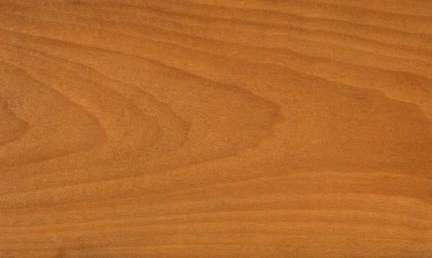
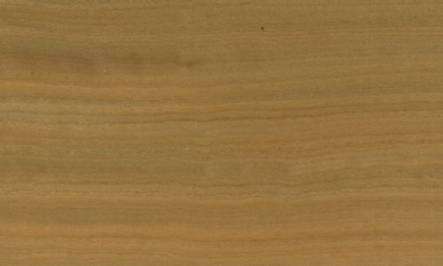
Ceylon satinwood (Chloroxylon swietenia)
Family: Rutaceae Common names: Behra, Behru, Bella, Bharhul, Bhera, Bhiraa, Bhirwa, Bihiri, Bilgu, Billu, Burus, Buruta, Burutu, Ceylon satinwood, East Indian satinwood, Flowered satinwood, Ghiriya, Halda, Huragalli, Huragatu, Mahogany, Mashwal, Mududad, Mutirai, Purush, Sali, Satinwood, Sengel, Vari-maram Distributed in: India, Pakistan, Sri Lanka (Oceania and S.E. Asia) Distribution overview: Central and southern India, Sir Lanka, and Ceylon. The species occurs in dry mixed evergreen or deciduous forest. Common uses: Agricultural implements, Axles, Bedroom suites, Boat building (general), Bobbins, Boxes and crates, Bridge construction, Broom handles, Brush backs & handles, Cabinetmaking, Carvings, Chairs, Chests, Concealed parts (Furniture), Decks, Decorative veneer, Desks, Dining-room furniture, Dowell pins, Dowells, Drawer sides, Excelsior, Figured veneer, Fine furniture, Floor lamps, Flooring, Furniture , Furniture components, Furniture squares or stock, Furniture, Handles: general, Handles: woodworking tools, Hatracks, Heavy construction, Inlay work, Joinery, Kitchen cabinets, Light construction, Living-room suites, Marine construction, Matches, Mathematical instruments, Moldings, Office furniture, Ornamental work , Paneling, Picker sticks, Piling, Poles, Posts, Pulp/Paper products, Radio - stereo - TV cabinets, Railroad ties, Rustic furniture, Shade rollers, Shuttles, Specialty items, Spindles, Spools, Sporting Goods, Stencil & chisel blocks, Stools, Sucker rods, Tables , Tables, Textile equipment, Tool handles, Turnery, Umbrella handles , Utility furniture, Vehicle parts, Veneer: decorative, Wheel spokes, Wheels Product sources: The timber has wide applications as veneer for inlays and decorative purposes, but it is only available in limited quantities in lumber form. Price is in the expensive range. Environment profile: Vulnerable in parts of its natural habitat Tree size: Trunk diameter is 100-150 cm
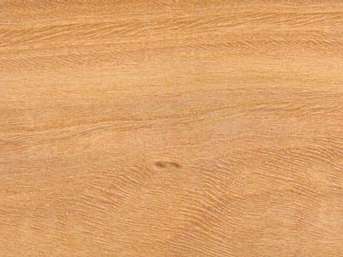
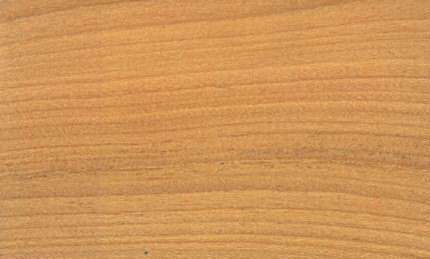
Colors: the heart isYellow, Yellow to golden-yellow to orangeand the sapwoodWhite to yellow, Yellow.The grain isWavy, the textureUniformand the lusterPronounced
Natural durability: Susceptible to insect attack, Very durable Odor: Slight pleasant fragrance when cut Kiln Schedules: UK=C US=T3C2/T3C1 Fr=3 Kiln Drying Rate: Very slow (>28 days for boards < 32 mm, to >84 days for boards >= 63 mm)
Drying Defects: Moderate twist/warp, Slight twist/warp Ease of Drying: Requires slow to moderate drying schedule. Tree Identification: Bole/stem form is straight Blunting Effect: Medium effect Boring: Very difficult Carving: Fairly difficult to carve Cutting Resistance: Easy to saw Gluing: Easy to glue Mortising: Finishes poorly Moulding: Requires a firm hold to prevent chattering Movement in Service: Requires a firm hold to prevent chattering Nailing: Pre-boring recommended, Very Good to Excellent Planing: Torn grain common in quartersawn material Resistance to Impregnation: Resistant sapwood Response to hand tools: Responds Readily Routing recessing: Secure hold recommended Sanding: Very difficult to sand Veneering qualities: Veneers easily, Veneers moderately easy
Screwing: Good screw holding properties, Pre-boring recommended; Turning: Very easy to turn
Painting: Fair to Good; Polishing: Very Good to Excellent; Staining: Finish is generally satisfactory; Varnishing: Fairly Easy to Very Easy;
Density (dry weight) = 61-67 lbs/cu. ft. 0 Density (dry weight) = 53-60 lbs/cu. ft. 0 Modulus of Elasticity (stiffness) = low Bending strength (MOR) = low Max. crushing strength = medium Max. crushing strength = high Hardness (side grain) = hard Toughness-Hammer drop (Impact Strength) = low Toughness (total work) = low Modulus of Elasticity (stiffness) = medium Hardness (side grain) = very hard Shrinkage, Radial = fairly large Toughness-Hammer drop (Impact Strength) = medium Shrinkage, Tangential = fairly large Bending strength (MOR) = high Shearing strength (parallel to grain) = medium Density (dry weight) = 46-52 lbs/cu. ft. Very heavy Toughness-Hammer drop (Impact Strength) = very low Shrinkage, Tangential = moderate Shrinkage, Tangential = large Shrinkage, Radial = large Shearing strength (parallel to grain) = very high Shearing strength (parallel to grain) = high Density = very high Compression strength (parallel to grain) = very high Bending strength (MOR) = very high Bending strength (MOR) = medium Anon,1963,Indian Woods: Their Identification, Properties and uses. Vol.II Linaceae,to Moringaceae,Manager of Publications, Delhi, IndiaArkwright, P.,1961,Know Your Timber - East Indian Satinwood,Woodworking Industry,39(81,1Bolza, E., Keating, W.G.,1972,African Timbers - the Properties, Uses and Characteristics of 700 Species,C.S.I.R.O. Div. of Building ResearchBolza, E.,1976,Timber and Health,Div. Building Res. C.S.I.R.O. AustraliaBrandis, D.,1906,Indian Trees,Constable & Co.Ltd.Broun, A.F.,(1899,Satinwood,Indian Forester,25(5,pp181-5Brown, W.H.,1969,Properties and uses of Tropical hardwoods in the United Kingdom. Part 1,Nonstructural properties and uses.,Conference on Tropical hardwoods SC-5/TN-5, Syracuse UniversityBrown, W.H.,1978,Timbers of the World, No. 3 Southern Asia,TRADA, Red Booklet SeriesChowdhury, K.A., Ghosh, S.S.,1958,Indian Woods: Their identification, properties and uses Vol. I,Dilleruaceae to Elaeocarpaceae,Manager of Publications, Delhi, IndiaChudnoff, M.,1984,Tropical Timbers of the World,U.S.A. Department of Agriculture, Forest Service, Forest Products,Laboratory, Madison.Clifford, N.,1953,Commercial Hardwoods - Their Characteristics Identification and,Utilization,Sir Isaac Pitman & Sons Ltd. LondonCox, H.A.,1939,A Handbook of Empire Timbers,Forest Products Research Laboratory, Princes RisboroughFarmer, R.H.,1972,Handbook of Hardwoods,HMSOFernando, X.M.,1959,Notes on Ceylon Timbers,Ceylon Forester,4(2,pp227-31Forest Products Research Laboratory, U.K.,1938,The Properties of Cramtree. Guinea excelsa H.B.K. from British Honduras,Forest Products Research Laboratory, Princes Risborough Project 22,Investigation 25 pp12Forest Products Research Laboratory, U.K.,1952,General Tests carried out on 3 Timber Species - Brachystegia - boehmii,,isoberlinia, spiciformis,Forest Products Research Laboratory, Department of Scientific and,Industrial ResearchForest Products Research Laboratory, U.K.,1955,Kiln-Drying Schedules,Forest Products Research Laboratory, Princes Risborough, Department of,Science and Industrial Research, Building Research Establishment Leaflet,No.42Gamble, J.S.,1902,A Manual of Indian Timbers,Sampson Low, Marston & Co. LondonHarrar, E.S.,1942,Some Physical Properties of Modern Cabinet Woods 3. Directional and Volume,Shrinkage,Tropical Woods,9(71, pp26-32Howard, A.L.,1948,A Manual of Timbers of the World.,Macmillan & Co. Ltd. London 3rd ed.Jackson, A. and D. Day.1991.Good Wood Handbook - The Woodworker's Guide to Identifying, Selecting and Using the Right Wood.Betterway Publications, Cincinnati, Ohio.Kaiser, J.Wood of the Month:Satinwood - As Smooth as its Name Suggests. InWood and Wood Products, July, 1991.Page 48.Kline, M. 1977. Chloroxylon swietenia - Ceylon satinwood. In A Guide to Useful Woods of the World. Flynn Jr., J.H., Editor. King Philip Publishing Co., Portland, Maine, 1994. Page 115-116.Koelmeyer, K.O.,1954,Silvicultural Notes on Trees - Satin,Ceylon Forester(ns,1(3,pp59-67Kribs, D.A.,1950,Commercial and Foreign Woods on the American Market (a manual to their,structure, identification, uses and distribution,U.S.A. Penn. State College, Tropical Woods LaboratoryKukachka, B.F.,1970,Properties of Imported Tropical Woods,Forest Research Paper FPL 125Lewis, F.,1934,The Vegetable Products of Ceylon,Assoc. Newspapers of Ceylon Ltd.Limaye, V.D.1954. Grouping of Indian Timbers and their Properties, Uses and Suitability. Indian Forest Records, New Series. Timber Mechanics, Vol. 1, No. 2, Forest Research Institute, Dehra Dun, India.Limaye, V.D. and B.R. Sen. 1953. Weights and Specific Gravities of Indian Woods. Indian Forest Records, New Series. Timber Mechanics, Vol. 1, No. 4, Forest Research Institute, Dehra Dun, India.Limaye, V.D.,1933,The Physical and Mechanical Properties of woods grown in India (Third,Interim Report on Project 1,Indian Forest Records,18(10,pp1-70Limaye, V.D.,1957,Grouping of Indian Timbers and Their Properties, Uses and Suitability.,Indian Forest Records (N.S. Timber Mechanics Vol.1 No.2)Lincoln, W. A.1986.World Woods in Color.Linden Publishing Co. Inc.,Fresno, California.Martawijaya, A., Kadir, K., Kartasujana, I.,1986,Indonesian Wood Atlas. Vol.1.,Department of Forestry Agency for Forestry Research and Development.,Bogar-IndonesiaNazma,1981,A handbook of Kerala Timbers,Kerala Forest Research Institute Research Report, No.9Patterson, D.,1988,Commercial Timbers of the World, 5th Edition,Gower Technical PressPearson, R.S., Brown, H.P.,1932,Commercial Timbers of India,Govt. Printer Calcutta,2 volsRendle, B.J.,1969,World Timbers (3 Vols.,Ernest Benn Ltd. LondonReyes, L.J.,1938,Philippine Woods,Commonwealth of the Philippines Department of Agriculture and Commerce,Technical Bulletin,No.7Sallenave, P.,1964,Proprietes Physiques et Mecaniques des Bois Tropicaux (Premier Supplement,C.T.F.T. Publ.,no.23Sekhar, A.C.,1955,The Physical and Mechanical Properties of Woods,Indian Forest Records (ns Timber Mechanics,1(3,pp69-72Stevens, W C,1961,Kiln Operators Handbook,HMSOTakahashi, A.,1978,Compilation of Data on the Mechanical Properties of Foreign Woods (Part,III) Africa,Shimane University, Japan, Research Report on Foreign Wood No. 7Tewari, M.C., Jain, J.C.,1980,Utilization of Secondary Species,Journal of the National Building Organization 25(2) pp1-6Timber Development Association Ltd.,1955,World Timbers (3 Vols.,Timber Development Association Ltd.Timber Development Association,1948,Some New Timbers and Their Uses No. 34,Timber Development Association Limited, London [TRADA]Wood, B., Calnan, D.,1976,Toxic Woods,British Journal of Dermat 94 Suppl. 13 |

*Come interpretare i dati (manleva su eventuali imprecisioni)
Messenger id: XXXXXXXXXX - Skype id: XXXXXXXXX
Copyright © 2026 | P.IVA 01158930998 Perito Camera di Commercio di Genova n.1917 settore Legnami e Pavimenti in legno

