Sei in: home » database dei legni


Fornitori
|
Ditta 5
Indirizzo: via dei platani 4 liguria Tel.: +39 456 5664 54 Sito web: www.pippo.it E-mail: pippo at libero.it |
|
Ditta 4
Indirizzo: via dei platani 4 liguria Tel.: +39 456 5664 54 Sito web: www.pippo.it E-mail: pippo at libero.it |
|
Ditta 3
Indirizzo: via dei platani 4 liguria Tel.: +39 456 5664 54 Sito web: www.pippo.it E-mail: pippo at libero.it |
|
Ditta 2
Indirizzo: via dei platani 4 liguria Tel.: +39 456 5664 54 Sito web: www.pippo.it E-mail: pippo at libero.it |
|
Ditta 1
Indirizzo: via dei platani 4 liguria Tel.: +39 456 5664 54 Sito web: www.pippo.it E-mail: pippo at libero.it |
|
Ditta 0
Indirizzo: via dei platani 4 liguria Tel.: +39 456 5664 54 Sito web: www.pippo.it E-mail: pippo at libero.it |
Contatti
database dei legni


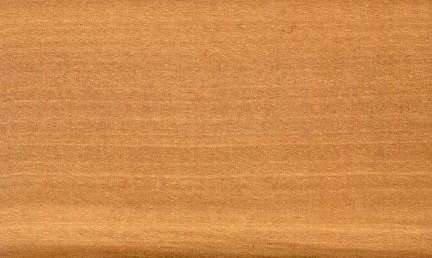
European horse chestnut (Aesculus hippocastanum)
Family: Hippocastanaceae Common names: European horse chestnutHorse chestnutMarrionier d'inde Distributed in: Albania, Austria, Bulgaria, France, Greece, India, Iran, United Kingdom (Eastern Europe, Oceania and S.E. Asia, Western Europe) Distribution overview: Its common range is in southern Europe (Greece, Albania), though it is naturalized at scattered locales throughout eastern North America from Maine to Minnesota, and south to South Carolina. It is also found in Great Britian, where it is widely cultivated. Common uses: Baskets, Boxes and crates, Broom handles, Brush backs & handles, Brush backs & handles, Building materials, Cabinetmaking, Carvings, Decorative plywood, Flooring, Food containers, Furniture, Handles: general, Interior construction, Interior trim, Moldings, Plywood, Pulp/Paper products, Sporting Goods, Tables, Textile equipment, Toys, Turnery, Veneer, Veneer: decorative Environment profile: Vulnerable in many parts of its natural habitat Tree size: Trunk diameter is 200-250 cm
Colors: the heart isYellow, Yellow to golden-yellow to orangeand the sapwoodWhite, Yellow.The grain isWavy, the textureUniformand the lusterSlightly lustrous
Natural durability: Susceptible to insect attack, Very little natural resistance Odor: No specific smell or taste
LightInduced Color Change: Darker
Kiln Schedules: Drying (speed) is fast Kiln Drying Rate: Naturally dries quickly Drying Defects: End splitting, Splitting Ease of Drying: Slowly Tree Identification: Bole/stem form is cylindrical
Comments: General finishing qualities are rated as good Blunting Effect: Little Boring: Satisfactory results Cutting Resistance: Moderate to saw Gluing: Very good properties Mortising: Fairly Easy to Very Easy Moulding: Fairly Easy to Very Easy Movement in Service: Fairly Easy to Very Easy Nailing: Satisfactory nailing properties, Very Good to Excellent Planing: Moderately easy to plane Resistance to Impregnation: Permeable sapwood Response to hand tools: Works well with hand tools Routing recessing: Good in both routing and recessing. Sanding: Fairly Easy to Very Easy Veneering qualities: Veneers easily, Veneers moderately easy Steam bending: Very good
Screwing: Screwing yields good results, Very Good to Excellent Results; Turning: Very Good to Excellent Results
Polishing: Very Good to Excellent; Staining: Very Good to Excellent; Varnishing: Very Good to Excellent;
Density (dry weight) = 31-37 lbs/cu. ft. 0 Bending strength (MOR) = low Modulus of Elasticity (stiffness) = very low Max. crushing strength = low Work to Maximum Load = very low Max. crushing strength = medium Weight= medium Toughness (total work) = low Shrinkage, Tangential = very small Shrinkage, Radial = very small Shearing strength (parallel to grain) = very low Shearing strength (parallel to grain) = low Resists denting and marring Hardness = medium Hardness (side grain) = soft Density = high Compression strength (parallel to grain) = medium Bending strength (MOR) = medium Brown, W.H.,1978,Timbers of the World, No. 6 Europe,TRADA, Red Booklet SeriesClifford, N.,1953,Commercial Hardwoods - Their Characteristics Identification and,Utilization,Sir Isaac Pitman & Sons Ltd. LondonClifford, N.,1957,Timber Identification for the Builder and Architect,Leonard Hill (Books) LTD. LondonFarmer, R.H.,1972,Handbook of Hardwoods,HMSOForest Products Research Laboratory, U.K.,1937,A Handbook of Home-Grown Timbers,HMSOForest Products Research Laboratory, U.K.,1967,The Steam Bending Properties of various timbers,Forest Products Research Laboratory, Princes Risborough, Leaflet,No.45Forest Products Research Laboratory, U.K.,1969,The Movement of Timbers,Forest Products Research Laboratory, Princes Risborough Technical Note,No.38Forests Products Research Laboratory, U.K.,1956,A Handbook of Hardwoods,Forest Products Research Laboratory, Princes Risborough, Department of,Science and Industrial Research, Building Research EstablishmentHMSO. 1972. Handbook of Hardwoods. 2nd Edition. Revised by R.H. Farmer. Department of the Environment, Building Research Establishment, Princes Risborough Laboratory, Princes Risborough, Aylesbury, Buckinghamshire.Howard, A.L.,1948,A Manual of Timbers of the World.,Macmillan & Co. Ltd. London 3rd ed.I.U.F.R.O.,1973,Veneer Species of the World,Assembled at F.P.L. Madison on behalf of I.U.F.R.O. Working Party on,Slicing and Veneer CuttingKloot, N. H. and E. Bolza.1961.Properties of Timbers Imported into Australia.Technological Paper No. 12.Division of Forest Products, Commonwealth Scientific and Industrial Research Organization, Melbourne, Australia.Kloot, N.H., Bolza, E.,1961,Properties of Timbers Imported into Australia,C.S.I.R.O. Forest Products Division Technological Paper,No.12Laidlaw, W.B.R.1960. Guide to British Hardwoods.Published by Leonard Hill [Books] Limited, 9 Eden Street, N.W.1, London.Lauricio, F.M., Bellosillo, S.B.,1966,Fifth Progress Report on the Mechanical and Related Properties of,Philippine woods,Philippine Lumberman,12(5,p66Lavers, G.M. 1966. The Strength Properties of Timbers. Forest Products Research Bulletin, No. 50. Ministry of Technology, Her Majesty's Stationery Office, London.Lavers, G.M.,1983,The Strength Properties of Timber (3rd ed. revised Moore G.L.,Forest Products Research Laboratory, Princes Risborough, Building Research,Establishment Report (formerly Bulletin No.50)Lincoln, W.A. 1986. World Woods in Color. Linden Publishing Co. Inc., Fresno, California.Little, E.L.1980.The Audobon Society Field Guide to North American Trees - Western Region.Published by Arthur A. Knopf, New York.Patterson, D.,1988,Commercial Timbers of the World, 5th Edition,Gower Technical PressRedding, L.W.,1971,Resistance of Timbers to Impregnation with Creosote,Forest Products Research Laboratory, Princes Risborough, Building Research,Establishment Bulletin No.54 pp.43Rendle, B.J.,1969,World Timbers (3 Vols.,Ernest Benn Ltd. LondonSmith, D.N.,1959,The Natural Durability of Timber,Forest Products Research Laboratory, Princes Risborough, Building Research,Establishment Record,No.30Stone, H.,1924,The Timbers of Commerce and their Identification,William Rider & Sons Ltd. LondonT.D.A.,1942,Timber Leaflet No.70 Horse Chestnut (Aesculus hippocastanum,TRADA Timber LeafletT.R.A.D.A.,1942,Home-grown timber trees - their characteristics, cultivation and Uses,TRADATimber Development Association Ltd.,1955,World Timbers (3 Vols.,Timber Development Association Ltd.Titmuss, F.H.,1965,Commercial Timbers of the World,Technical Press Ltd., London, 3rd editionWCMC. 1992. Conservation Status Listing - Trees and Timbers of the World. World Conservation Monitoring Center-Plants Programme, Cambridge, CB3 ODL, United Kingdom.Wood, A.D.,1963,Plywoods of the World: Their Development, Manufacture and,Application,Johnston & Bacon Ltd. Edinburgh & London |


*Come interpretare i dati (manleva su eventuali imprecisioni)
Messenger id: XXXXXXXXXX - Skype id: XXXXXXXXX
Copyright © 2026 | P.IVA 01158930998 Perito Camera di Commercio di Genova n.1917 settore Legnami e Pavimenti in legno

