Sei in: home » database dei legni


Fornitori
|
Ditta 5
Indirizzo: via dei platani 4 liguria Tel.: +39 456 5664 54 Sito web: www.pippo.it E-mail: pippo at libero.it |
|
Ditta 4
Indirizzo: via dei platani 4 liguria Tel.: +39 456 5664 54 Sito web: www.pippo.it E-mail: pippo at libero.it |
|
Ditta 3
Indirizzo: via dei platani 4 liguria Tel.: +39 456 5664 54 Sito web: www.pippo.it E-mail: pippo at libero.it |
|
Ditta 2
Indirizzo: via dei platani 4 liguria Tel.: +39 456 5664 54 Sito web: www.pippo.it E-mail: pippo at libero.it |
|
Ditta 1
Indirizzo: via dei platani 4 liguria Tel.: +39 456 5664 54 Sito web: www.pippo.it E-mail: pippo at libero.it |
|
Ditta 0
Indirizzo: via dei platani 4 liguria Tel.: +39 456 5664 54 Sito web: www.pippo.it E-mail: pippo at libero.it |
Contatti
database dei legni


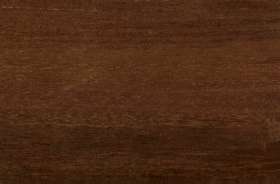
Awang (Cotylelobium malayanum)
Family: Dipterocarpaceae Common names: Awang, Bukit, Damar resak, Gagil, Giam, Giam padi, Giyam putih, Rasak, Rasak bukit, Rasak gunung, Resak, Resak babalok, Resak batu, Resak bukit, Resak daun kechil, Resak daun kecil, Resak daun lebar, Resak duren, Resak durian, Resak gagil, Resak gunung, Resak hitam, Resak jawai, Resak kecil daun, Resak kelabu, Resak keranji, Resak linga, Resak mendawe, Resak mentotoh, Resak padi, Resak paya, Resak rembaga, Resak tembaga, Resak tempurong Distributed in: Brunei, Malaysia, Thailand (Oceania and S.E. Asia) Common uses: Boat building (general), Boat building: framing, Bridge construction, Door, Flooring, Furniture, Heavy construction, Joinery (external): ground contact, Joinery, Light construction, Marine construction, Millwork, Mine timbers, Oars, Piling, Poles, Posts, Railroad ties, Turnery, Wharf construction Tree size: Tree height is 10-20 m
Colors: the heart isWhite, Yellow to golden-yellow to orangeand the sapwoodWhite, White to yellow.The grain isStraight, the textureMediumand the lusterMedium
Natural durability: Susceptible to marine borer attack, Very durable Kiln Schedules: Drying (speed) is fast
Drying Defects: Moderate surface checking
Ease of Drying: Difficult
Tree Identification: Bole/stem form is misshapen Comments: General finishing qualities are rated as good Blunting Effect: Blunting effect on machining is slight Boring: Easy
Cutting Resistance: Easy to saw Mortising: Finishes well
Planing: Planes well, to a good finish
Resistance to Impregnation: Heartwood is resistant Response to hand tools: Fairly Difficult to Difficult to Work Sanding: Good sanding finish
Turning: Easy to turn
Density (dry weight) = 61-67 lbs/cu. ft. Density (dry weight) = 53-60 lbs/cu. ft. Density (dry weight) = 46-52 lbs/cu. ft. Density (dry weight) = 67-75 lbs/cu. ft. Ashton, P.S.,1964,A manual of the Dipterocarp trees of Brunei State,O.U.P. LondonBrowne, F.G.,1955,Forest Trees of Sarawak and Brunei and their Products.,Government Printing Office, Kuching, SarawakBrown, W.H.,1978,Timbers of the World, No. 4 South East Asia,TRADA, Red Booklet SeriesBurgess, P.F.,1966,Timbers of Sabah,Sabah Forest Record, no.6Chudnoff, M.,1984,Tropical Timbers of the World,U.S.A. Department of Agriculture, Forest Service, Forest Products,Laboratory, Madison.Desch, H.E.,1954,Manual of Malayan Timbers (2 vols,Malayan Forest Records,no.15Fundter, J.M.,1982,Names for Dipterocarp timbers and trees from Asia,Pudoc, Wageningen, NetherlandsI. Soerianegara and R.H.M.J. Lemmens (Editors,1993,Plant Resources of South-East Asia 5,(PROSEA, 1,Timber trees: Major commercial timbers,Pudoc Scientific Publishers, Wageningen 1993Meijer, W., Wood, G.H.S.,1964,Dipterocarps of Sabah (North Borneo,Sabah Forest Department, Forest Record No.5Tamolang, F.N., Martawijaya, A., Kartasujana, I., Kadir, K., Parwira, S.,1992,Indonesian Wood Atlas Volume II,Department of Forestry, Agency for Forestry Research and Development,,Bogor-Indonesia |

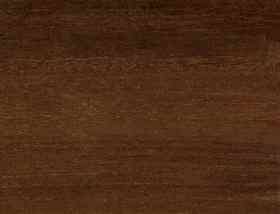


*Come interpretare i dati (manleva su eventuali imprecisioni)
Messenger id: XXXXXXXXXX - Skype id: XXXXXXXXX
Copyright © 2026 | P.IVA 01158930998 Perito Camera di Commercio di Genova n.1917 settore Legnami e Pavimenti in legno

