Sei in: home » database dei legni


Fornitori
|
Ditta 5
Indirizzo: via dei platani 4 liguria Tel.: +39 456 5664 54 Sito web: www.pippo.it E-mail: pippo at libero.it |
|
Ditta 4
Indirizzo: via dei platani 4 liguria Tel.: +39 456 5664 54 Sito web: www.pippo.it E-mail: pippo at libero.it |
|
Ditta 3
Indirizzo: via dei platani 4 liguria Tel.: +39 456 5664 54 Sito web: www.pippo.it E-mail: pippo at libero.it |
|
Ditta 2
Indirizzo: via dei platani 4 liguria Tel.: +39 456 5664 54 Sito web: www.pippo.it E-mail: pippo at libero.it |
|
Ditta 1
Indirizzo: via dei platani 4 liguria Tel.: +39 456 5664 54 Sito web: www.pippo.it E-mail: pippo at libero.it |
|
Ditta 0
Indirizzo: via dei platani 4 liguria Tel.: +39 456 5664 54 Sito web: www.pippo.it E-mail: pippo at libero.it |
Contatti
database dei legni


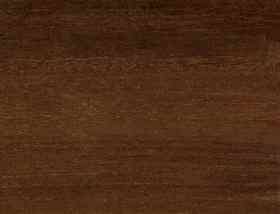
Resak (Cotylelobium spp.)
Family: Dipterocarpaceae Common names: Chan thip, Lau tau, Mascal wood, Narig, Resak, Taungsagaing Distributed in: Cambodia, India, Malaysia, Myanmar, Papua New Guinea, Philippines, Sri Lanka (Oceania and S.E. Asia) Distribution overview: Widespread in Southeast Asia from India and Ceylon to New Guinea. Thailand, Laos, Vietnam, Cambodia and Indomalesia. Generally occurs sporadically throughout the well-drained lowland dipterocarp forests near rivers and hills. Common uses: Barge fenders, Bedroom suites, Boat building, Building construction, Building materials, Cabin construction, Cabinetmaking, Canoes, Construction, Crossties, Docks, Dockwork, Domestic flooring, Drawer sides, Excelsior, Factory construction, Flooring, Furniture , Harbor work, Heavy construction, Joinery, Kitchen cabinets, Lifeboats, Living-room suites, Marine construction, Mine timbers, Naval architecture, Office furniture, Parquet flooring, Radio - stereo - TV cabinets, Raft floats, Rafts, Railroad ties, Shipbuilding, Sills, Sub-flooring, Wharf construction, Windows Product sources: The trade name Resak is assigned to timbers produced by species in both Cotylelobium and Vatica genera. The timbers are highly similar in structure. Environment profile: Secure within many parts of its natural range, but not completely assessed Tree size: Tree height is 10-20 m
Colors: the heart isDarkens with age, Yellowish brownand the sapwoodPaler than heartwood, Well defined.The grain isSilver tinted figure, the textureFine and uniform
Natural durability: Heartwood is very resistant to decay and termite attack, Heartwood is vulnerable to pin-hole borer attack Odor: No specific smell or taste
Silica Content: Likely to have significant impact on machining Drying Defects: Slight surface checking, Slight twist/warp Ease of Drying: Fairly Easy Blunting Effect: Severe
Cutting Resistance: Difficult to saw
Nailing: Difficult to nail
Planing: Difficult to plane
Resistance to Impregnation: Sapwood is resistant
Screwing: Difficult to screw
;
Polishing: Takes high polish
;
Resists denting and marring Hardness (side grain) = medium Compression strength (parallel to grain) = high Bending strength (MOR) = very high Chowdhury, K.A. and S.S. Ghosh. 1958. Indian Woods - Their Identification, Properties and Uses, Volume I - Dilleniaceae to Elaeocarpaceae. Published by the Manager of Publications, Delhi, India.Chudnoff, M.,1984,Tropical Timbers of the World,U.S.A. Department of Agriculture, Forest Service, Forest Products,Laboratory, Madison.Desch, H. E. 1957. Manual of Malayan Timbers - Volume I. Malayan Forest Records, No. 15. Malaya Publishing House Ltd., Singapore.Keating, W.G., Bolza, E.,1982,Characteristics properties and uses of timbers. South East Asia, Northern,Australia and the Pacific,C.S.I.R.O. Div. Chemical Technology,Inkata Press,1WCMC. 1992. Conservation Status Listing - Trees and Timbers of the World. World Conservation Monitoring Center-Plants Programme, Cambridge, CB3 ODL, United Kingdom. |


*Come interpretare i dati (manleva su eventuali imprecisioni)
Messenger id: XXXXXXXXXX - Skype id: XXXXXXXXX
Copyright © 2026 | P.IVA 01158930998 Perito Camera di Commercio di Genova n.1917 settore Legnami e Pavimenti in legno

