Sei in: home » database dei legni


Fornitori
|
Ditta 5
Indirizzo: via dei platani 4 liguria Tel.: +39 456 5664 54 Sito web: www.pippo.it E-mail: pippo at libero.it |
|
Ditta 4
Indirizzo: via dei platani 4 liguria Tel.: +39 456 5664 54 Sito web: www.pippo.it E-mail: pippo at libero.it |
|
Ditta 3
Indirizzo: via dei platani 4 liguria Tel.: +39 456 5664 54 Sito web: www.pippo.it E-mail: pippo at libero.it |
|
Ditta 2
Indirizzo: via dei platani 4 liguria Tel.: +39 456 5664 54 Sito web: www.pippo.it E-mail: pippo at libero.it |
|
Ditta 1
Indirizzo: via dei platani 4 liguria Tel.: +39 456 5664 54 Sito web: www.pippo.it E-mail: pippo at libero.it |
|
Ditta 0
Indirizzo: via dei platani 4 liguria Tel.: +39 456 5664 54 Sito web: www.pippo.it E-mail: pippo at libero.it |
Contatti
database dei legni


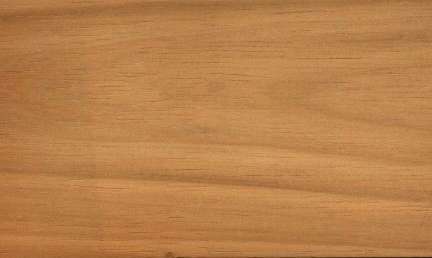
Capa de tabaco (Couratari guianensis)
Family: Lecythidaceae Common names: Capa de tabaco, Coco cabuyo, Congolo garapelo, Couatari, Fine leaf wadara, Iengipipa, Imbirema, Ingie-pipa, Ingiepipa, Ingipipa, Inguipipa, Irimariye, Irimiyar, Mahot, Mahot cigare, Marimari, Tabari, Tampipio, Tauari, Tauary, Urimari, Wadara, Waranaka Distributed in: Brazil, Colombia, Columbia, Costa Rica, French Guiana, Guyana, Panama, Peru, Suriname, Venezuela (Central America, Latin America) Distribution overview: Grows in the hill forests in Costa Rica, Panama, and adjacent Colombia, as well as in diverse forest types from Venezuela and the Guianas to Amazonian Brazil. Common uses: Balusters, Bent Parts, Boxes and crates, Building construction, Building materials, Cabinetmaking, Casks, Ceiling, Chairs, Chests, Concrete formwork, Construction, Crossties, Decorative plywood, Decorative veneer, Desks, Dining-room furniture, Domestic flooring, Drawer sides, Excelsior, Figured veneer, Fine furniture, Flooring, Flooring: industrial heavy traffic, Form work, Furniture , Furniture components, Furniture squares or stock, Furniture, General carpentry, Hatracks, Heavy construction, Interior construction, Interior trim, Joinery, Kitchen cabinets, Light construction, Living-room suites, Marine construction, Millwork, Moldings, Office furniture, Packing cases, Parquet flooring, Piling, Plywood, Railroad ties, Veneer, Wheel spokes, Wheels Product sources: The ITTO reports that the species is an important source of timber. The timber is exported in low quantities. Environment profile: Status unknown in many of its growth areas Tree size: Trunk diameter is 100-150 cm
Colors: the heart isYellow to golden-yellow to orange, Yellowish tingeand the sapwoodWhite, Yellow.The grain isStraight to interlocked, the textureMedium to coarseand the lusterMedium
Natural durability: Very durable, Very little natural resistance Odor: Has an odor Silica Content: Moderate silica contact Kiln Schedules: Drying (speed) is fast Drying Defects: Slight twist/warp, Splitting Ease of Drying: Moderately Difficult to Difficult Tree Identification: Bole/stem form is straight Comments: General finishing qualities are rated as good General finishing qualities are rated as satisfactory Blunting Effect: Moderate to severe Boring: Fairly difficult to very difficult
Carving: Generally good results Cutting Resistance: Easy to saw Gluing: Very Good to Excellent Results Mortising: Fairly Difficult to Very Difficult
Moulding: Fairly Difficult to Very Difficult
Movement in Service: Fairly Difficult to Very Difficult
Nailing: Fairly Easy to Very Easy, Holds satisfactorily Planing: Very Good to Excellent Resistance to Impregnation: Sapwood is permeable Resistance to Splitting: Satisfactory
Response to hand tools: Variable qualities Routing recessing: Fairly Difficult to Very Difficult
Veneering qualities: Good gluing qualities
Steam bending: Poor
Screwing: Easy to screw
; Turning: Fairly Difficult to Very Difficult
Painting: Satisfactory; Polishing: Very Good to Excellent; Staining: Very Good to Excellent; Varnishing: Satisfactory;
Density (dry weight) = 38-45 lbs/cu. ft. Density (dry weight) = 31-37 lbs/cu. ft. Bending strength (MOR) = medium Max. crushing strength = medium Shearing strength (parallel to grain) = low Shrinkage, Tangential = moderate Shrinkage, Radial = moderate Modulus of Elasticity (stiffness) = medium Hardness (side grain) = soft Density (dry weight) = 46-52 lbs/cu. ft. Shrinkage, Radial = fairly large Modulus of Elasticity (stiffness) = low Modulus of Elasticity (stiffness) = high Density (dry weight) = 53-60 lbs/cu. ft. Bending strength (MOR) = high Work to Maximum Load = very low Shrinkage, Tangential = small Shrinkage, Tangential = fairly large Shrinkage, Radial = small Shearing strength (parallel to grain) = very low Max. crushing strength = high Heavy Hardness (side grain) = hard Density = high Compression strength (parallel to grain) = high Bending strength (MOR) = very low Berni, C.A., Bolza, E., Christensen, F.J.,1979,South American Timbers - The Characteristics, Properties and Uses of 190,Species,C.S.I.R.O Div. Building ResearchBois et Forets des Tropiques,1984,Inguipipa - Couratari pulchra Sandw.,Bois et Forets des Tropiques Vol. 203 p.52Bois et Forets des Tropiques,1992,New potentially commercial tree species for Latin America: Couratari spp.,[Nouvelles essences commercialisables d'Ameriques Latine: tauari],Bois et Forets des Tropiques. 1992., No.234, 73-76Bois et Forets des Tropiques,1992,Tauari - Couratari oblongifolia Ducke et Knuth, C. guianensis Aubl., C.,multiflora Eyma, C. stellata A.C. Smith, C. macrosperma A.C. Smith,Bois et Forets des Tropiques Vol. 234Chichignoud, M., G. Deon, P. Detienne, B. Parant, and P. Vantomme.1990.Tropical Timber Atlas of Latin America.International Tropical Timber Organization (ITTO, Centre Technique Forestier Tropical, Division of CIRAD, 45 bis Avenue de la Belle Gabrielle, Nogent-sur-marne, CEDEX, France.Chudnoff, M.,1984,Tropical Timbers of the World,U.S.A. Department of Agriculture, Forest Service, Forest Products,Laboratory, Madison.Erfurth, T., Rusche, H.,1976,The Marketing of Tropical Wood B. Wood Species from S. American Tropical,Moist Forests,F.A.O. Forestry DepartmentFanshawe, D.B.,1954,Forest Products of British Guiana Part 1 Principal Timbers,Forest Department British Guiana Forestry Bulletin (New Series 2nd,Edition,No.1Hess, R.W., Wangaard, F.F., Dickinson, F.E.,1950,Properties and Uses of Tropical Woods 2,Tropical Woods,13(97,pp1-132ITTO. New Marketable Species Technical Notes. Prepared by Centre Technique Forestier Tropical (CTFT, Division of CIRAD, 45 bis, Avenue de la Belle Gabrielle, 94736 Nogent-sur-marne Cedex, FranceLamb, A.F.A., Wangaard, F.F.,1950,The Gluing Properties of certain Tropical American Woods,Yale Univ. School of Forestry Technical Report,4Maeglin, R., C. K. Baah, G. Troemmer, J. D. Danielson, and S. P. Loehnertz.1989.Pre-project Report:Sawing of Difficult Species. Prepared for International Tropical Timber Organization (ITTO) by United States Department of Agriculture (USDA, Forest Service, Forest Products Laboratory, Madison, Wisconsin.Polak, A.M.,1992,Major Timber Trees of Guyana A Field Guide,The Tropenbos Foundation Wageningen, The NetherlandsTakahashi, A.,1975,Compilation of data on the Mechanical Properties of Foreign Woods (Part 2,Central and South America,Shimane University, Japan, Research Report on Foreign Wood No.4Wangaard, F.F., Chudnoff, M.,1950,The Steam Bending Properties of Certain Tropical American Woods,Yale Univ. School of Forestry Technical Report No. 6Wangaard, F.F., Muschler, A.F.,1952,Properties and Uses of Tropical Woods 3,Tropical Woods,14(98, pp1-190 |

*Come interpretare i dati (manleva su eventuali imprecisioni)
Messenger id: XXXXXXXXXX - Skype id: XXXXXXXXX
Copyright © 2026 | P.IVA 01158930998 Perito Camera di Commercio di Genova n.1917 settore Legnami e Pavimenti in legno

