Sei in: home » database dei legni


Fornitori
|
Ditta 5
Indirizzo: via dei platani 4 liguria Tel.: +39 456 5664 54 Sito web: www.pippo.it E-mail: pippo at libero.it |
|
Ditta 4
Indirizzo: via dei platani 4 liguria Tel.: +39 456 5664 54 Sito web: www.pippo.it E-mail: pippo at libero.it |
|
Ditta 3
Indirizzo: via dei platani 4 liguria Tel.: +39 456 5664 54 Sito web: www.pippo.it E-mail: pippo at libero.it |
|
Ditta 2
Indirizzo: via dei platani 4 liguria Tel.: +39 456 5664 54 Sito web: www.pippo.it E-mail: pippo at libero.it |
|
Ditta 1
Indirizzo: via dei platani 4 liguria Tel.: +39 456 5664 54 Sito web: www.pippo.it E-mail: pippo at libero.it |
|
Ditta 0
Indirizzo: via dei platani 4 liguria Tel.: +39 456 5664 54 Sito web: www.pippo.it E-mail: pippo at libero.it |
Contatti
database dei legni


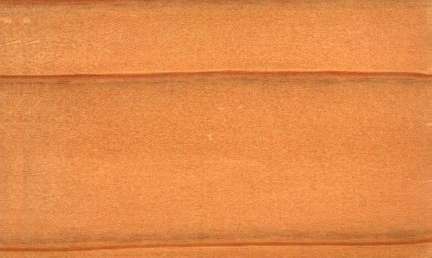
Sugi (Cryptomeria japonica)
Family: Taxodiaceae Common names: Cryptomeria, Japanese cedar, Sugi, Suji Distributed in: China, India, Japan, South Africa, Sri Lanka (Africa, Oceania and S.E. Asia) Distribution overview: Japan & Taiwan. In Japan it occurs naturally in pure and mixed stands from Kyushu to N Honshu at elevations to 400 m. In Taiwan, the distribution includes Xinchu Xian: Sheipa National Park; Ilan Xian: Yuanyanghu Nature Preserve; Nantou Xian: Xitou Forest Recreation Area; Xinchu Xian: Yuanyanghu Natural Preserved Area; at elevations of 900-2500 m in plantations and in association with Tsuga, Pinus and Fagaceae species. Common uses: Balusters, Bedroom suites, Blinds, Boat building: planking, Boxes and crates, Building construction, Building materials, Cabinetmaking, Casks, Chairs, Chests, Concealed parts (Furniture), Construction, Core Stock, Decorative veneer, Desks, Dining-room furniture, Domestic flooring, Dowell pins, Dowells, Drawer sides, Figured veneer, Fine furniture, Fishnet floats, Floats, Floor lamps, Flooring, Furniture , Furniture components, Furniture squares or stock, Furniture, Hatracks, Heavy construction, Interior construction, Interior trim, Joinery, Kitchen cabinets, Light construction, Living-room suites, Lock gates, Millwork, Moldings, Musical instruments, Office furniture, Packing cases, Paneling, Parquet flooring, Plain veneer, Plywood, Radio - stereo - TV cabinets Environment profile: Rare in parts of its natural range (population is at risk) Tree size: Trunk diameter is 300-350 cm
Colors: the heart isYellow, Yellow to golden-yellow to orangeand the sapwoodWhite to yellow, Yellow.The grain isWavy, the textureResinous and oilyand the lusterSlightly lustrous
Natural durability: Susceptible to insect attack, Very durable Odor: No specific taste Kiln Schedules: T12 - E5 (4/4) US/T12 - E5 (4/4) US
Kiln Drying Rate: Very slow Drying Defects: Moderate surface checking, Splitting Ease of Drying: Slowly Tree Identification: Bole/stem form is buttressed
Comments: General finishing qualities are rated as good Blunting Effect: Moderate Boring: Well defined Cutting Resistance: Fairly Difficult to Very Difficult to saw Gluing: Very Good to Excellent Results Mortising: Fairly Difficult to Very Difficult Moulding: Poor to Very Poor Movement in Service: Poor to Very Poor Nailing: Pre-Boring Recommended, Satisfactory nailing properties Planing: Very Good to Excellent Resistance to Impregnation: Resistant sapwood Resistance to Splitting: Poor
Response to hand tools: Fairly Difficult to Difficult to Work Routing recessing: Very Good to Excellent Results Sanding: Very Good to Excellent Results Veneering qualities: Easy to cut, No drying degrade. Dries flat without splitting Steam bending: Unsuitable
Screwing: Pre-boring recommended, Screwing yields good results; Turning: Very Good to Excellent Results
Painting: Good; Polishing: Surface Preparation; Staining: Surface Preparation;
Density (dry weight) = 15-22 lbs/cu. ft. Density (dry weight) = 23-30 lbs/cu. ft. Bending strength (MOR) = very low Work to Maximum Load = very low Shrinkage, Tangential = small Shrinkage, Radial = very small Modulus of Elasticity (stiffness) = very low Max. crushing strength (stiffness) = very low Toughness-Hammer drop (Impact Strength) = very low Toughness (total work) = very low Max. crushing strength = low Hardness (side grain) = very soft Density (dry weight) = 31-37 lbs/cu. ft. Bending strength (MOR) = low The wood is light in weight. The density is average, or medium Bolza, E., Keating, W.G.,1972,African Timbers - the Properties, Uses and Characteristics of 700 Species,C.S.I.R.O. Div. of Building ResearchBrown, W.H.,1978,Timbers of the World, No.5 Philippines and Japan,TRADA, Red Booklet SeriesChen, C.L.,1962,The Physical Properties of 101 Chinese Woods,Forest Products Journal 12(7) pp339-42Dallimore, W. and Jackson, A. Bruce,1966,A Handbook of Coniferae and Ginkgoaceae Fourth Ed. Revised by S.G.,Harrison,Edward Arnold (Publishers) Ltd. LondonDas, N.R., et al,1965,Data on the Natural Durability of Timber Species,Journal of Timber Development Assoc. of India,11(2,pp6-12Howard, A.L.,1948,A Manual of Timbers of the World.,Macmillan & Co. Ltd. London 3rd ed.I.U.F.R.O.,1973,Veneer Species of the World,Assembled at F.P.L. Madison on behalf of I.U.F.R.O. Working Party on,Slicing and Veneer CuttingKeating, W.G., Bolza, E.,1982,Characteristics properties and uses of timbers. South East Asia, Northern,Australia and the Pacific,C.S.I.R.O. Div. Chemical Technology,Inkata Press,1Kloot, N.H., Bolza, E.,1961,Properties of Timbers Imported into Australia,C.S.I.R.O. Forest Products Division Technological Paper,No.12Limaye, V. D.1954.Grouping of Indian Timbers and their Properties, Uses, and Suitability. Indian Forest Records (New Series). Timber Mechanics.Volume 1 No. 2.Manager of Publications (Publisher, Delhi.Limaye, V. D. and B. R. Sen.1956. Weights and Specific Gravities of Indian Woods. Indian Forest Records (New Series).Timber Mechanics.Volume 1 No. 4. Manager of Publications (Publisher, Delhi.Lincoln, W.A. 1986.World Woods in Color.Linden Publishing Co. Inc., Fresno, California.Rendle, B.J.,1969,World Timbers (3 Vols.,Ernest Benn Ltd. LondonScott, M.H.,1935,Weights of South African Growth Timbers,South African Department of Agriculture and Forestry Bulletin,No.145,Forest Products Institute, Forestry Series No.1Sekhar, A.C.,1955,The Physical and Mechanical Properties of Woods,Indian Forest Records (ns Timber Mechanics,1(3,pp69-72Tewari, M.C., Jain, J.C.,1980,Utilization of Secondary Species,Journal of the National Building Organization 25(2) pp1-6 |

*Come interpretare i dati (manleva su eventuali imprecisioni)
Messenger id: XXXXXXXXXX - Skype id: XXXXXXXXX
Copyright © 2026 | P.IVA 01158930998 Perito Camera di Commercio di Genova n.1917 settore Legnami e Pavimenti in legno

