Sei in: home » database dei legni


Fornitori
|
Ditta 5
Indirizzo: via dei platani 4 liguria Tel.: +39 456 5664 54 Sito web: www.pippo.it E-mail: pippo at libero.it |
|
Ditta 4
Indirizzo: via dei platani 4 liguria Tel.: +39 456 5664 54 Sito web: www.pippo.it E-mail: pippo at libero.it |
|
Ditta 3
Indirizzo: via dei platani 4 liguria Tel.: +39 456 5664 54 Sito web: www.pippo.it E-mail: pippo at libero.it |
|
Ditta 2
Indirizzo: via dei platani 4 liguria Tel.: +39 456 5664 54 Sito web: www.pippo.it E-mail: pippo at libero.it |
|
Ditta 1
Indirizzo: via dei platani 4 liguria Tel.: +39 456 5664 54 Sito web: www.pippo.it E-mail: pippo at libero.it |
|
Ditta 0
Indirizzo: via dei platani 4 liguria Tel.: +39 456 5664 54 Sito web: www.pippo.it E-mail: pippo at libero.it |
Contatti
database dei legni


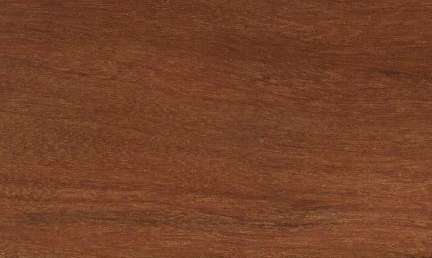
Okip (Ctenolophon englerianus)
Family: Linaceae Common names: Ijaw me, Me, Okip Distributed in: Cameroon, Gabon, Nigeria (Africa) Distribution overview: The species occurs on the west coast of Africa, from south-western Nigeria to Cameroon and Gabon. It is usually found in freshwater swamp forests. Common uses: Agricultural implements, Barge fenders, Boat building (general), Boat building, Building construction, Building materials, Cabin construction, Canoes, Construction, Crossties, Docks, Dockwork, Domestic flooring, Factory construction, Flooring, Fuelwood, Harbor work, Heavy construction, Lifeboats, Marine construction, Mine timbers, Naval architecture, Parquet flooring, Poles, Raft floats, Rafts, Railroad ties, Shipbuilding, Sporting Goods, Sub-flooring, Truck bodies, Utility poles, Vehicle parts, Wharf construction Environment profile: Status has not been officially assessed Tree size: Trunk diameter is 150-200 cm
Colors: the heart isYellow, Yellowish tanand the sapwoodWhite, Yellow.The grain isStraight, the textureFineand the lusterLow
Natural durability: Very durable, Very durable Odor: No specific smell or taste
Kiln Drying Rate: Very slow Drying Defects: Prone to warping and splitting , Splitting Ease of Drying: Thick Stock Requires Care Comments: Generally strong, tough, and hard. Oil ContentThe wood contains oil deposits Blunting Effect: High to severe
Boring: Fairly difficult to very difficult Carving: Fairly Difficult to Very Difficult
Cutting Resistance: Fairly Difficult to Very Difficult to saw Gluing: Fairly Easy to Very Easy Mortising: Fairly Difficult to Very Difficult
Moulding: Fairly Difficult to Very Difficult Movement in Service: Fairly Difficult to Very Difficult Nailing: Pre-Boring Recommended, Pre-Boring is necessary Planing: Very Good to Excellent Resistance to Abrasion: High Resistance to Impregnation: Resistant sapwood Response to hand tools: Poor response to hand tools Routing recessing: Fairly Difficult to Very Difficult
Veneering qualities: No drying degrade, Suitable for peeling Steam bending: Fairly Easy to Very Easy
Screwing: Fair to Good Results, Pre-boring recommended; Turning: Very Good to Excellent Results
Polishing: Very Good to Excellent; Staining: Very Good to Excellent;
Shrinkage, Radial = large Shrinkage, Tangential = fairly large Shrinkage, Radial = fairly large Bending strength (MOR) = very high Shrinkage, Volumetric = fairly large Shrinkage, Tangential = large Max. crushing strength = very high Max. crushing strength = high Shrinkage, Volumetric = moderate Shrinkage, Volumetric = large Shearing strength (parallel to grain) = low Modulus of Elasticity (stiffness) = medium Modulus of Elasticity (stiffness) = high Heavy Hardness (side grain) = very hard Hardness (side grain) = hard Density (dry weight) =53-60 lbs/cu. ft. Density (dry weight) = 61-67 lbs/cu. ft It is stronger than Hard maple, White oak, or Teak. It is hard - harder than Hard maple or Teak The wood is very heavy. Bolza, E., Keating, W.G.,1972,African Timbers - the Properties, Uses and Characteristics of 700 Species,C.S.I.R.O. Div. of Building ResearchDalziel, J.M.,1937,The Useful Plants of West Tropical Africa,Crown Agents for the ColoniesKeay, R.W.J.1989. Trees of Nigeria.Revised Version of Nigerian Trees. Clarendon Press, Oxford.Keay, R.W.J., et al,1960,Nigerian Trees Vol.1,Nigeria Federal Department of Forest Research, IbadanKennedy, J.D.,1936,Forest Flora of Southern Nigeria,Government Printer LagosSallenave, P.,1955,Proprietes Phyiques et Mecaniques des Bois Tropicaux de l'Union Francaise,C.T.F.TSallenave, P.,1964,Proprietes Physiques et Mecaniques des Bois Tropicaux (Premier Supplement,C.T.F.T. Publ.,no.23Takahashi, A.,1978,Compilation of Data on the Mechanical Properties of Foreign Woods (Part,III) Africa,Shimane University, Japan, Research Report on Foreign Wood No. 7 |

*Come interpretare i dati (manleva su eventuali imprecisioni)
Messenger id: XXXXXXXXXX - Skype id: XXXXXXXXX
Copyright © 2026 | P.IVA 01158930998 Perito Camera di Commercio di Genova n.1917 settore Legnami e Pavimenti in legno

