Sei in: home » database dei legni


Fornitori
|
Ditta 5
Indirizzo: via dei platani 4 liguria Tel.: +39 456 5664 54 Sito web: www.pippo.it E-mail: pippo at libero.it |
|
Ditta 4
Indirizzo: via dei platani 4 liguria Tel.: +39 456 5664 54 Sito web: www.pippo.it E-mail: pippo at libero.it |
|
Ditta 3
Indirizzo: via dei platani 4 liguria Tel.: +39 456 5664 54 Sito web: www.pippo.it E-mail: pippo at libero.it |
|
Ditta 2
Indirizzo: via dei platani 4 liguria Tel.: +39 456 5664 54 Sito web: www.pippo.it E-mail: pippo at libero.it |
|
Ditta 1
Indirizzo: via dei platani 4 liguria Tel.: +39 456 5664 54 Sito web: www.pippo.it E-mail: pippo at libero.it |
|
Ditta 0
Indirizzo: via dei platani 4 liguria Tel.: +39 456 5664 54 Sito web: www.pippo.it E-mail: pippo at libero.it |
Contatti
database dei legni


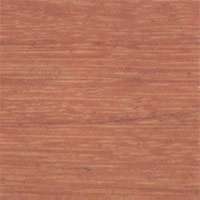
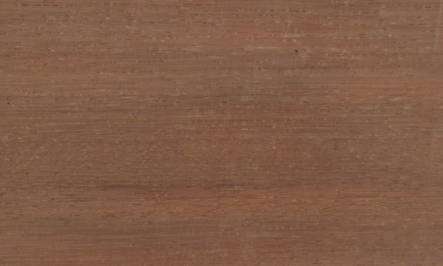
Afzelia (Afzelia bipindensis)
Family: Leguminosae Common names: Afzelia, Aligna, Apa, Azza, Beyo, Bolengo, Doussie, Kpendei, Lingue, M'banga, Meli, Mkola, Mussacosa, N'kokongo, Papao, Pauconta, Uvala, Yellow afzelia Distributed in: Cameroon (Africa) Distribution overview: A. bipindensis is found mostly in the Guineo-Congolian regional centre of endemism, but also extends into the Zambezian region. This species occurs in Angola, Central African Republic, Cameroon, Congo, Gabon, Nigeria, Uganda and Zaire. It is a rainforest species. Common uses: Boat building, Building materials, Canoes, Chemical containers, Desks, Dining-room furniture, Domestic flooring, Excelsior, Exterior trim & siding, Exterior uses, Fine furniture, Fixtures, Flooring, Framing, Furniture , Interior construction, Joinery, Lifeboats, Living-room suites, Office furniture, Parquet flooring, Shakes, Sheathing, Shingles, Shipbuilding, Siding, Sills, Stairrails, Stairworks, Stringers, Sub-flooring, Tables , Utility furniture, Windows Environment profile: Generally secure within most of its natural habitat, but note exceptions. Tree size: Trunk diameter is 100-150 cm
Colors: the heart isRed, Reddish brownand the sapwoodWhite to yellow, Yellow.The grain isStraight to interlocked, the textureModerately coarseand the lusterMedium
Natural durability: Durable
Naturally resistant to attack by decay fungi and other wood destroying organisms
Odor: No specific smell or taste
Kiln Schedules: Schedule E (4/4) United Kingdom Drying Defects: Shakes may become extended, Slight checking and cracking Ease of Drying: Slowly Comments: Afzelia bipindensis is also somewhat resinousThe wood contains a yellow dye-stuff (afzelin) which can stain textile materials under moist conditions. Blunting Effect: Moderate Boring: Fairly difficult to very difficult
Carving: Fairly Difficult to Very Difficult
Cutting Resistance: Fairly Difficult to Very Difficult to saw Gluing: Fairly Difficult to Very Difficult Mortising: Fairly Difficult to Very Difficult
Moulding: Fairly Difficult to Very Difficult Movement in Service: Fairly Difficult to Very Difficult Nailing: Pre-Boring Recommended, Pre-boring recommended Planing: May produce some torn grain Resistance to Impregnation: Sapwood is moderately treatable Response to hand tools: Responds Poorly Routing recessing: Fairly Difficult to Very Difficult
Sanding: Fairly Easy to Very Easy Veneering qualities: Difficult to veneer, Not suited for plywood manufacture Steam bending: Satisfactory
Screwing: Fairly Difficult to Very Difficult, Pre-boring recommended; Turning: Fairly Difficult to Very Difficult
Polishing: Surface treatment advised; Staining: Fairly Difficult to Very Difficult; Varnishing: Surface Preparation;
Weight = high Resists denting and marring Density = high Crushing strength = high Compression strength (parallel to grain) = high Bending strength (MOR) = high Bolza, E., Keating, W.G.,1972,African Timbers - the Properties, Uses and Characteristics of 700 Species,C.S.I.R.O. Div. of Building ResearchChudnoff, M.,1984,Tropical Timbers of the World,U.S.A. Department of Agriculture, Forest Service, Forest Products,Laboratory, Madison.HMSO.1972.Handbook of Hardwoods.2nd Edition.Revised by R. H. Farmer.Department of the Environment, Building Research Establishment, Princes Risborough Laboratory, Princes Risborough, Aylesbury, Buckinghamshire.ITTO.1986.Tropical Timber Atlas, Volume 1 - Africa.International Tropical Timber Organization (ITTO) and Centre Technique Forestier Tropical (CTFT, 45bis, Avenue de la Belle Gabrielle, Nogent-sur-Marne Cedex, France.Keay, R.W.J.1989. Trees of Nigeria.Revised Version of Nigerian Trees. Clarendon Press, Oxford.Lavers, G. M.1966.The Strength Properties of Timbers.Forest Products Research Bulletin, No. 50.Ministry of Technology, Her Majesty's Stationery Office, London.Lincoln, W. A.1986.World Woods in Color.Linden Publishing Co. Inc., Fresno, California.WCMC.1992.Conservation Status Listing - Trees and Timbers of the World.World Conservation Monitoring Center-Plants Programme, Cambridge, CB3 ODL, United Kingdom. |
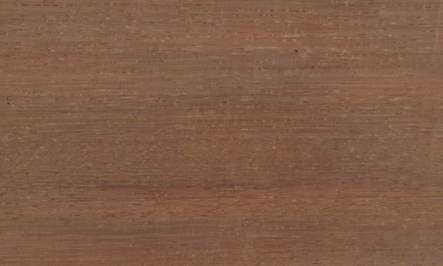
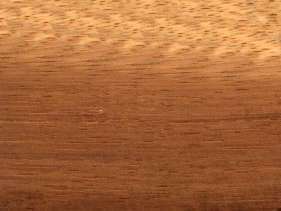
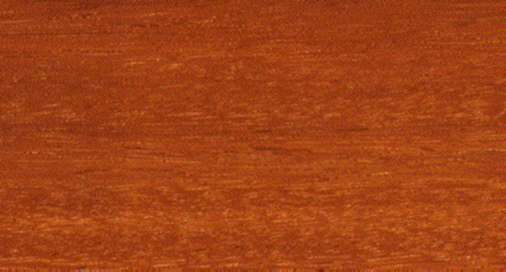

*Come interpretare i dati (manleva su eventuali imprecisioni)
Messenger id: XXXXXXXXXX - Skype id: XXXXXXXXX
Copyright © 2026 | P.IVA 01158930998 Perito Camera di Commercio di Genova n.1917 settore Legnami e Pavimenti in legno

