Sei in: home » database dei legni


Fornitori
|
Ditta 5
Indirizzo: via dei platani 4 liguria Tel.: +39 456 5664 54 Sito web: www.pippo.it E-mail: pippo at libero.it |
|
Ditta 4
Indirizzo: via dei platani 4 liguria Tel.: +39 456 5664 54 Sito web: www.pippo.it E-mail: pippo at libero.it |
|
Ditta 3
Indirizzo: via dei platani 4 liguria Tel.: +39 456 5664 54 Sito web: www.pippo.it E-mail: pippo at libero.it |
|
Ditta 2
Indirizzo: via dei platani 4 liguria Tel.: +39 456 5664 54 Sito web: www.pippo.it E-mail: pippo at libero.it |
|
Ditta 1
Indirizzo: via dei platani 4 liguria Tel.: +39 456 5664 54 Sito web: www.pippo.it E-mail: pippo at libero.it |
|
Ditta 0
Indirizzo: via dei platani 4 liguria Tel.: +39 456 5664 54 Sito web: www.pippo.it E-mail: pippo at libero.it |
Contatti
database dei legni


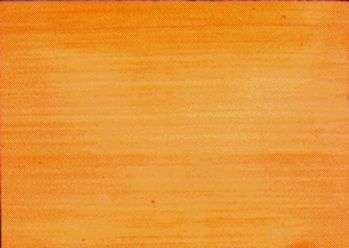
Cowdie (Agathis australis)
Family: Araucariaceae Common names: Cowdie, Cowdie pine, Cowrie, Kauri, Kauri pine, Kaurie, Kawri, New Zealand kauri, New Zealand kauri pine, New Zealand pine, New Zealand pitch tree, Southern dammar Distributed in: New Zealand (Oceania and S.E. Asia) Distribution overview: This species is found on the northern peninsula of the North Island of New Zeland, at low elevations (Silba 1986). It lives in forests which include Podocarpus totara, Dacrydium cupressinum, and Podocarpus ferruginoides. Common uses: Boat building (general), Boat building: decking, Boat building: masts, Boxes and crates, Bridge construction, Cabinetmaking, Chemical derivatives, Flooring, Food containers, Furniture, Heavy construction, Joinery, Light construction, Matches, Paneling, Pencil, Plywood, Pulp/Paper products, Shade rollers, Shingles, Turnery, Vats, Veneer Tree size: Trunk diameter is 300-350 cm
Colors: the heart isYellow, Yellow to golden-yellow to orangeand the sapwoodWhite, Yellow.The grain isWavy, the textureFineand the lusterMedium
Natural durability: Susceptible to attack from termites (Isoptera), Susceptible to insect attack Kiln Schedules: Kiln Drying Rate (in days) is fairly rapid Kiln Drying Rate: Rapid (<10 days for boards < 32 mm, to <30 days for boards >= 63 mm) Drying Defects: Slight surface checking, Slight twist/warp Ease of Drying: Slowly Tree Identification: Bole/stem form is straight
Comments: General finishing qualities are rated as good Blunting Effect: Moderate Boring: Fairly easy to very easy Cutting Resistance: Easy to saw Gluing: Fairly Easy to Very Easy Mortising: Finishes satisfactorily Moulding: Very Good to Excellent Movement in Service: Very Good to Excellent Nailing: Holds nails well, Very Good to Excellent Planing: Very Good to Excellent Resistance to Impregnation: Resistant sapwood Response to hand tools: Easy to machine Routing recessing: Routing is easy
Screwing: Screwing yields good results, Very Good to Excellent Results; Turning: Very Good to Excellent Results
Painting: Very Good to Excellent; Polishing: Very Good to Excellent; Staining: Very Good to Excellent;
Density (dry weight) = 31-37 lbs/cu. ft. 0 Max. crushing strength = medium 1 Density (dry weight) = 38-45 lbs/cu. ft. Modulus of Elasticity (stiffness) = medium Bending strength (MOR) = medium Shearing strength (parallel to grain) = low Bending strength (MOR) = low Shearing strength (parallel to grain) = very low Hardness (side grain) = very soft Hardness (side grain) = soft Modulus of Elasticity (stiffness) = low Max. crushing strength = low Shrinkage, Tangential = very small Shrinkage, Tangential = small Shrinkage, Radial = very small Density (dry weight) = 23-30 lbs/cu. ft. Bending strength (MOR) = high Bier, H.,1983,The strength properties of small clear specimens of New Zealand-grown,timber,New Zealand Forest Service Forest Research Institute, FRI Bulletin No.41Brown, W.H.,1978,Timbers of the World, No. 8 Australasia,TRADA, Red Booklet SeriesClifford, N.,1957,Timber Identification for the Builder and Architect,Leonard Hill (Books) LTD. LondonCockayne, L. and Phillips Turner, E.,1958,The trees of New Zealand,New Zealand Forest Service Information Series No.12Dallimore, W. and Jackson, A. Bruce,1966,A Handbook of Coniferae and Ginkgoaceae Fourth Ed. Revised by S.G.,Harrison,Edward Arnold (Publishers) Ltd. LondonEntrican, A.R.,1949,The properties and uses of Kauri (Agathis australis,New Zealand Forest Service Information Series No.7Forest Products Research Laboratory U.K.,1957,A Handbook of Softwoods,Department of Scientific and Industrial Research Forest Products Research,HMSOForest Products Research Laboratory, U.K.,1945,A Handbook of Empire Timbers,Department of Scientific and Industrial Research Forest Products ResearchHoward, A.L.,1948,A Manual of Timbers of the World.,Macmillan & Co. Ltd. London 3rd ed.Kloot, N.H., Bolza, E.,1961,Properties of Timbers Imported into Australia,C.S.I.R.O. Forest Products Division Technological Paper,No.12Patterson, D.,1988,Commercial Timbers of the World, 5th Edition,Gower Technical PressRendle, B.J.,1969,World Timbers (3 Vols.,Ernest Benn Ltd. LondonSmith, S.W. and Entrican, A.R.,1957,Forestry in New Zealand,New Zealand Forest Service Information Series No.1Stone, H.,1924,The Timbers of Commerce and their Identification,William Rider & Sons Ltd. LondonTimber Development Association Ltd.,1955,World Timbers (3 Vols.,Timber Development Association Ltd.Titmuss, F.H.,1965,Commercial Timbers of the World,Technical Press Ltd., London, 3rd edition |

*Come interpretare i dati (manleva su eventuali imprecisioni)
Messenger id: XXXXXXXXXX - Skype id: XXXXXXXXX
Copyright © 2026 | P.IVA 01158930998 Perito Camera di Commercio di Genova n.1917 settore Legnami e Pavimenti in legno

