Sei in: home » database dei legni


Fornitori
|
Ditta 5
Indirizzo: via dei platani 4 liguria Tel.: +39 456 5664 54 Sito web: www.pippo.it E-mail: pippo at libero.it |
|
Ditta 4
Indirizzo: via dei platani 4 liguria Tel.: +39 456 5664 54 Sito web: www.pippo.it E-mail: pippo at libero.it |
|
Ditta 3
Indirizzo: via dei platani 4 liguria Tel.: +39 456 5664 54 Sito web: www.pippo.it E-mail: pippo at libero.it |
|
Ditta 2
Indirizzo: via dei platani 4 liguria Tel.: +39 456 5664 54 Sito web: www.pippo.it E-mail: pippo at libero.it |
|
Ditta 1
Indirizzo: via dei platani 4 liguria Tel.: +39 456 5664 54 Sito web: www.pippo.it E-mail: pippo at libero.it |
|
Ditta 0
Indirizzo: via dei platani 4 liguria Tel.: +39 456 5664 54 Sito web: www.pippo.it E-mail: pippo at libero.it |
Contatti
database dei legni


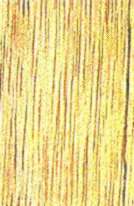
Baru bukit (Endospermum malaccense)
Family: Euphorbiaceae Common names: Baru bukit, Bebaru, Bembulan, Bukit, Ekor belangkas, Gubas, Inchong perlis, Kadjoe radja, Kajoe semoet, Mahang puteh, Marabulan, Medang kelabu, Membulan, Sendok, Sendok-sendok, Sesendok, Sesundo, Terbulan Distributed in: Brunei, Indonesia, Malaysia, Thailand (Oceania and S.E. Asia) Common uses: Agricultural implements, Boat building (general), Boxes and crates, Cabinetmaking, Carvings, Concrete formwork, Drawing boards, Flooring: industrial heavy traffic, Furniture, Heavy construction, Joinery, Light construction, Matches, Particleboard, Plywood corestock, Plywood, Pulp/Paper products, Toys, Veneer: decorative Environment profile: Endangered Tree size: Trunk diameter is 250-300 cm
Colors: the heart isWhite to cream, Yellow to golden-yellow to orangeand the sapwoodPink, Red.The grain isWeak figure, the textureMedium to coarseand the lusterSlightly lustrous
Natural durability: Susceptible to insect attack, Susceptible to marine borer attack Odor: Has an odor Kiln Schedules: Drying (speed) is fast
Kiln Drying Rate: Slow Drying Defects: Slight twist/warp, Splitting Ease of Drying: Variable Tree Identification: Bole/stem form is buttressed
Blunting Effect: Moderate Boring: Fairly difficult to very difficult Carving: Fairly Easy to Very Easy Cutting Resistance: Fairly Difficult to Very Difficult to saw Gluing: Fairly Easy to Very Easy Mortising: Fairly Easy to Very Easy Moulding: Fairly Easy to Very Easy Movement in Service: Fairly Easy to Very Easy Nailing: Fairly Easy to Very Easy, Holds nails well Planing: Planes well, to a good finish Resistance to Impregnation: Resistant sapwood Resistance to Splitting: Excellent
Response to hand tools: Responds Readily Routing recessing: Fairly Easy to Very Easy Sanding: Very Good to Excellent Results Veneering qualities: Veneers easily, Veneers moderately easy Steam bending: Unsuitable
Screwing: Fair to Good Results, Fairly Easy to Very Easy; Turning: Finish is generally satisfactory
Painting: Surface Preparation; Polishing: Very Good to Excellent; Staining: Very Good to Excellent; Varnishing: Surface Preparation;
Density (dry weight) = 31-37 lbs/cu. ft. 1 Shrinkage, Tangential = very small Shrinkage, Radial = very small Density (dry weight) = 23-30 lbs/cu. ft. Density (dry weight) = 38-45 lbs/cu. ft. Toughness-Hammer drop (Impact Strength) = very low Shrinkage, Tangential = small Shearing strength (parallel to grain) = very low Modulus of Elasticity (stiffness) = low Max. crushing strength = medium Hardness (side grain) = very soft Bending strength (MOR) = low Browne, F.G.,1955,Forest Trees of Sarawak and Brunei and their Products.,Government Printing Office, Kuching, SarawakBrown, W.H.,1978,Timbers of the World, No. 4 South East Asia,TRADA, Red Booklet SeriesBurgess, P.F.,1966,Timbers of Sabah,Sabah Forest Record, no.6Chudnoff, M.,1984,Tropical Timbers of the World,U.S.A. Department of Agriculture, Forest Service, Forest Products,Laboratory, Madison.Desch, H.E.,1954,Manual of Malayan Timbers (2 vols,Malayan Forest Records,no.15Keating, W.G., Bolza, E.,1982,Characteristics properties and uses of timbers. South East Asia, Northern,Australia and the Pacific,C.S.I.R.O. Div. Chemical Technology,Inkata Press,1Kraemer, J.H.,1951,Trees of the Western Pacific Region,West Lafayette, Indiana U.S.A.Kumarasamy, K., Burgess, H.J.,1956,The nailing properties of 72 Malayan Timber Species,The Malayan Forester 19 pp219-26Lee, Y.H., et al,1974,Commercial Timbers of Peninsular Malaysia,Kuala Lumpur Malaysia Department of Forestry Peninsular Malaysia and,Malaysian Timber Industry BoardLee, Y.H., Lopez, D.T.,1968,The Machining Properties of some Malayan Timbers,Malayan Forester,3,pp194-210Menon, K.D.,1958,Susceptibility of Commercial Species of Malayan Timbers to Powder-post,Beetle,Attack,Malayan Forest Service Trade Leaflet,no.27Menon, P.K.B.,1959,The wood anatomy of Malayan timbers: commercial timbers, 3. Light,hardwoods,Malaysian Forest Research Institute Kepong, Research Pamplet, No. 27.Smythies, B.E.,1965,Common Sarawak Trees,Borneo Literature BureauStadelman, R.C.,1966,Forests of South-East Asia,Wimmer Bros., Memphis TennesseeThomas, A.V., Browne, F.G.,1950,Notes on Air-Seasoning of Timber in Malaya,Malayan Forester 13(4) pp214-23Thomas, A.V., Pillai, P.K.B.,1954,Shrinkage of Malayan timbers,Malayan Forester 17(4) pp208-9Whitmore, T.C.,1973,Tree Flora of Malaya A Manual for Foresters Volume 2,Forest Department Ministry of Primary Industries MalaysiaWyatt-Smith, J.,1979,Pocket Checklist of Timber Trees,Malayan Forest Records No.17Yap, S.K., Razali, H.,1980,The reproductive behaviour of Sesendok (Endospermum malaccense,Malayan Forester 43(1) pp37-43 |

*Come interpretare i dati (manleva su eventuali imprecisioni)
Messenger id: XXXXXXXXXX - Skype id: XXXXXXXXX
Copyright © 2026 | P.IVA 01158930998 Perito Camera di Commercio di Genova n.1917 settore Legnami e Pavimenti in legno

