Sei in: home » database dei legni


Fornitori
|
Ditta 5
Indirizzo: via dei platani 4 liguria Tel.: +39 456 5664 54 Sito web: www.pippo.it E-mail: pippo at libero.it |
|
Ditta 4
Indirizzo: via dei platani 4 liguria Tel.: +39 456 5664 54 Sito web: www.pippo.it E-mail: pippo at libero.it |
|
Ditta 3
Indirizzo: via dei platani 4 liguria Tel.: +39 456 5664 54 Sito web: www.pippo.it E-mail: pippo at libero.it |
|
Ditta 2
Indirizzo: via dei platani 4 liguria Tel.: +39 456 5664 54 Sito web: www.pippo.it E-mail: pippo at libero.it |
|
Ditta 1
Indirizzo: via dei platani 4 liguria Tel.: +39 456 5664 54 Sito web: www.pippo.it E-mail: pippo at libero.it |
|
Ditta 0
Indirizzo: via dei platani 4 liguria Tel.: +39 456 5664 54 Sito web: www.pippo.it E-mail: pippo at libero.it |
Contatti
database dei legni


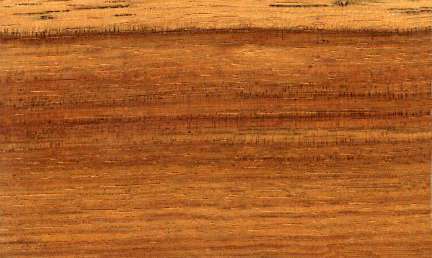
Timbauba (Enterolobium schomburgkii)
Family: Leguminosae Common names: Acacia franc, Acadia franc, Angelim, Angelim orelha de negro, Angelium, Batibatra, Bois la morue, Bougou bati batra, Brownuya, Coumarouna odorata, Curarina, Fava de rosoa, Harino, Hevio, Jebio, Kabbes, Kadiouchi, Makka, Menudito, Orelha de macaco, Poirier, Tamaren prokoni, Timbauba, Timbo, Timbo de mata, Timbo rana, Timborana, Titim batibatra, Vinhatico Distributed in: Bolivia, Brazil, French Guiana, Guyana, Peru, Suriname, Venezuela (Central America, Latin America) Distribution overview: Central America and southward to the Guianas and northern Brazil, Peru and Bolivia (including Panama and Venezuela); preferring non-inundated sandy soil. Common uses: Agricultural implements, Bedroom suites, Boat building: framing, Building construction, Building materials, Cabin construction, Cabinetmaking, Chairs, Chests, Concealed parts (Furniture), Concrete formwork, Construction, Crossties, Desks, Dining-room furniture, Domestic flooring, Dowell pins, Dowells, Drawer sides, Factory construction, Factory flooring, Fine furniture, Floor lamps, Flooring, Furniture , Furniture components, Furniture squares or stock, Furniture, Handles, Hatracks, Heavy construction, Joinery, Kitchen cabinets, Light construction, Living-room suites, Mine timbers, Office furniture, Paneling, Parquet flooring, Radio - stereo - TV cabinets, Railroad ties, Rustic furniture, Shafts/Handles, Stools, Sub-flooring, Tables , Tool handles, Utility furniture, Vehicle parts, Veneer: decorative Product sources: The ITTO reports that timber from this species is produced at a low rate. Export potential is rated as fair. Environment profile: Status unknown in many of its growth areas Tree size: Trunk diameter is 200-250 cm
Colors: the heart isYellow to golden-yellow to orange, Yellowish brownand the sapwoodWhite to yellow, Yellow.The grain isWavy, the textureMediumand the lusterSlightly lustrous
Natural durability: Very durable, Very durable Odor: No specific smell or taste
LightInduced Color Change: Darker
Kiln Schedules: Kiln Drying Rate (in days) is rather slow Kiln Drying Rate: Very slow (>28 days for boards < 32 mm, to >84 days for boards >= 63 mm) Drying Defects: Slight twist/warp, Splitting Ease of Drying: Slowly Tree Identification: Bole/stem form is straight Comments: General finishing qualities are rated as good The timber is similar in properties to the African species Afrormosia (Pericopsis elata ) Blunting Effect: Moderate effect Boring: Moderately easy Carving: Fairly Difficult to Very Difficult
Cutting Resistance: Fairly Difficult to Very Difficult to saw Gluing: Surface Preparation Mortising: Fairly Difficult to Very Difficult
Moulding: Fairly Difficult to Very Difficult
Movement in Service: Fairly Difficult to Very Difficult
Nailing: Good nailing properties, Pre-Boring Recommended Planing: Very Good to Excellent Resistance to Impregnation: Sapwood is treatable Response to hand tools: Responds Poorly Routing recessing: Fairly Difficult to Very Difficult
Sanding: Very Good to Excellent Results
Screwing: Fair to Good Results, Pre-boring recommended; Turning: Very Good to Excellent Results
Painting: Takes paint easily after pre-treatment; Polishing: Very good; Varnishing: Satisfactory
;
Max. crushing strength = high Bending strength (MOR) = high Modulus of Elasticity (stiffness) = high Hardness (side grain) = hard Density (dry weight) = 61-67 lbs/cu.ft Density (dry weight) = 53-60 lbs/cu. ft Density (dry weight) = 46-52 lbs/cu. ft. Density (dry weight) = 38-45 lbs/cu. ft. Shrinkage, Tangential = fairly large Shrinkage, Radial = small Shrinkage, Tangential = large Shrinkage, Radial = moderate Shearing strength (parallel to grain) = medium Modulus of Elasticity (stiffness) = medium Bending strength (MOR) = very high Bending strength (MOR) = medium Shrinkage, Radial = fairly large Shearing strength (parallel to grain) = very low Shearing strength (parallel to grain) = low Shearing strength (parallel to grain) = high Modulus of Elasticity (stiffness) = low Max. crushing strength = medium Max. crushing strength = low Hardness (side grain) = medium Bois et Forets des Tropiques,1985,Acacia franc - Enterolobium schomburgkii Benth.,Bois et Forets des Tropiques Vol. 207Bois et Forets des Tropiques,1991,Acacia franc - Enteroloblium schomburgkii Benth.,Bois et Forets des Tropiques Vol.230 pp.53-56Chichignoud, M., G. Deon, P. Detienne, B. Parant and P. Vantomme.1990.Tropical Timber Atlas of Latin America.International Tropical Timber Organization (ITTO, Centre Technique Forestier Tropical, Division of CIRAD, 45 bis Avenue de la Belle Gabrielle, Nogent-sur-Marne, CEDEX, France.Chudnoff, M.,1984,Tropical Timbers of the World,U.S.A. Department of Agriculture, Forest Service, Forest Products,Laboratory, Madison.Erfurth, T., Rusche, H.,1976,The Marketing of Tropical Wood B. Wood Species from S. American Tropical,Moist Forests,F.A.O. Forestry DepartmentSallenave, P.,1955,Proprietes Phyiques et Mecaniques des Bois Tropicaux de l'Union Francaise,C.T.F.TTakahashi, A.,1975,Compilation of data on the Mechanical Properties of Foreign Woods (Part 2,Central and South America,Shimane University, Japan, Research Report on Foreign Wood No.4Teixeira, D. E., M. A. E. Santana and M. Rabelo de Souza.1988. Amazonian Timbers for the International Market.ITTO Technical Series 1.Brazilian Institute for Forestry Development, Brazil.Wangaard, F.F., et al,1954,Properties and Uses of Tropical Woods 4,Tropical Woods,14(99, pp1-187 |

*Come interpretare i dati (manleva su eventuali imprecisioni)
Messenger id: XXXXXXXXXX - Skype id: XXXXXXXXX
Copyright © 2026 | P.IVA 01158930998 Perito Camera di Commercio di Genova n.1917 settore Legnami e Pavimenti in legno

