Sei in: home » database dei legni


Fornitori
|
Ditta 5
Indirizzo: via dei platani 4 liguria Tel.: +39 456 5664 54 Sito web: www.pippo.it E-mail: pippo at libero.it |
|
Ditta 4
Indirizzo: via dei platani 4 liguria Tel.: +39 456 5664 54 Sito web: www.pippo.it E-mail: pippo at libero.it |
|
Ditta 3
Indirizzo: via dei platani 4 liguria Tel.: +39 456 5664 54 Sito web: www.pippo.it E-mail: pippo at libero.it |
|
Ditta 2
Indirizzo: via dei platani 4 liguria Tel.: +39 456 5664 54 Sito web: www.pippo.it E-mail: pippo at libero.it |
|
Ditta 1
Indirizzo: via dei platani 4 liguria Tel.: +39 456 5664 54 Sito web: www.pippo.it E-mail: pippo at libero.it |
|
Ditta 0
Indirizzo: via dei platani 4 liguria Tel.: +39 456 5664 54 Sito web: www.pippo.it E-mail: pippo at libero.it |
Contatti
database dei legni


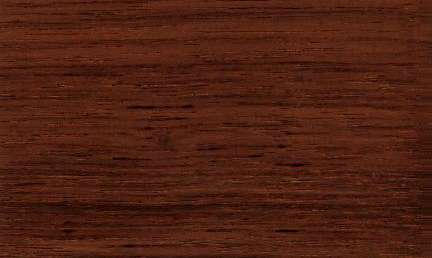
Wallaba (Eperua falcata)
Family: Leguminosae Common names: Apa, Apazeiro, Bainha de espada, Bijhout, Bijlhout, Bioudou, Bois de sabre, Eperu, Eperua falcata, Espadeira, Ituri, Ituri wallaba, Itusi wallaba, Jacare copahiba, Jebaro, Jebaru-rana, Palo machete, Parewe, Parive, Pois sabre, Soft wallaba, Uapa, Uapa tabaco, Vouapa-tabaca, Walaba, Walaba ituri walaba, Wallaba, Wallabaholz, Wapa, Wapa gras, Wapa huileux, Wapa patouve, Water wallaba, White wallaba, Woapa, Woapa huileux, Wopa, Wouapa, Yoboko Distributed in: Brazil, French Guiana, Guyana, Suriname, Venezuela (Central America, Latin America) Distribution overview: Generally found in the Guianas and into Venezuela and the Amazon region of northern Brazil. Common uses: Boat building: decking, Boat building: framing, Bridge construction, Building construction, Building materials, Cabin construction, Charcoal, Construction, Cooperages, Crossties, Decks, Factory construction, Factory flooring, Flooring, Flooring: commercial heavy traffic, Flooring: industrial heavy traffic, Fuelwood, Furniture, Heavy construction, Joinery (external): ground contact, Joinery, Light construction, Marine construction, Mine timbers, Particleboard, Piling, Poles, Posts, Pulp/Paper products, Railroad ties, Roofing, Shingles, Structural work, Sub-flooring, Turnery, Utility poles, Vats, Vehicle parts, Wharf construction, Wheel spokes, Wheels Product sources: The ITTO reports that timber production from the species is rather low. The timber is exported in low quantities. Environment profile: Vulnerable
Colors: the heart isRed, Reddish brownand the sapwoodWhite, White to yellow.The grain isWeak figure, the textureMedium to coarseand the lusterDull
Natural durability: Susceptible to marine borer attack, Very durable Odor: No characteristic taste LightInduced Color Change: Darker
Kiln Schedules: Kiln Drying Rate (in days) is rather slow Kiln Drying Rate: Very slow (>28 days for boards < 32 mm, to >84 days for boards >= 63 mm)
Drying Defects: Slight end splitting, Warping can be expected Ease of Drying: Moderately Difficult to Difficult Tree Identification: Bole/stem form is cylindrical Comments: General finishing qualities are rated as good General finishing qualities are rated as poor General finishing qualities are rated as satisfactory Blunting Effect: Moderate effect Boring: Fairly easy to very easy Carving: Fairly Easy to Very Easy Cutting Resistance: Cutting Resistance with dry wood is easy Gluing: Glues well Mortising: Fairly Easy to Very Easy Moulding: Fairly Easy to Very Easy Movement in Service: Fairly Easy to Very Easy Nailing: Holds nails well, Pre-boring recommended Planing: Planes well, to a good finish Resistance to Impregnation: Untreatable Resistance to Splitting: Poor
Response to hand tools: Variable qualities Routing recessing: Fairly Easy to Very Easy Steam bending: Moderate
Turning: Good results
Painting: Satisfactory; Polishing: Satisfactory; Staining: Reacts with Iron to discolour wood;
Bending strength (MOR) = high 0 Modulus of Elasticity (stiffness) = high 0 Density (dry weight) = 53-60 lbs/cu. ft 0 Max. crushing strength = high 1 Hardness (side grain) = medium Shrinkage, Tangential = small Shrinkage, Tangential = moderate Shrinkage, Radial = very small Hardness (side grain) = hard Shrinkage, Volumetric = small Shrinkage, Radial = small Shearing strength (parallel to grain) = medium Shearing strength (parallel to grain) = low Max. crushing strength = very high Shrinkage, Volumetric = moderate Shrinkage, Radial = moderate Density (dry weight) = 61-67 lbs/cu.ft Density (dry weight) = 46-52 lbs/cu. ft. Shrinkage, Tangential = fairly large Modulus of Elasticity (stiffness) = medium Toughness-Hammer drop (Impact Strength) = low Shrinkage, Tangential = very small Shrinkage, Tangential = large Shrinkage, Radial = large Shearing strength (parallel to grain) = very low Hardness (side grain) = soft Bending strength (MOR) = very high Bending strength (MOR) = medium Barbour, W.R.,1952,Cativo (Prioria copaifera,Journal of Forestry,50(2,PP96-9Bena, P.,1960,Essences Forestieres de Guyane,Bureau Agricole et Forestier Guyanais GuyanaBerni, C.A., Bolza, E., Christensen, F.J.,1979,South American Timbers - The Characteristics, Properties and Uses of 190,Species,C.S.I.R.O Div. Building ResearchBois et Forets des Tropiques,1951,Wafa (Eperua sp. en particulier E. falcata et E. jenmani,Bois et Forets des Tropiques,No.17 pp37-40Boone, R.S., C.J. Kozlik, P.J. Bois, E.M. Wengert. 1988. Dry Kiln Schedules for Commercial Hardwoods - Temperate and Tropical. USDA, Forest Service, General Technical Report FPL-GTR-57, Forest Products Laboratory, Madison, Wisconsin.Brown, W.H.,1978,Timbers of the World, No. 2 South America,TRADA, Red Booklet SeriesChichignoud, M., G. Deon, P. Detienne, B. Parant and P. Vantomme.1990.Tropical Timber Atlas of Latin America.International Tropical Timber Organization (ITTO, Centre Technique Forestier Tropical, Division of CIRAD, 45 bis Avenue de la Belle Gabrielle, Nogent-sur-Marne, CEDEX, France.Chudnoff, M.,1984,Tropical Timbers of the World,U.S.A. Department of Agriculture, Forest Service, Forest Products,Laboratory, Madison.Clifford, N.,1957,Timber Identification for the Builder and Architect,Leonard Hill (Books) LTD. LondonEdmondson, C.H.,1949,Reaction of Woods from S.America and Caribbean areas to Marine Borers in,Hawaiian Waters,Caribbean Foresters,10(1,PP37-41Erfurth, T., Rusche, H.,1976,The Marketing of Tropical Wood B. Wood Species from S. American Tropical,Moist Forests,F.A.O. Forestry DepartmentFanshawe, D.B.,1948,Studies of the Trees of British Guiana Part 3,Tropical Woods,12(93,pp1-28Fanshawe, D.B.,1954,Forest Products of British Guiana Part 1 Principal Timbers,Forest Department British Guiana Forestry Bulletin (New Series 2nd,Edition,No.1Farmer, R.H.,1972,Handbook of Hardwoods,HMSOForest Products Research Laboratory, U.K.,1954,Hardwoods for Industrial Flooring,Forest Products Research Laboratory, Princes Risborough, Leaflet, No.48Forests Products Research Laboratory, U.K.,1956,A Handbook of Hardwoods,Forest Products Research Laboratory, Princes Risborough, Department of,Science and Industrial Research, Building Research EstablishmentGuna et al, S.R.D.,1945,Notes on British Guiana Timbers,The 'Daily Chronicle' Ltd. Printers,28PPGuyana - Forest Department,1951,British Guiana Timbers - Wallaba (Epenia Spp.,British Guiana Forestry Department Leaflet No. 3HMSO. 1981. Handbook of Hardwoods, 2nd Edition. Revised by R.H. Farmer, Department of the Environment, Building Research Establishment, Princes Risborough Laboratory, Princes Risborough, Aylesbury, Buckinghamshire.Howard, A.L.,1948,A Manual of Timbers of the World.,Macmillan & Co. Ltd. London 3rd ed.Kribs, D.A.,1950,Commercial and Foreign Woods on the American Market (a manual to their,structure, identification, uses and distribution,U.S.A. Penn. State College, Tropical Woods LaboratoryKynoch, W., Norton, N.A.,1938,Mechanical Properties of certain tropical woods chiefly from S. America,School of Forestry and Conservation, University of Michigan Bulletin,No.7Longwood, F.R.,1962,Commercial Timbers of the Caribbean,U.S.A. Department of Agriculture, Agriculture Handbook,No.207Martin-Lavigne, E.,1909,Recherches sur les Bois de la Guyane,Vigot Freres ParisPolak, A.M.,1992,Major Timber Trees of Guyana A Field Guide,The Tropenbos Foundation Wageningen, The NetherlandsRecord, S.J., Hess, R.W.,1943,Timbers of the New World,Yale University PressRecord, S.J., Mell, C.D.,1924,Timbers of Tropical America,Yale Univ. PressRedding, L.W.,1971,Resistance of Timbers to Impregnation with Creosote,Forest Products Research Laboratory, Princes Risborough, Building Research,Establishment Bulletin No.54 pp.43Sallenave, P.,1955,Proprietes Phyiques et Mecaniques des Bois Tropicaux de l'Union Francaise,C.T.F.TSallenave, P.,1971,Proprietes Physiques et Mecaniques des Bois Tropicaux (Deuxieme,Supplement,C.T.F.T.Stone, H.,1924,The Timbers of Commerce and their Identification,William Rider & Sons Ltd. LondonSurinam Forest Service,1952,Surinam Timber - A Summary with brief descriptions of the main timber,species of Surinam,Surinam Forest ServiceTakahashi, A.,1975,Compilation of data on the Mechanical Properties of Foreign Woods (Part 2,Central and South America,Shimane University, Japan, Research Report on Foreign Wood No.4Vink, A.T.,1965,Surinam Timbers,Surinam Forest Service Paramaribo,3rd rev. ed.Wolcott, G.N.,1950,An Index to the Termite Resistance of Woods,Agricultural Experimental Station, University of Puerto Rico Bulletin,No.85 |

*Come interpretare i dati (manleva su eventuali imprecisioni)
Messenger id: XXXXXXXXXX - Skype id: XXXXXXXXX
Copyright © 2026 | P.IVA 01158930998 Perito Camera di Commercio di Genova n.1917 settore Legnami e Pavimenti in legno

