Sei in: home » database dei legni


Fornitori
|
Ditta 5
Indirizzo: via dei platani 4 liguria Tel.: +39 456 5664 54 Sito web: www.pippo.it E-mail: pippo at libero.it |
|
Ditta 4
Indirizzo: via dei platani 4 liguria Tel.: +39 456 5664 54 Sito web: www.pippo.it E-mail: pippo at libero.it |
|
Ditta 3
Indirizzo: via dei platani 4 liguria Tel.: +39 456 5664 54 Sito web: www.pippo.it E-mail: pippo at libero.it |
|
Ditta 2
Indirizzo: via dei platani 4 liguria Tel.: +39 456 5664 54 Sito web: www.pippo.it E-mail: pippo at libero.it |
|
Ditta 1
Indirizzo: via dei platani 4 liguria Tel.: +39 456 5664 54 Sito web: www.pippo.it E-mail: pippo at libero.it |
|
Ditta 0
Indirizzo: via dei platani 4 liguria Tel.: +39 456 5664 54 Sito web: www.pippo.it E-mail: pippo at libero.it |
Contatti
database dei legni


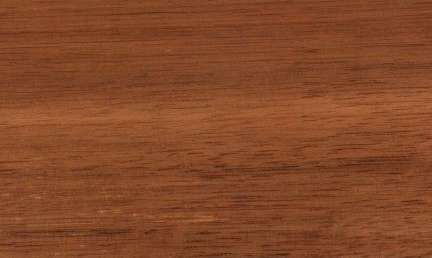
Jaboty (Erisma uncinatum)
Family: Vochysiaceae Common names: Cambara, Cedrinho, Couaie, Feli kouali, Felli kouali, Jaboti, Jaboty, Jaboty da terra firma, Kokopaie, Leteballibelero, Manonti kaouali, Manonti kouali, Mureillo, Quariuba, Quaruba vermelha, Quarubarana, Quarubatinga, Singri-kwari, Singrie kwarie Distributed in: Brazil, French Guiana, Guyana, Suriname, Venezuela (Central America, Latin America) Distribution overview: Humid, sub-tropical and tropical forests of Santa Cruz, Beni and Pando in Bolivia. May also be present in the Guianas, Surinam and Venezuela. Common uses: Bedroom suites, Boat building, Boxes and crates, Cabinetmaking, Chairs, Chests, Concrete formwork, Decorative plywood, Desks, Fine furniture, Fuelwood, Furniture , Furniture, Joinery, Living-room suites, Moldings, Office furniture, Packing cases, Plywood, Rustic furniture, Shipbuilding, Tables , Utility furniture, Wardrobes Product sources: The ITTO reports that the species is an important source of timber. The timber is exported regularly, and is imported from Brazil into China. Environment profile: Status has not been officially assessed
Tree size: Tree height is 40-50 m
Colors: the heart isReddish brown, Yellowand the sapwoodWhite to yellow, Yellow.The grain isStraight, the textureMedium to coarseand the lusterLow
Natural durability: Susceptible to termite attack, Very durable Odor: No specific smell or taste
Silica Content: Slight Kiln Schedules: Kiln Drying Rate (in days) is fairly rapid Kiln Drying Rate: Naturally dries slowly Drying Defects: Moderate surface checking, Splitting Ease of Drying: Slowly Tree Identification: Bole/stem form is buttressed
Blunting Effect: Slight effect Boring: Easy
Cutting Resistance: Fairly Difficult to Very Difficult to saw Gluing: Good properties Nailing: Easy to nail, Holds nails well Planing: good Resistance to Impregnation: Response to treatment varies from moderate to poor
Response to hand tools: Fairly Difficult to Difficult to Work Sanding: Very good characteristics Veneering qualities: Suitable for peeling, Suitable for slicing
Screwing: Easy to screw
;
Painting: Good; Polishing: Good; Staining: Finish is generally good
; Varnishing: Good;
Density (dry weight) = 38-45 lbs/cu. ft. Density (dry weight) = 31-37 lbs/cu. ft. Bending strength (MOR) = low Shrinkage, Tangential = large Shrinkage, Radial = fairly large Modulus of Elasticity (stiffness) = medium Max. crushing strength = medium Max. crushing strength = high Bending strength (MOR) = medium Bending strength (MOR) = high Shrinkage, Tangential = moderate Shrinkage, Tangential = fairly large Shrinkage, Radial = small Shrinkage, Radial = moderate Shrinkage, Radial = large Shearing strength (parallel to grain) = very low Modulus of Elasticity (stiffness) = very low Modulus of Elasticity (stiffness) = low Modulus of Elasticity (stiffness) = high Hardness (side grain) = soft Bending strength (MOR) = very high Bois et Forets des Tropiques,1984,Jaboty - Erisma uncinatum,Bois et Forets des Tropiques Vol. 204 p.57-60Boone, R.S., C.J. Kozlik, P.J. Bois, E.M. Wengert. 1988. Dry Kiln Schedules for Commercial Hardwoods - Temperate and Tropical. USDA, Forest Service, General Technical Report FPL-GTR-57, Forest Products Laboratory, Madison, Wisconsin.Chichignoud, M., G. Deon, P. Detienne, B. Parant, and P. Vantomme.1990.Tropical Timber Atlas of Latin America.International Tropical Timber Organization (ITTO) and Centre Technique Forestier Tropical (CTFT, 45bis, Avenue de la Belle Gabrielle, Nogent-sur-Marne Cedex, France.Erfurth, T., Rusche, H.,1976,The Marketing of Tropical Wood B. Wood Species from S. American Tropical,Moist Forests,F.A.O. Forestry DepartmentI.U.F.R.O.,1973,Veneer Species of the World,Assembled at F.P.L. Madison on behalf of I.U.F.R.O. Working Party on,Slicing and Veneer CuttingSallenave, P.,1955,Proprietes Phyiques et Mecaniques des Bois Tropicaux de l'Union Francaise,C.T.F.TTakahashi, A.,1975,Compilation of data on the Mechanical Properties of Foreign Woods (Part 2,Central and South America,Shimane University, Japan, Research Report on Foreign Wood No.4Teixeira, D. E., M. A. E. Santana and M. Rabelo de Souza.1988. Amazonian Timbers for the International Market.ITTO Technical Series 1.Brazilian Institute for Forestry Development, Brazil. |

*Come interpretare i dati (manleva su eventuali imprecisioni)
Messenger id: XXXXXXXXXX - Skype id: XXXXXXXXX
Copyright © 2026 | P.IVA 01158930998 Perito Camera di Commercio di Genova n.1917 settore Legnami e Pavimenti in legno

