Sei in: home » database dei legni


Fornitori
|
Ditta 5
Indirizzo: via dei platani 4 liguria Tel.: +39 456 5664 54 Sito web: www.pippo.it E-mail: pippo at libero.it |
|
Ditta 4
Indirizzo: via dei platani 4 liguria Tel.: +39 456 5664 54 Sito web: www.pippo.it E-mail: pippo at libero.it |
|
Ditta 3
Indirizzo: via dei platani 4 liguria Tel.: +39 456 5664 54 Sito web: www.pippo.it E-mail: pippo at libero.it |
|
Ditta 2
Indirizzo: via dei platani 4 liguria Tel.: +39 456 5664 54 Sito web: www.pippo.it E-mail: pippo at libero.it |
|
Ditta 1
Indirizzo: via dei platani 4 liguria Tel.: +39 456 5664 54 Sito web: www.pippo.it E-mail: pippo at libero.it |
|
Ditta 0
Indirizzo: via dei platani 4 liguria Tel.: +39 456 5664 54 Sito web: www.pippo.it E-mail: pippo at libero.it |
Contatti
database dei legni


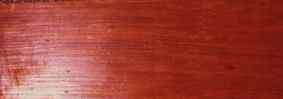
Alui (Erythrophleum guineense)
Family: Leguminosae Common names: A-kon, Adjuga, Akpa, Akpa etuidiwi, Alui, Arachi, Arue, Atiemia, Atiuhia, Babala, Baska, Bolodo, Bolondo, Buirane, Bungoro, Burene, Digpende, Dikassaa-kassa, Elegue-muani, Ellong, Elondo, Eloun, Elui, Elun, Erue, Erui, Erun, Erun obo, Evun, Eyo, Gbanga-gbende, Gogwi, Gue, Guhie, Guilutu, Gwaska, Ibo, Idip, Ifwon, Inyi, Inyii, Inyin, Jallin baro, Jru, Ka-kontha, Kakawa, Kassa, Kbande, Keke-ru, Kekeu, Koe-kon, Koro, Kulenten, Lakpa, Limdu Gabon, Lo, Loundi, Manconi, Massanda, Mauve, Mbaraka, Mbele, Meli, Messanda, Mishenga, Missanda, Missandra, Mkelekele, Mkina, Mkuu, Mongoro, Muave, Muavi, Mumara, Mwafi, Mwaui, Mwavi, Ndom, Ngero, Ngogbei, Nko, Obo, Oginyi, Oguiyi, Okeze, Oloun, Orachi, Ordeal bark, Ordeal tree, Orhue, Ovinyin, Potrodom, Red water tree, Sachi, Sahi, Sangay, Sasswood, Sassword, Sassybark, Tali, Talimbaro, Tehi, Telehi, Teli, Tsa Distributed in: Cameroon, Gambia, Ghana, Guinea, Ivory Coast, Kenya, Nigeria, Sierra Leone, South Africa, Tanzania, Uganda, Zaire, Zambia (Africa) Distribution overview: Believed present in evergreen, deciduous, and savannah forests in Gambia. Common uses: Agricultural implements, Boat building (general), Bridge beams, Bridge construction, Bridge joists, Building construction, Building materials, Cabin construction, Cabinetmaking, Canoes, Chairs, Charcoal, Construction, Crossties, Docks, Dockwork, Domestic flooring, Factory construction, Flooring, Flooring: commercial heavy traffic, Flooring: industrial heavy traffic, Framing, Furniture, Harbor work, Heavy construction, Joinery, Light construction, Marine construction, Mine timbers, Musical instruments, Parquet flooring, Piling, Plywood, Railroad ties, Sporting Goods, Sub-flooring, Toys, Turnery, Vehicle parts Environment profile: Status has not been officially assessed Tree size: Tree height is 30-40 m
Colors: the heart isReddish brown, Yellow to golden-yellow to orangeand the sapwoodWhite to yellow, Yellow.The grain isIrregular, the textureFineand the lusterLustrous
Natural durability: Very high natural resistance, Very resistant to termite attack. Odor: No specific smell or taste
Silica Content: Siliceous LightInduced Color Change: Darker
Kiln Schedules: Dry at a slow speed
Kiln Drying Rate: Naturally dries slowly Drying Defects: Severe twisting/warping, Splitting Ease of Drying: Slowly Tree Identification: Bole/stem form is not buttressed Comments: General finishing qualities are rated as good Blunting Effect: High to severe Boring: Poor results Carving: Poor results Cutting Resistance: Fairly Difficult to Very Difficult to saw Gluing: Fairly Difficult to Very Difficult Mortising: Poor mortising properties Moulding: Fairly Difficult to Very Difficult Movement in Service: Fairly Difficult to Very Difficult Nailing: Holds nails well, Pre-Boring Recommended Planing: Planes well, to a good finish Resistance to Impregnation: Sapwood is treatable Response to hand tools: Responds Poorly Routing recessing: Fairly Difficult to Very Difficult Sanding: Yields smooth, clean surfaces Veneering qualities: Diifficult to veneer, Suitable for peeling Steam bending: Fair to Good Results
Screwing: Good screw holding properties, Screwing yields good results; Turning: Turning qualities are poor
Polishing: Very Good to Excellent; Varnishing: Satisfactory
;
Density (dry weight) = 61-67 lbs/cu.ft 0 Density (dry weight) = 53-60 lbs/cu. ft 1 Max. crushing strength = very high Bending strength (MOR) = high Modulus of Elasticity (stiffness) = high Shearing strength (parallel to grain) = medium Hardness (side grain) = medium Density (dry weight) = 67-75 lbs/cu. ft Density (dry weight) = 46-52 lbs/cu. ft. Shrinkage, Tangential = moderate Shrinkage, Radial = small Max. crushing strength = high Hardness (side grain) = hard Shrinkage, Tangential = very small Shrinkage, Tangential = fairly large Shrinkage, Radial = very small Shrinkage, Radial = fairly large Bending strength (MOR) = very high Banks, C.H., Schoeman, J.P., Otto, K.P.,1977,The Mechanical Properties of Timbers with particular reference to South,Africa,South African Forestry Research Institute Bulletin,(Ed.,Schoeman, J.P. 1973 & Otto K.P. 1976,No.48Banks, C.H.,1954,The Mechanical Properties of Timbers with Particular Reference to those,grown in the Union of South Africa,Journal of the South African Forestry Association,No. 24 pp.44-65,[South,African Forestry Journal]Bertin, A., Meniaud, J.,1949,Timbers of the Cameroons,Compagnie Francais du Cameroon,(Transl. by F.Jane)Bois, P.J.,1966,The Strength Properties of Tanzania Timbers,Tanzania Forest Div. Util. Sec. Moshi Tech. Note, No.35Bolza, E., Keating, W.G.,1972,African Timbers - the Properties, Uses and Characteristics of 700 Species,C.S.I.R.O. Div. of Building ResearchChudnoff, M.,1984,Tropical Timbers of the World,U.S.A. Department of Agriculture, Forest Service, Forest Products,Laboratory, Madison.Dale, I.R., Greenway, P.J.,1961,Kenya Trees and Shrubs,Buchanans Kenya Estates Ltd. Nairobi Hatchards LondonDalziel, J.M.,1937,The Useful Plants of West Tropical Africa,Crown Agents for the ColoniesEggeling, W.J.,1940,Indigenous Trees of Uganda,Govt. Printer Entebbe UgandaGotz, E.,1983,Timber trees of the Gambia,Stiftung Walderhaltung in Afrika and Bundesforschungsanstalt fur Forst-,und HolzwirtschaftGutierrez Oliva, A., Plaza Pulgar, F.,1967,Caracteristicas fisico-mecanicas de las maderas Espanolas. (Physical and,mechanical properties of Spanish timbers.,Min.Agric./Dir.Gen Montes/Instituto Forestral de Investigaciones,y,Experiencias, Madrid pp102HMSO.1972.Handbook of Hardwoods.2nd Edition.Revised by R.H. Farmer.Department of the Environment, Building Research Establishment, Princes Risborough Laboratory, Princes Risborough, Aylesbury, Buckinghamshire.Jay, B.A.,1968,Timbers of West Africa,TRADA, Red Booklet SeriesMurira, K.,1984,Natural Durability Tests of Tanzanian Timbers 1955 - 1982,Tanzania Forestry Research Institute, Timber Utilisation Research Centre,,Moshi.Sallenave, P.,1955,Proprietes Phyiques et Mecaniques des Bois Tropicaux de l'Union Francaise,C.T.F.TTakahashi, A.,1978,Compilation of Data on the Mechanical Properties of Foreign Woods (Part,III) Africa,Shimane University, Japan, Research Report on Foreign Wood No. 7Tanzania Forest Division,1967,The Weights and Shrinkage of some Local Timbers,Tanzania Forest Div. Util. Sect. Technical Note,No.25Uganda Forest Department,1954,The Mechanical Properties of some Ugandan Timbers,Uganda Forest Department Timber Leaflet,No.1 |

*Come interpretare i dati (manleva su eventuali imprecisioni)
Messenger id: XXXXXXXXXX - Skype id: XXXXXXXXX
Copyright © 2026 | P.IVA 01158930998 Perito Camera di Commercio di Genova n.1917 settore Legnami e Pavimenti in legno

