Sei in: home » database dei legni


Fornitori
|
Ditta 5
Indirizzo: via dei platani 4 liguria Tel.: +39 456 5664 54 Sito web: www.pippo.it E-mail: pippo at libero.it |
|
Ditta 4
Indirizzo: via dei platani 4 liguria Tel.: +39 456 5664 54 Sito web: www.pippo.it E-mail: pippo at libero.it |
|
Ditta 3
Indirizzo: via dei platani 4 liguria Tel.: +39 456 5664 54 Sito web: www.pippo.it E-mail: pippo at libero.it |
|
Ditta 2
Indirizzo: via dei platani 4 liguria Tel.: +39 456 5664 54 Sito web: www.pippo.it E-mail: pippo at libero.it |
|
Ditta 1
Indirizzo: via dei platani 4 liguria Tel.: +39 456 5664 54 Sito web: www.pippo.it E-mail: pippo at libero.it |
|
Ditta 0
Indirizzo: via dei platani 4 liguria Tel.: +39 456 5664 54 Sito web: www.pippo.it E-mail: pippo at libero.it |
Contatti
database dei legni


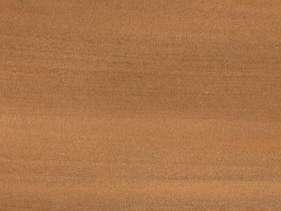
Fijian kauri (Agathis vitiensis)
Family: Araucariaceae Common names: Dakua, Dakua makadre, Fiji kauri, Fijian kauri, Ndakua makandre Distributed in: Fiji [Polynesia], Fiji (Oceania and S.E. Asia) Distribution overview: A close relative of New Zealand Kauri (Agathis australis), the species grows in the Fiji islands. Common uses: Balusters, Boat building (general), Boat building: decking, Boat building: masts, Boat building: planking, Boxes and crates, Brush backs & handles, Cabinetmaking, Carvings, Chemical containers, Coffins, Decks, Food containers, Furniture, Handles: general, Heavy construction, Joinery (external): ground contact, Joinery, Light construction, Matches, Model airplanes, Moldings, Musical instruments, Oars, Paneling , Paneling, Particleboard, Plywood, Pulp/Paper products, Sporting Goods, Tool handles, Toys, Turnery, Vats, Veneer, Veneer: decorative, Xylophones Environment profile: Status has not been officially assessed
Tree size: Trunk diameter is 200-250 cm
Colors: the heart isYellow, Yellow to golden-yellow to orangeand the sapwoodWhite to yellow, Yellow.The grain isWeak figure, the textureUniformand the lusterOften lustrous
Natural durability: Susceptible to insect attack, Susceptible to marine borer attack Odor: No specific smell or taste
Kiln Schedules: T10 - D5s (4/4); T8 - D4s (8/4) US/T10 - D5s (4/4); T8 - D4s (8/4) US Kiln Drying Rate: Rapid (<10 days for boards < 32 mm, to <30 days for boards >= 63 mm) Drying Defects: Distortion (twist/warp) is likely, Internal Honeycombing Possible Ease of Drying: Stains easily Tree Identification: Bole/stem form is not buttressed Comments: Abnormal Wood Tissue Blunting Effect: There is some significant blunting effect on cutting tools Boring: Moderately easy Carving: Fairly Easy to Very Easy Cutting Resistance: Low resistance to sawing Gluing: Moderate gluing properties Mortising: Very Good to Excellent Moulding: Very Good to Excellent Movement in Service: Very Good to Excellent Nailing: Variable, from difficult to satisfactory, Very Good to Excellent Planing: Very Good to Excellent Resistance to Impregnation: Sapwood has low permeability Resistance to Splitting: Poor
Response to hand tools: Responds well to hand tools Routing recessing: Routing is easy Sanding: Fairly Easy to Very Easy Veneering qualities: Veneers easily, Veneers moderately easy Steam bending: Moderate
Screwing: Very Good to Excellent Results, Very good screw holding qualities; Turning: Very Good to Excellent Results
Painting: Little or no surface prep required; Polishing: Very Good to Excellent; Staining: Very Good to Excellent; Varnishing: Satisfactory;
Density (dry weight) = 31-37 lbs/cu. ft. 0 Bending strength (MOR) = low 0 Shearing strength (parallel to grain) = low Bending strength (MOR) = medium Shrinkage, Tangential = moderate Hardness (side grain) = soft Shearing strength (parallel to grain) = medium Hardness (side grain) = very soft Shrinkage, Tangential = small Shrinkage, Tangential = fairly large Shearing strength (parallel to grain) = very low Toughness (total work) = medium Alston, A.S.,1966,Natural Heartwood Durability,Fiji Forestry Department, Suva. Fiji timbers and their uses No. 2Alston, A.S.,1982,Timbers of Fiji: Properties and potential uses,Fiji Forestry Department, SuvaBolza, E., Kloot, N.H.,1972,The Mechanical Properties of 56 Fijian Timbers,Australia C.S.I.R.O. Division of Forest Products Technological Paper,No.,62Boone, R.S., C.J. Kozlik, P.J. Bois, E.M. Wengert. 1988. Dry Kiln Schedules for Commercial Hardwoods -Temperate and Tropical. USDA, Forest Service, General Technical Report FPL-GTR-57, Forest Products Laboratory, Madison, Wisconsin.Brown, W.H.,1978,Timbers of the World, No. 8 Australasia,TRADA, Red Booklet SeriesBudgen, B.,1981,Shrinkage and density of some Australian and South-East Asian Timbers,C.S.I.R.O. Div. building Res. Tech Paper(2nd Series) No.38Chudnoff, M.,1984,Tropical Timbers of the World,U.S.A. Department of Agriculture, Forest Service, Forest Products,Laboratory, Madison.Dallimore, W. and Jackson, A. Bruce,1966,A Handbook of Coniferae and Ginkgoaceae Fourth Ed. Revised by S.G.,Harrison,Edward Arnold (Publishers) Ltd. LondonEddowes, P. J. 1961. Commercial Timbers of Papua New Guinea:Their Properties and Uses. Office of Forests, Papua New GuineaFiji Department of Forestry,1969,A Summary of the Properties of 34 Indigenous Timbers,Fiji Forestry Department, Suva. Fiji timbers and their uses No.38Fiji Department of Forestry,1972,Guide to the use of local timbers,Fiji Forestry Department, Suva. Fiji timbers and their uses No.55Fiji Forestry Department,1966,The Properties and Potential uses of Dakua makadre (Agathis vitiensis) A,Summary of C.S.I.R.O. Investigations,Fiji Timbers and Their Uses No.8, Department of Forestry, Suva, FijiFiji Forestry Department,1967,The Properties and Potential Uses of Buabua (Fagraea gracilipes) A Summary,of C.S.I.R.O. Investigations,Fiji Timbers and their Uses No. 14, Department of Forestry, Suva, FijiFiji Forestry Department,1981,The Properties and Uses of 43 Indigenous and Exotic Timbers,Fiji Forestry Department, Fiji Timbers and their Uses No.71I.U.F.R.O.,1973,Veneer Species of the World,Assembled at F.P.L. Madison on behalf of I.U.F.R.O. Working Party on,Slicing and Veneer CuttingKeating, W.G., Bolza, E.,1982,Characteristics properties and uses of timbers. South East Asia, Northern,Australia and the Pacific,C.S.I.R.O. Div. Chemical Technology,Inkata Press,1Kloot, N. H. and E. Bolza.1961.Properties of Timbers Imported into Australia.Technological Paper No. 12.Division of Forest Products, Commonwealth Scientific & Industrial Research Organization, Melbourne, Australia.Kloot, N.H., Bolza, E.,1961,Properties of Timbers Imported into Australia,C.S.I.R.O. Forest Products Division Technological Paper,No.12Lavers, G.M.,1983,The Strength Properties of Timber (3rd ed. revised Moore G.L.,Forest Products Research Laboratory, Princes Risborough, Building Research,Establishment Report (formerly Bulletin No.50)U.K. - Colonial Forest Resources Development Department,1939,British Colonial Timbers - Woods recommended for Various Uses,Colonial Forest Resources Development Department,London |

*Come interpretare i dati (manleva su eventuali imprecisioni)
Messenger id: XXXXXXXXXX - Skype id: XXXXXXXXX
Copyright © 2026 | P.IVA 01158930998 Perito Camera di Commercio di Genova n.1917 settore Legnami e Pavimenti in legno

