Sei in: home » database dei legni


Fornitori
|
Ditta 5
Indirizzo: via dei platani 4 liguria Tel.: +39 456 5664 54 Sito web: www.pippo.it E-mail: pippo at libero.it |
|
Ditta 4
Indirizzo: via dei platani 4 liguria Tel.: +39 456 5664 54 Sito web: www.pippo.it E-mail: pippo at libero.it |
|
Ditta 3
Indirizzo: via dei platani 4 liguria Tel.: +39 456 5664 54 Sito web: www.pippo.it E-mail: pippo at libero.it |
|
Ditta 2
Indirizzo: via dei platani 4 liguria Tel.: +39 456 5664 54 Sito web: www.pippo.it E-mail: pippo at libero.it |
|
Ditta 1
Indirizzo: via dei platani 4 liguria Tel.: +39 456 5664 54 Sito web: www.pippo.it E-mail: pippo at libero.it |
|
Ditta 0
Indirizzo: via dei platani 4 liguria Tel.: +39 456 5664 54 Sito web: www.pippo.it E-mail: pippo at libero.it |
Contatti
database dei legni


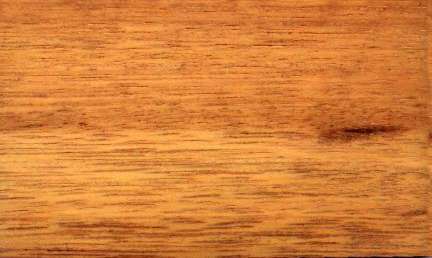
Albizzia (Albizia gummifera)
Family: Leguminosae Common names: Albizzia, Asihue, Avu, Ayinre, Bakwe kapun bongbo, Bangban, Bangbaye, Flat crown, Kasa-kasa, Kiririgwi, Kokko, Lubamba, Mapumbat, Mboromoro, Mchani-mbao, Mduruasi, Mepepe, Mfuranji, Mkenge, Mpepe, Mruka, Msame, Msarawachi, Mshai, Mtanga, Mtango, Mtsani, Mtsavia, Muanza, Mugarayense, Mugavu, Mukhonzuli, Mukuruwe, Mungerenge, Munjerenje, Mupambangoma, Murenjererje, Mushabeya, Mushebele, Mushebera, Mwethia, Niensiensi, Nongo, Okuro, Ol-geturai, Omulera, Osungu, Pampena, Platkroon, Possi, Sahati, Sakachi, Saliemo, Se, Set, Seyet, Sorai, Sorii, Uwowe, West African albizzia Distributed in: Angola, Cameroon, Ethiopia, Ghana, Ivory Coast, Kenya, Nigeria, Sierra Leone, South Africa, Tanzania, Togo, Uganda, Zaire (Africa) Distribution overview: A deciduous tree preferring forest margins and open forests throughout mountainous regions in Tanzania, from the coastal hills to Kilimanjaro and Kagera. It grows poorly in higher areas. It also occurs as a small tree colonizing mixed thickets and woodlands. This tree can also be found in some areas of West Africa (mostly confined to the highlands in Nigeria and Cameroon), but is most common in East Africa. Common uses: Agricultural implements, Balusters, Barge fenders, Bedroom suites, Boxes and crates, Building construction, Building materials, Cabinetmaking, Carvings, Casks, Charcoal, Construction, Crossties, Decorative plywood, Docks, Dockwork, Domestic flooring, Drawer sides, Excelsior, Flooring, Furniture , Furniture, Handles, Harbor work, Hardboards, Heavy construction, Interior construction, Interior trim, Joinery, Kitchen cabinets, Ladders , Light construction, Living-room suites, Marine construction, Millwork, Mine timbers, Moldings, Naval architecture, Novelties, Office furniture, Packing cases, Parquet flooring, Particleboard, Plywood, Poles, Posts, Pulp/Paper products, Railroad ties, Sporting Goods, Tool handles, Vehicle parts, Veneer: decorative Environment profile: Generally secure within its natural habitat Tree size: Trunk diameter is 100-150 cm
Colors: the heart isYellow, Yellow to golden-yellow to orangeand the sapwoodWhite to yellow, Yellow.The grain isStriped figure, the textureMedium to coarse
Natural durability: Susceptible to insect attack, Susceptible to wood staining fungal attack Odor: No specific smell or taste
LightInduced Color Change: None
Kiln Schedules: T6-D4 (4/4); T3-D3 (8/4) US/T6-D4 (4/4); T3-D3 (8/4) US Kiln Drying Rate: Naturally dries slowly Ease of Drying: Slowly Tree Identification: Bole/stem form is straight Comments: General finishing qualities are rated as Poor Cutting Resistance: Low resistance to sawing Gluing: Glues well Nailing: Holds nails well, Very Good to Excellent Planing: Very Good to Excellent Resistance to Impregnation: Resistant sapwood Response to hand tools: Variable qualities Steam bending: Moderate
Screwing: Fair to Good Results, Very Good to Excellent Results;
Polishing: Satisfactory; Staining: Finish is generally satisfactory;
Max. crushing strength = medium Hardness (side grain) = very soft Density (dry weight) = 31-37 lbs/cu. ft. Bending strength (MOR) = low Shearing strength (parallel to grain) = low Modulus of Elasticity (stiffness) = very low Shrinkage, Tangential = very small Shrinkage, Radial = very small Density (dry weight) = 23-30 lbs/cu. ft. Toughness-Hammer drop (Impact Strength) = low Shrinkage, Volumetric = moderate Shrinkage, Tangential = small Density (dry weight) = 38-45 lbs/cu. ft. Bending strength (MOR) = medium Density (dry weight) = 46-52 lbs/cu. ft. Bois, P.J.,1966,The Strength Properties of Tanzania Timbers,Tanzania Forest Div. Util. Sec. Moshi Tech. Note, No.35Bolza, E., Keating, W.G.,1972,African Timbers - the Properties, Uses and Characteristics of 700 Species,C.S.I.R.O. Div. of Building ResearchBryce, J.M.,1967,Commercial Timbers of Tanzania,Tanzanian Forestry Division Util. Sec. MoshiChudnoff, M.,1984,Tropical Timbers of the World,U.S.A. Department of Agriculture, Forest Service, Forest Products,Laboratory, Madison.Eggeling, W.J.,1940,Indigenous Trees of Uganda,Govt. Printer Entebbe UgandaForest Products Research Laboratory, U.K.,1951,Albizzia spp.,Forest Products Research Laboratory, Princes Risborough, Timber LeafletFouarge, J.,1950,Appropriation de Bois Congolais aux Besoins de la Metropole,I.N.E.A.C. Belgium Serie Technique,No.38Fouarge, J.,1953,Bois du Congo,I.N.E.A.C.France - C.T.F.T./C.T.B.,1982,Guide pour le Choix des Essences Deroulables-pour la fabrication du,contreplaque,C.T.F.T./C.T.B. FranceGrant, D.K.S.,1934,Some Local Timbers,Tanzania Forest DepartmentGueneau, P., Gueneau, D.,1969,Proprietes Physiques et Mecaniques des Bois Malagaches,CTFT MadagascarKeay, R.W.J.1989. Trees of Nigeria.Revised Version of Nigerian Trees. Clarendon Press, Oxford.Lebacq, L., Dechamps, R.,1967,Contribution a un Inventaire de Forets du Nord-kasai,Musee Royal de L'Afrique Centrale Belgium Annals Series 8 No.5McCoy-Hill, M.,1956,Timbers of Tanganyika - Mfurangi, Mfuranji and Mroma,Timber Technology,64(2204, p305Murira, K.,1984,Natural Durability Tests of Tanzanian Timbers 1955 - 1982,Tanzania Forestry Research Institute, Timber Utilisation Research Centre,,Moshi.Pardy, A.A.,1952,Notes on Indigenous Trees and Shrubs of S. Rhodesia - Albizzia gummifera,Ministry of Agriculture and Lands S. Rhodesia Bulletin,No.1673Patterson, D.N.,1963,The strength of Kenya timbers, their derivation and application,Kenya Forestry Department Research Bulletin,No.23Reyes, L.J.,1938,Philippine Woods,Commonwealth of the Philippines Department of Agriculture and Commerce,Technical Bulletin,No.7Scott, M.H.,1935,Weights of South African Growth Timbers,South African Department of Agriculture and Forestry Bulletin,No.145,Forest Products Institute, Forestry Series No.1Scott, M.H.,1950,Notes on the more Important African Timbers Imported into the Union with,Special Ref. to Port. E.A. Species,Journal of the South African Forestry Association,No.19,pp18-62,[South,African Forestry Journal]Spalt, H.A., Stern, W.L.,1956,Survey of African woods 1,Tropical Woods,115(105,pp 13-38Stevens, W C,1961,Kiln Operators Handbook,HMSOTack, C.H.,1969,Uganda Timbers,Govt. Printer UgandaTakahashi, A.,1978,Compilation of Data on the Mechanical Properties of Foreign Woods (Part,III) Africa,Shimane University, Japan, Research Report on Foreign Wood No. 7Tanzania Forest Department,1960,The Natural Durability of Local Timbers,Tanzanian Forest Dept. Tech. Note,No.14Uganda Forest Department,1969,The Shrinkage of Some Ugandan Timbers,Uganda Forestry Department Timber Leaflet,No.47WCMC.1992.Conservation Status Listing - Trees and Timbers of the World.World Conservation Monitoring Center-Plants Programme, Cambridge, CB3 ODL, United Kingdom.Wimbush, S.H.,1950,Catalogue of Kenya Timbers,Govt. Printer Nairobi Kenya |

*Come interpretare i dati (manleva su eventuali imprecisioni)
Messenger id: XXXXXXXXXX - Skype id: XXXXXXXXX
Copyright © 2026 | P.IVA 01158930998 Perito Camera di Commercio di Genova n.1917 settore Legnami e Pavimenti in legno

