Sei in: home » database dei legni


Fornitori
|
Ditta 5
Indirizzo: via dei platani 4 liguria Tel.: +39 456 5664 54 Sito web: www.pippo.it E-mail: pippo at libero.it |
|
Ditta 4
Indirizzo: via dei platani 4 liguria Tel.: +39 456 5664 54 Sito web: www.pippo.it E-mail: pippo at libero.it |
|
Ditta 3
Indirizzo: via dei platani 4 liguria Tel.: +39 456 5664 54 Sito web: www.pippo.it E-mail: pippo at libero.it |
|
Ditta 2
Indirizzo: via dei platani 4 liguria Tel.: +39 456 5664 54 Sito web: www.pippo.it E-mail: pippo at libero.it |
|
Ditta 1
Indirizzo: via dei platani 4 liguria Tel.: +39 456 5664 54 Sito web: www.pippo.it E-mail: pippo at libero.it |
|
Ditta 0
Indirizzo: via dei platani 4 liguria Tel.: +39 456 5664 54 Sito web: www.pippo.it E-mail: pippo at libero.it |
Contatti
database dei legni


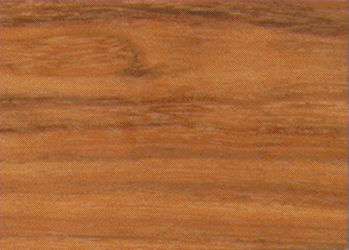
Bansa (Albizia odoratissima)
Family: Leguminosae Common names: Bansa, Bas, Bassein, Bersa, Bhandir, Billiwar, Bilwara, Black siris, Borhi, Chichalda, Chichanda, Chichola, Chichua, Chichwa, Chinduga, Chittilei vagei, Ginnera, Godhunchi, Jati-koroi, Kal-thuringi, Kala siris, Kala-siris, Kalei, Kali harreri, Kani vagei, Kar vaghe, Karambru, Karu vage, Karu vagei, Khang, Koroi, Kunnivga, Lasrin, Mara, Moroi, Nelli vaga, Nellivaga, Polach, Ponnai murankai, Puli vaga, Pullibaghi, Sedong, Sela vanjai, Shinduga, Siran, Siris, Solomanim, Suriya mara, Telsu, Tetura, Thit-pyu, Thitmagyi, Thitpyu, Yerjoohetta, Yerjuchinta Distributed in: Bangladesh, Burma, India, Pakistan, Sri Lanka (Oceania and S.E. Asia) Distribution overview: Albizia odoratissima occurs naturally in Southern China, Burma, Peninsula India, and Tropical Africa. Under tropical conditions the species is not gregarious. It is frequently found on hill slopes and sometimes in valleys. Common uses: Agricultural implements, Boat building (general), Boxes and crates, Bridge construction, Cabinetmaking, Carvings, Cooperages, Furniture, Heavy construction, Joinery, Light construction, Mathematical instruments, Millwork, Mine timbers, Paneling, Plywood, Poles, Railroad ties, Tool handles, Turnery, Vats, Vehicle parts, Veneer: decorative, Wheel spokes, Wheels Tree size: Trunk diameter is 100-150 cm
Colors: the heart isPale brown, Redand the sapwoodWhite to yellow, Yellow.The grain isWavy, the textureCoarseand the lusterMedium
Natural durability: Very durable, Very durable Kiln Schedules: Kiln Drying Rate (in days) is fairly rapid Kiln Drying Rate: Naturally dries at a moderate speed Drying Defects: Slight twist/warp, Splitting Ease of Drying: Slowly Tree Identification: Bole/stem form is straight Comments: General finishing qualities are rated as good General finishing qualities are rated as Poor Blunting Effect: Moderate Cutting Resistance: Fairly Difficult to Very Difficult to saw Resistance to Impregnation: Resistant sapwood Response to hand tools: Fairly Difficult to Difficult to Work
Polishing: Very Good to Excellent;
Max. crushing strength = high Bending strength (MOR) = high Shrinkage, Tangential = small Shrinkage, Radial = very small Shrinkage, Volumetric = small Density (dry weight) = 46-52 lbs/cu. ft. Bending strength (MOR) = medium Toughness-Hammer drop (Impact Strength) = medium Bourdillon, T.F.,1908,The Forest Trees of Travancore,Travancore Government PressBrown, W.H.,1978,Timbers of the World, No. 3 Southern Asia,TRADA, Red Booklet SeriesCarrapiett, J.B.,1960,Notes on ornamental timbers of Burma,Burmese Forester,10(1,pp37-53Gamble, J.S.,1902,A Manual of Indian Timbers,Sampson Low, Marston & Co. LondonHoward, A.L.,1948,A Manual of Timbers of the World.,Macmillan & Co. Ltd. London 3rd ed.Nazma,1981,A handbook of Kerala Timbers,Kerala Forest Research Institute Research Report, No.9Pearson, R.S., Brown, H.P.,1932,Commercial Timbers of India,Govt. Printer Calcutta,2 volsRamesh, Rao K., Juneja, K.B.S.,1971,Field Identification of Fifty Important timbers of India,Dehra Dun IndiaRamesh, Rao K., Purkayastha, S.K.,1972,Indian Woods - Their Identification Properties and Uses,Dehra Dun India,Vol. 3Tewari, M.C., Jain, J.C.,1980,Utilization of Secondary Species,Journal of the National Building Organization 25(2) pp1-6 |

*Come interpretare i dati (manleva su eventuali imprecisioni)
Messenger id: XXXXXXXXXX - Skype id: XXXXXXXXX
Copyright © 2026 | P.IVA 01158930998 Perito Camera di Commercio di Genova n.1917 settore Legnami e Pavimenti in legno

